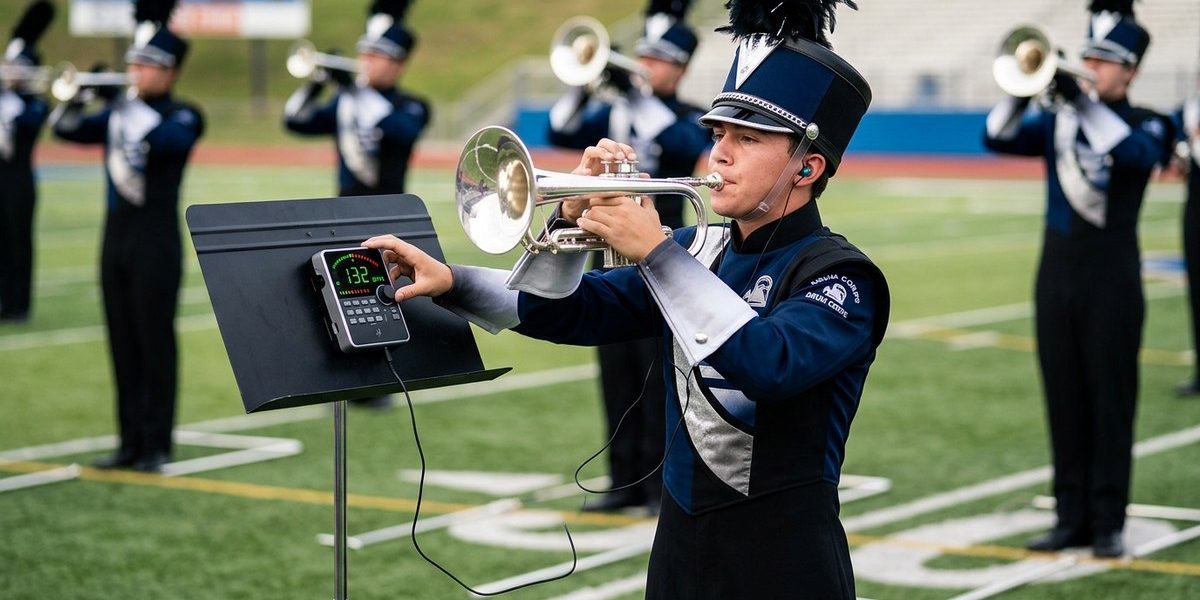
Nothing spoils a drum corps show faster than a brass section that can’t stay together. You know the feeling: the battery is locked in, the pit is grooving, but the horn line rushes the release or drags through a chord change. The fix isn’t more reps or louder playing. The fix is a metronome. But using a metronome for marching brass isn’t the same as tapping your foot in a practice room. It’s a targeted skill that transforms how you hear, feel, and execute time on the field.
Using a metronome for marching brass is about more than just keeping time. It trains your internal pulse, sharpens articulation, and builds ensemble cohesion. This guide covers why the metronome is essential for field shows, a step-by-step practice process, common pitfalls, and how to apply it to your daily routine for better timing under pressure. Whether you are a section leader or a rookie, these methods will help you lock in and perform with confidence.
Why Your Brass Section Needs a Metronome More Than You Think
Brass players in marching ensembles face a unique timing challenge. You are moving, playing at odd angles, and sharing air with dozens of other players. Your ears are bombarded with stadium noise, drill counts, and wind. In that chaos, your internal pulse is the only thing keeping you aligned. A metronome builds that pulse.
Too many players treat the metronome like a crutch for slow practice. In marching brass, it is a rehearsal tool for every tempo. It exposes where you rush (usually into releases) and where you drag (often during visual load). It also teaches you to hear time in relation to the ensemble, not just your own part. If you want a horn line that sounds like one instrument, start with the click.
The 3-Step Process to Locking In With a Metronome
Here is a practical method that works whether you are in the parking lot or on the field. It is designed to mimic the demands of a marching show.
-
Set your metronome to the performance tempo plus five. If the drill calls for 144 bpm, set the click to 149. This forces you to push just a fraction faster than comfortable. Play a simple long tone or scale pattern at that speed for two minutes. Focus on placing each attack exactly on the click. Do not let the faster tempo rush your air; keep your support steady. This step trains your ear to hear time ahead of the beat, which helps you avoid dragging when you add visuals.
-
Remove the downbeat. Most metronomes have an option to mute the first beat of each measure. Turn that off. Now you only hear beats two, three, and four. Play your exercise while subdividing the missing beat in your head. If you lose the pulse, stop and start again. This builds internal counting. In a show, you will often lose the audible click due to corps sound; you need to feel the downbeat without hearing it.
-
Add body movement. Stand in a marching stance. Mark time at the metronome tempo while playing a passage from your show. Keep your feet exactly on the click. Then add direction: forward eight steps, backward eight steps. Check if your timing shifts when you change direction. If it does, slow the metronome by ten clicks and repeat until movement and sound stay locked together. This is the most realistic drill for marching brass because it combines the musical and visual demands.
After you master one tempo, bump it up by three clicks and repeat the cycle. Over time, your internal pulse becomes stronger than any external distraction.
Common Timing Mistakes and How to Fix Them
Many brass players make the same errors when they start using a metronome. Recognizing them early saves hours of frustration.
| Mistake | Why It Happens | Fix |
|---|---|---|
| Playing ahead of the click on releases | Tension in the body or rushing to the next form | Breathe earlier and sustain through the release. Use a longer note value. |
| Falling behind during fast runs | Inefficient articulation or lazy air support | Slow the click by 20 bpm and play with a focus on finger/tongue coordination. Gradually increase. |
| Ignoring the click when visuals get hard | Brain overload | Practice the visual separately while singing the part. Then combine with metronome at half speed. |
| Turning the metronome off too soon | Ego or impatience | Set a timer for ten minutes. Do not stop until the timer ends. Consistency beats speed. |
How to Weave Metronome Work Into Your Daily Routine
You do not need a full hour of metronome time every day. Even ten minutes of focused clicking can transform your timing if you do it right. Here are ways to integrate it without burning out.
- Start your warmup with the metronome. Play your first long tones and lip slurs with the click on every beat. This sets the tempo for the rest of your session.
- Dedicate one day a week to “metronome only” technique. No music, no show tunes. Just scales, articulation patterns, and breathing exercises against the click. It sounds boring, but it deepens your connection to time.
- Use a tempo conversion chart. Many drill sets use different pulse speeds (eighth notes, half notes). Program your metronome to the felt pulse, not the written subdivision. This trains your ear to hear the larger beat structure.
- Record yourself playing with the metronome. Listen back and mark where you drift. Most players are surprised at how much they rush when no one is listening.
- Pair metronome work with breathing exercises. Good time starts with relaxed, consistent air. When your breath is unstable, your timing wavers. Check out our 5 essential breathing exercises every brass player should master to strengthen that connection.
For those who want a structured approach, the how to build a perfect 30-minute individual practice routine guide includes specific metronome blocks that fit into a busy day.
Expert Advice on Metronome Discipline
“The metronome is not a judge. It is a mirror. It shows you exactly where your time lives. Most players fight the mirror because they do not like what they see. But if you sit with the click and accept the information, your listening ear opens up. That is when real growth happens.”
— Mike S., brass caption head for a World Class corps since 2014
That advice cuts to the heart of it. The metronome does not punish you. It reveals your habits. Once you stop reacting emotionally to the click, you can start using it as a tool for deliberate practice.
One Extra Drill That Changes Everything
If you are an instructor or section leader, try this with your brass line. Have everyone close their eyes and play a unison note at mezzo-forte while marching forward. Start the metronome. After eight counts, cut the metronome sound but tell them to keep marching in time. After another eight counts, bring the metronome back. Count how many players are off when it returns. Repeat until they can survive the silent interval without drifting. This simple exercise exposes who is truly feeling the pulse and who is just following the click.
Turning the Click Into Your Greatest Ally
The best marching brass sections sound effortless because every player shares the same time center. That does not happen by accident. It happens through disciplined metronome practice that simulates show conditions. Whether you are a trumpet fighting a mellophone line or a euphonium trying to match the tuba section, your timing starts with a single click.
Set your metronome today. Play a simple note. March a few steps. Listen to where you land. Adjust. Repeat. Three weeks from now, you will not recognize your own timing. And on the field, under the lights, when the adrenaline hits, your inner clock will keep you locked in with the corps.