The 2026 season is shaking up the way drum corps choose their music. If you have been following the early show announcements, you have noticed something different. Corps are mixing genres more freely, leaning into original compositions, and pulling from sources that would have felt out of place just a few years ago. The pressure to stand out on the competitive field has never been higher, and repertoire choices are now a defining factor in a show’s success.
The 2026 drum corps repertoire is being reshaped by three big forces: updated judging criteria that reward cohesive storytelling, a surge in custom arrangements from living composers, and the growing use of electronic sampling in live shows. Corps that blend these elements with strong visual narratives are pulling ahead in the race for finals.
Why Repertoire Choices Matter More Than Ever
A decade ago, a show could lean heavily on a single recognizable piece and still contend for a medal. That is no longer the case. Judges now reward the way music supports the entire production from the first note to the final chord. The 2026 scoring sheets place extra weight on “programmatic coherence.” That means the music cannot just be a collection of impressive licks. It must tell a story, set a mood, and guide the audience through an emotional arc.
At the same time, fan expectations are shifting. Audiences have become more sophisticated. They want to hear something fresh, not just a medley of movie themes they already know. Corps are responding by commissioning original works or by selecting pieces that challenge the listener while still being accessible.
Major Influences on 2026 Repertoire
Several forces are steering the direction of this year’s music selections. Here is a look at the main drivers.
Rule Changes That Opened New Doors
The 2026 DCI rule modifications include a relaxed limit on the number of arrangements per show. This allows a corps to weave together three or four distinct pieces without having to cut material prematurely. It also encourages more risk taking. If a particular arrangement does not land, the corps can swap it out mid season without losing too much of the show’s identity.
Another change involves the allowed use of pre recorded atmospheric elements. While electronics have been around for a while, the new rules clarify where and how sampled sounds can be layered with live brass and percussion. This opens up possibilities for ambient textures that fill the field without overpowering the acoustic sound.
Composer Collaborations on the Rise
More corps than ever are working directly with living composers to create custom repertoire. This practice started with a few top programs, but now middle tier groups are also commissioning pieces. The benefit is twofold: the music is exclusive and it is built specifically for that corps’ instrumentation and visual style. For example, Boston Crusaders hired a composer from the film industry last winter to craft a suite that mirrors the show’s maritime theme. The result is a sound that no other corps can replicate.
Tech Tools That Speed Up Arranging
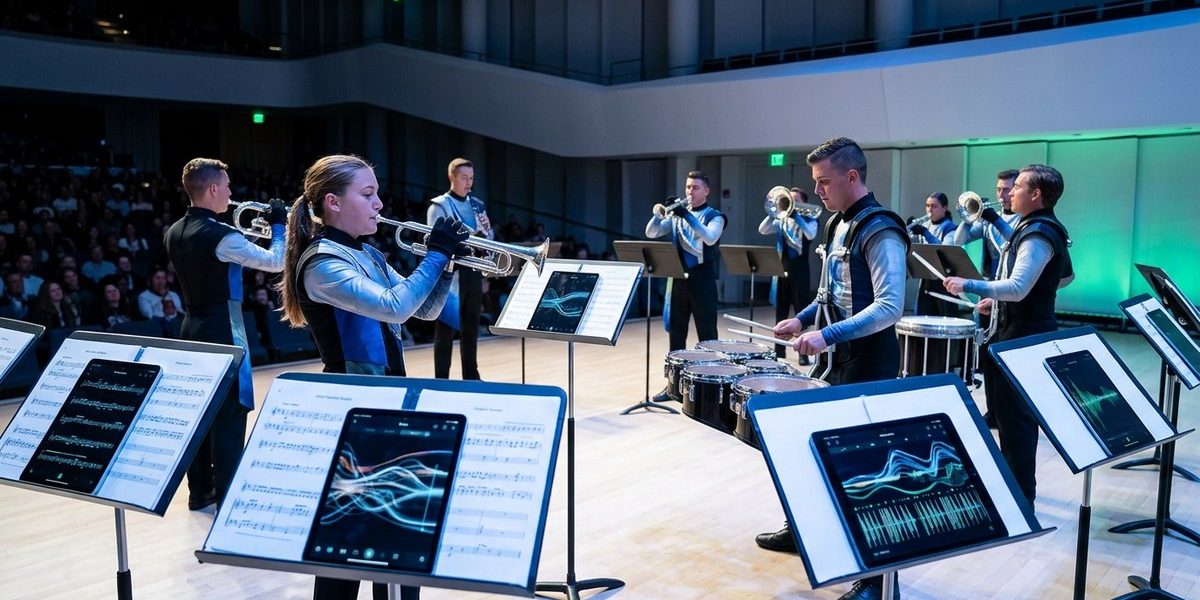
Arrangers now use software that can mock up a full horn line and battery in real time. This allows design teams to test different key changes, tempo shifts, and orchestration ideas before any musician touches a note. The turnaround between concept and field ready music has shortened from weeks to days. Corps that embrace these tools can iterate faster and land on a final repertoire set that feels polished from early season.
How do design teams actually go from an idea to a field ready repertoire? The process typically follows a clear path.
- Define the show’s narrative spine. The visual and musical teams agree on a central theme or story. This could be abstract, like “entropy and order,” or concrete, like “the life of a historical figure.”
- Source potential pieces that fit the narrative. Designers pull from classical works, film scores, indie songs, and even crowd sourced suggestions from social media.
- Arrange and test. The arranger creates a rough mock up of each movement. The corps plays through excerpts during spring training to see how the music feels under movement.
- Refine based on early feedback. If a passage is too tricky or does not connect to the visual moment, it gets rewritten. This iterative loop continues until the repertoire is locked.
Trending Genres and Styles in 2026
The repertoire landscape this season leans in a few distinct directions. These are not hard rules, but they show up across multiple corps.
- Modern classical minimalism: Philip Glass, John Adams, and Caroline Shaw are common sources. Their repetitive structures give arrangers flexible material that can be stretched or compressed.
- Indie rock and folk: Songs from artists like Bon Iver and Phoebe Bridgers provide emotional ballads that resonate with younger audiences. The challenge is adapting the vocal lines for brass.
- Electronic and synth based music: Daft Punk, Aphex Twin, and even video game soundtracks (think Journey or Hades) are appearing in percussion features and pit music.
- Original compositions: As mentioned, more corps are commissioning entirely unique works. This trend is strongest among World Class finalists, but Open Class groups are also starting to dip their toes.
Techniques and Pitfalls in Repertoire Selection
To give you a clearer picture of what works and what does not, here is a table comparing common approaches among top corps.
| Technique | Example | Common Mistake |
|---|---|---|
| Weave two contrasting genres to create emotional tension | Pairing a dark classical piece with a hopeful indie rock ballad | Switching styles too abruptly, leaving the audience confused |
| Use a single composer’s catalog for consistency | Building a show entirely around works by John Mackey | Forgetting to vary tempo and dynamics, making the show feel one dimensional |
| Integrate electronic samples only in percussion features | Adding a synth pad under a battery solo | Overusing electronics, which drowns out live sound and hurts brass blend |
| Commission an original piece aligned with visual moments | Having a composer write a climax that matches a drill peak | Underestimating the time needed to workshop the piece, leading to late season rewrites |
“The best repertoire doesn’t just sound good on a recording. It has to breathe on the field. If the music doesn’t leave space for the guard to move or the battery to articulate cleanly, no amount of beautiful notes will save the show.”
Sarah Tran, arranger for a 2026 World Class finalist corps
How Performers Can Adapt to New Repertoire Demands
If you are a performer preparing for a 2026 audition or summer tour, the changing repertoire landscape means you need to be ready for anything. Here are a few practical suggestions.
First, work on your music reading across styles. Many audition packets now include sections that sound more like indie rock than traditional marching band music. Practice with recordings of modern composers to get comfortable with odd time signatures and unexpected dynamic shifts. Our guide on 5 Essential Breathing Exercises Every Brass Player Should Master can help you build the breath control needed for sustained phrases.
Second, get used to playing with a click track. Even if the show is mostly live, many corps use a metronome feed during rehearsal to lock in timing between brass and percussion. If you are not already practicing with a metronome every day, now is the time to start. Check out Should You Practice With a Metronome Every Day? for a deeper look.
Third, learn to move with musical purpose. The new repertoire often requires you to play through complex drill while the music itself is shifting gears. Visual technique and music cannot be separated. Reviewing The Complete Guide to Practicing Visuals Without a Field can give you ideas for at home preparation.
Finally, listen to the source material. If your corps announces a show built on pieces by a particular composer, go listen to their full albums. Understanding the original context helps you interpret the music with more emotion and accuracy.
The Bigger Picture for 2026 Repertoire
The shift in repertoire selection is not a passing trend. It reflects a deeper change in how the activity views music. Drum corps are no longer just showcasing technical skill; they are telling stories through sound. The most successful shows this season will be the ones where every note feels intentional, where the repertoire lifts the visual design and the visual design completes the music.
For educators and fans, this means paying attention to the “why” behind each piece. Why did a certain corps choose a minimalist string quartet for their ballad? Why did another opt for an original electronic score? The answers reveal what the design team values and what they think will move the judges and the audience.
As you watch the 2026 season unfold, take note of the repertoire choices. They are a window into the future of drum corps. And if you are a participant, let these trends inspire your own practice and preparation. The music you play this summer might look different on paper than what you expected, but that is exactly what makes this activity so exciting.
Go listen. Go explore. And get ready for a season full of surprises.