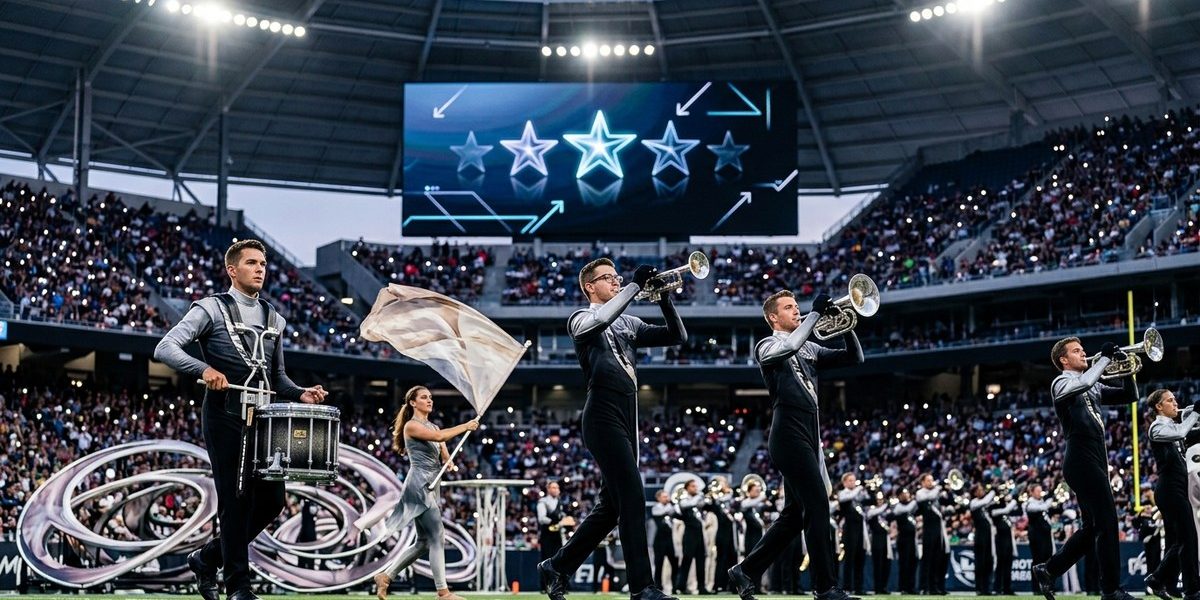
You are sitting in the stands at Lucas Oil Stadium in Indianapolis. The lights dim. The announcer calls the next corps. The first chord hits you in the chest. Instantly you know this is something special. But what exactly separates a great show from a five-star production? In 2026, the bar is higher than ever. Design teams are blending technology, storytelling, and athletic precision into performances that feel more like Broadway spectacles than marching competitions. Let us break down exactly what makes a drum corps show earn that top rating this season.
A five-star drum corps production in 2026 balances four core areas: music design that challenges and delights, visual presentation that tells a clear story, flawless execution from every performer, and a willingness to take risks that push the activity forward. No single element guarantees five stars; the magic happens when all four lock together perfectly.
The Core Pillars of a Five-Star Show
Every top-tier show rests on the same foundation. But in 2026, the details have shifted. Judges are rewarding depth over flash. Audiences are craving emotional connection. Here is what the best productions get right.
Music That Stays With You Long After the Show
Five-star music design starts with a strong concept. The repertoire must feel intentional. Not just a medley of recognizable tunes, but a set that builds a narrative arc. In 2026, successful shows use original compositions or reimaginings that sound fresh yet approachable.
Key musical ingredients:
- Complexity without clutter. The brass book demands precision at high tempos, but never sacrifices blend for difficulty.
- Percussion writing that drives the story. Battery and front ensemble parts are not just accompaniment; they create tension, release, and texture.
- Dynamic range. A five-star show moves from whisper to roar. The quietest moments land just as hard as the climax.
- Intelligent use of electronics. Synthesizers and samples are woven in to enhance the live sound, not cover up weaknesses.
Consider the shows that won brass captions this season. Their music felt inevitable. Every phrase served the larger picture.
Visual Design That Transforms the Field
The visual package in 2026 is more than drill and color guard work. Designers treat the entire field as a canvas. Props, tarps, and structures create environments that evolve from moment to moment. A five-star production uses these tools with purpose.
- Drill that is both beautiful and readable. Complex forms must resolve cleanly. The audience should never feel lost.
- Guard work that amplifies the theme. Flags, rifles, and sabres are not just tricks; they are storytelling devices that mirror the music.
- Costumes that reflect the show’s world. Uniforms in 2026 range from sleek modern fits to detailed period pieces. Every seam matters.
- Lighting integration that changes the mood. LED accents, projected patterns, and smart lighting cues now play a major role in live shows.
Execution That Looks Effortless
You can have the best design on paper. But if the performers cannot deliver, it is not a five-star show.
Execution means:
- Brass tone that stays full and centered at any volume.
- Percussion splits that land inside the pocket.
- Marching that is clean, connected, and stylistically appropriate.
- Guard equipment that never drops and always matches the peak of the phrase.
In 2026, the margin for error is razor thin. One balance issue or missed step can drop a show from five stars to four. The top corps practice until perfect becomes automatic.
Storytelling That Makes You Feel Something
A list of great moments is not enough. The best shows take you on a journey. The opening statement sets up a question. The development offers discovery. The ballad provides reflection. The closer resolves everything with power.
Five-star storytelling:
- Has a clear central theme. It could be a concept, an emotion, a historical event, or a philosophical idea.
- Uses motifs that return in different forms. A melodic fragment or a visual shape that appears again and carries new meaning.
- Avoids cliches. In 2026, audiences are tired of vague “journey” narratives. Specificity wins.
- Ends with a moment that feels earned, not tacked on.
How to Spot a Five-Star Production: A Viewer’s Checklist
Next time you watch a show, use this list to evaluate it yourself. It can help you understand why one show stands above the rest.
- Listen to the first thirty seconds. Does the music grab you immediately? Is there a clear musical idea that sets the tone?
- Watch the first major set change. Does the drill move cleanly from point A to point B? Can you follow the transition?
- Check the ballad. Does the emotional arc land? Is the brass sound full and supported? Is the guard work poetic?
- Look for moments of risk. Does the corps attempt something hard that could fail? A risky drill move, a tricky key change, a daring guard toss. Five-star shows take chances.
- Judge the ending. When the last chord fades, do you feel satisfied? Or does it feel rushed and rehearsed? The closer should be a release of everything built earlier.
Common Pitfalls That Prevent a Show From Reaching Five Stars
| Area | Five-Star Behavior | Common Mistake |
|---|---|---|
| Music design | Thematic unity across all movements | Random pop songs that do not connect |
| Visual design | Purposeful props and staging | Props used as decoration without function |
| Percussion | Battery writing that compliments the brass | Overly busy parts that mask the melody |
| Execution | Consistent tone and timing from all players | Isolated brilliance mixed with sloppy sections |
| Storytelling | Clear, specific narrative | Generic “struggle to triumph” without details |
| Risk-taking | Smart risks that pay off | Reckless choices that cause visible mistakes |
Advice From a Veteran Designer
“A five-star show is not about being perfect. It is about being intentional. Every note, every step, every flag toss should have a reason behind it. If the audience can sense that the design team made choices with conviction, they will forgive small errors. Without conviction, even a clean show feels hollow.”
— Mark T., former visual designer for a top-5 corps
What’s Different in 2026?
The 2026 season has brought several shifts that affect what five-star means.
- New judging emphasis on overall effect. The sheets now weigh artistic impact more heavily than pure technical achievement. A show that moves the crowd can beat one that is technically perfect but cold.
- Rule changes allowing more flexibility in instrumentation. Some corps are adding auxiliary instruments like cello or guitar (amplified). Five-star shows use these additions to expand their palette, not to fill gaps.
- Greater focus on member wellness. Corps that perform with visible joy and energy often score higher. A five-star production feels alive, not robotic.
- Technology integration is now standard. Almost every top show uses some form of live audio processing, synchronized lighting, or video projection. The bar is not whether you use tech, but how well you integrate it.
Looking Ahead to the 2026 Season
The definition of a five-star production will keep evolving. But the core truth remains: a great show makes you forget you are in a stadium. It transports you. It makes you sit forward in your seat. It gives you something to talk about on the drive home.
As you watch the 2026 season unfold, pay close attention to the shows that have that special quality. Notice how the pieces fit together. Notice the small details. And when you find a show that hits all the marks, you will know exactly why it earned five stars.
Now go enjoy the music. The field is waiting.