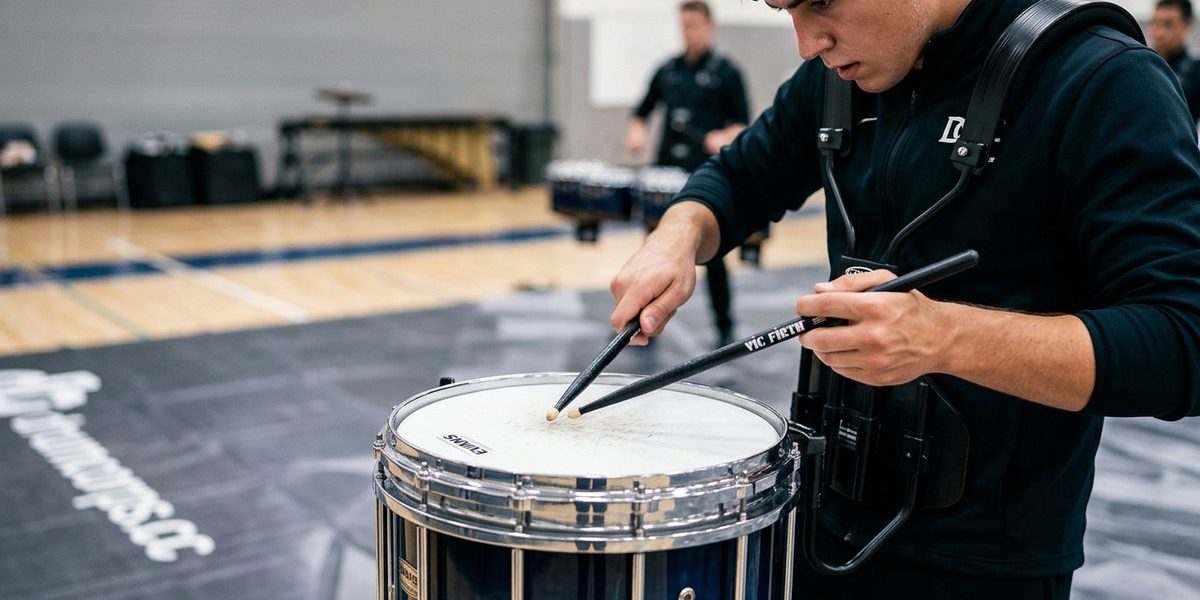
You know that feeling. You’re running through a drumline exercise, and the flam taps land like two separate notes instead of a single, controlled sound. The grace note is too loud, or the primary note comes in late. The whole line sounds muddy, and the caption head gives you that look. You’re not alone. Every snare drummer at the intermediate level hits this wall. The good news is that sloppy flam taps are almost always caused by a handful of fixable issues, and with the right drills, you can clean them up faster than you’d think. Let’s get into the mechanics and then three drills that will transform your sound.
Sloppy flam taps usually come from uneven stick heights, rushed grace notes, or too much pressure in the grip. The three drills here target each flaw separately: a static check for balance, an accent shift for timing, and a pressure release for relaxation. Spend 10 minutes per drill, and you will hear a cleaner, more confident flam tap within a week.
Why Flam Taps Fall Apart
A flam tap is just a flam followed by a tap. Simple on paper, tricky in practice. The grace note needs to be low and soft. The primary stroke needs to be higher and louder. The tap that follows must match the grace note in height and volume. Most players break one of those rules.
Here is the typical breakdown:
- Grace note too high. That raises the volume and kills the dynamic contrast.
- Primary note too low. The flam disappears, and you are left with two nearly equal strokes.
- Tap note inconsistent. The final tap either explodes or fades, ruining the phrase.
The root cause is usually grip tension or rushing. When you rush the grace note, the spacing between the grace and primary shrinks. When you grip too hard, the sticks can’t rebound naturally, which makes the tap uneven.
Drill 1: The Static Check
This drill isolates the balance between grace note and primary stroke. It’s the foundation for all other flam tap work.
- Set your metronome to 60 BPM. Play a single flam tap on each beat. Right hand leads.
- Freeze after each tap. Do not play the next note until you mentally check your stick heights. The grace note should be at 2 inches or lower. The primary should be at 9 inches. The tap should return to 2 inches.
- Alternate hands. Start with right lead for four beats, then left lead for four beats. Keep the metronome on the quarter note.
- Record yourself. Listen back. If you hear two distinct sounds on the flam (tap-tap instead of a single crunch), your grace note is too high. Lower the grace stick height by an inch.
Do this for five minutes. Do not increase tempo until you can play ten consecutive flam taps with the correct visual check. This drill is boring, but it works. It forces your hands to feel the correct height differential.
Drill 2: The Accent Shift
The second drill fixes timing. Most drummers rush the grace note when they try to accent the primary. This exercise deliberately changes where the accent falls, so your ears learn to place the grace note exactly where it belongs.
- Play a steady stream of eighth notes on a practice pad at 70 BPM.
- On every downbeat, play a flam tap with an accent on the primary stroke.
- On every upbeat, play a flam tap with an accent on the grace note. Yes, accent the grace note.
- Alternate the accent every two beats.
- Keep the stick height contrast: accent at 9 inches, non-accent at 2 inches.
The purpose is to force your weaker hand to control the grace note when it is not the lead. If your left-hand grace notes are inconsistent, this drill will expose it. The accent on the grace note is unusual, so your brain has to work harder. That is exactly what you want.
“The moment you can accent a grace note and still keep it low, you have mastered the spacing. Most drummers never try that, so their flams always sound rushed.” — Mark H., former percussion caption head for a top-6 DCI corps.
Drill 3: The Pressure Release
This drill addresses grip tension. Many players squeeze the stick when they reach for the higher primary stroke. That tension kills the rebound and makes the subsequent tap tight and choked.
| Common Problem | What It Sounds Like | What to Do |
|---|---|---|
| Grip too tight at the top of the stroke | Tap note is flat, no rebound | Loosen your back fingers on the primary stroke |
| Grace note is choked | No “crunch” sound, just a tap | Let the grace note fall freely, do not pull it |
| Primary stroke uses arm instead of wrist | Loud, uncontrolled | Use only wrist for the primary at moderate dynamics |
| Tap note is louder than the grace | Sound becomes “ta-TAP” | Lower the tap height by an inch |
Here is the drill:
- Play flam taps at 80 BPM, but focus entirely on your back three fingers. As the stick rises for the primary stroke, consciously relax your ring and pinky fingers. Let the stick pivot in your fulcrum.
- Pay attention to the tap. If it feels dead, you are still squeezing. Replay the flam with a physically lighter grip. You can always add more pressure later, but you cannot subtract it once it is locked in.
- Do this for three minutes. Then, without stopping, play the same flam taps with maximum stick height (primary at 12 inches). Keep the fingers loose. If you can do that, you are ready for higher tempos.
How to Integrate These Drills into Your Practice
Do not try all three drills in the same session. Pick one problem area based on your self-assessment from the static check. If you are consistently hearing a rushed grace, focus on Drill 2. If the tap feels choked, go to Drill 3. If you are unsure, start with Drill 1 for a week.
A good structure for a 15-minute block:
- 3 minutes of warm-up (single strokes, double strokes)
- 5 minutes of your chosen flam tap drill
- 3 minutes of combining flam taps into a simple grid (e.g., alternating flam taps with eighth notes)
- 4 minutes of playing the flam tap within a phrase from your show music
Consistency matters more than duration. Five focused minutes every day will produce better results than a single hour once a week. Check your progress by recording yourself on day one and day seven.
For additional help with your overall practice structure, check out our guide on how to build a perfect 30-minute individual practice routine. If your left hand is the weak link, the 7 drumline exercises that build speed and accuracy fast will give you more targeted work.
Keep the Flam Tap Alive in Your Daily Warmup
The flam tap is not just a rudiment. It is a diagnostic tool. Every time you play it, you are testing your grip, your stick height control, and your timing. If you can play clean flam taps at 120 BPM, your other rudiments will follow. They require the same elements: a low grace, a controlled primary, and a relaxed hand.
So next time you sit down on the practice pad, do not rush through the flam taps. Run the static check. Bother with the accent shift. Let your fingers breathe. Your drumline will thank you, and the caption head might even crack a smile. Now go make those grace notes whisper.