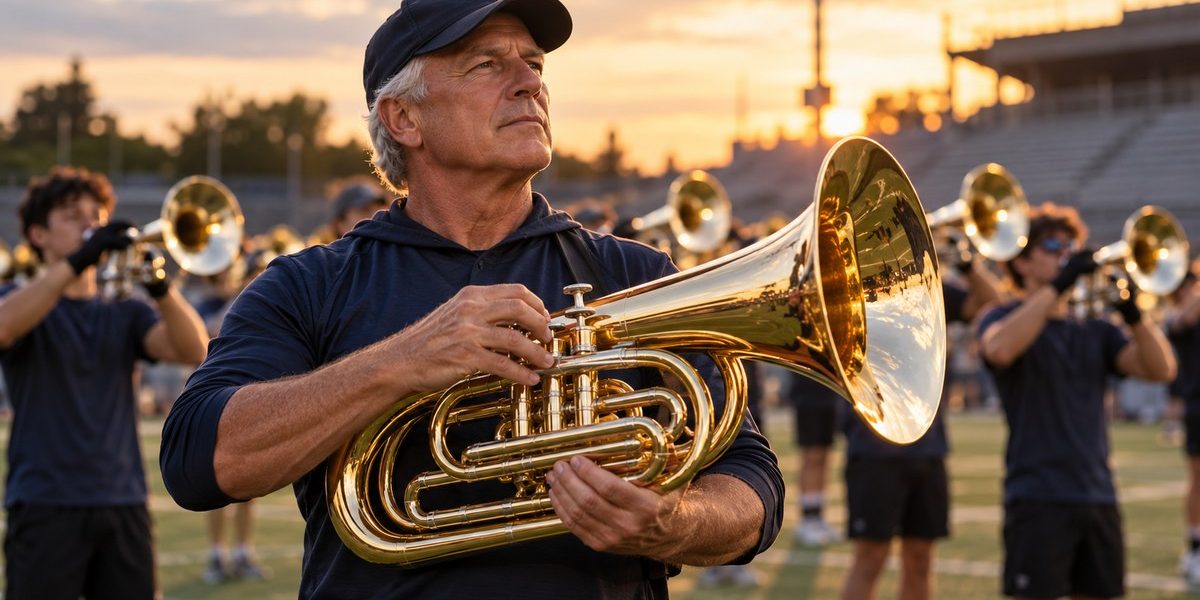
The first time my chops gave out mid-rehearsal, I was sixteen years old, standing on a sun-baked parking lot in central Florida. We were running the closer for the third time, and my upper lip just stopped responding. The note wavered, cracked, and disappeared. My section leader, a guy who had marched five seasons with a top-twelve corps, looked at me and said something I have never forgotten: “Your lungs quit before your lips did.”
He was right. Building brass endurance is not about forcing your embouchure to work harder. It is about building a system of air, relaxation, and recovery that lets you play longer without breaking down. After four decades in drum corps, as a performer, instructor, and caption head, I have collected the brass endurance tips that actually work. Here is everything I wish someone had told me on that hot parking lot.
Brass endurance in drum corps depends on three pillars: efficient breathing that supports your sound without tension, a warmup routine that prepares your face for heavy playing, and smart recovery habits that keep your chops fresh through long rehearsals. Master these, and you will outlast nearly everyone around you.
Why Most Brass Players Hit a Wall
The biggest mistake young players make is treating endurance like a strength problem. They press the mouthpiece harder into their face. They tighten their throat to force air through the horn. They play through the pain until something gives. That approach works for about ten minutes. Then the tissue in your lips swells, your sound flattens, and you are done for the day.
Real brass endurance is about efficiency. Your lips vibrate best when they are relaxed and well-supported by steady air pressure. Your sound projects farthest when your throat and chest stay open. Your stamina lasts longest when you know exactly how much effort each passage requires and you do not waste a single calorie of energy.
I learned this the hard way during my third summer on tour. My embouchure was shot by week two. A veteran tech pulled me aside and made me buzz on just the mouthpiece for an entire afternoon. No horn. Just buzzing long tones while he watched my face. He was looking for tension. Every time my cheeks tightened or my jaw clenched, he made me stop and breathe. That afternoon changed everything.
The Five-Step Endurance Building Process
Here is the exact process I use with every brass section I coach. Follow these steps, and you will see noticeable improvement within two weeks.
-
Start every practice session with ten minutes of mouthpiece buzzing. Focus on steady, relaxed vibrations. If your buzz wavers, you are using too much pressure. Back off until the sound is clean and easy.
-
Move to long tones on the horn. Hold each note for eight to twelve counts at a comfortable dynamic. Keep your throat open and your shoulders down. Imagine you are sighing into the instrument.
-
Practice soft playing before loud playing. Play a simple scale at piano. Then play it again at mezzo-forte. Then again at forte. Your chops build tolerance faster when they warm up in low gear first.
-
Use a metronome for articulation exercises. Clean attacks require precise air starts, not extra mouthpiece pressure. If your articulation sounds choked, you are likely squeezing. Read more about this in our guide on how to use a metronome to perfect your brass timing in marching shows.
-
End each session with a cool-down. Play five minutes of soft, low-register long tones. Let your face relax completely before you put the horn away.
The Breathing Foundation You Cannot Skip
Your air is everything. Without solid breath support, your lips have to work overtime to produce sound, and that leads to fatigue fast. The best brass endurance tips always circle back to breathing.
Here is a simple check. Take a full breath. Did your shoulders rise? If yes, you are breathing shallow. A proper breath for brass playing happens in your lower abdomen. Your shoulders should stay still. Your stomach should expand outward like a balloon.
Practice this away from the horn. Lie on your back with one hand on your belly and one on your chest. Breathe in and feel your belly rise. Your chest should barely move. That is the breathing pattern you want to use every time you play.
For a deeper look at this, check out our article on 5 essential breathing exercises every brass player should master.
Common Mistakes and Better Approaches
| Mistake | Why It Hurts Endurance | What to Do Instead |
|---|---|---|
| Pressing the mouthpiece hard into your lips | Restricts blood flow and causes swelling | Use only enough pressure to create a seal. Let your air do the work. |
| Holding your breath before entrances | Creates tension in your chest and throat | Breathe continuously. Inhale on the pickup, exhale through the phrase. |
| Playing everything at full volume | Wastes energy and fatigues your face early | Match your dynamic to the music. Save your power for the peaks. |
| Skipping warmups on rehearsal days | Starts your chops cold and increases injury risk | Always do a five-minute warmup, even if you are short on time. |
| Ignoring hydration | Dry lips crack and tire faster | Drink water consistently throughout the day. Avoid sugary drinks on the field. |
What a Veteran Instructor Told Me
“Your chops are not a muscle you can beat into submission. They are a delicate tissue that responds to good habits. Treat them like a fine instrument, not a hammer. The players who last through August are the ones who learn to play smart, not hard.”
That advice came from a man who marched in the 1980s, when horns were heavier and rehearsal days were longer. He never had a serious lip injury in forty years. He knew something most young players do not: endurance is a skill you build with patience, not force.
How to Structure Your Practice Week
Building brass endurance requires consistency. You cannot cram it the night before a camp. Here is a weekly template that works for high school and college players alike.
- Monday: Light fundamentals only. Mouthpiece buzzing, long tones, and soft articulation. Keep the horn down for most of the session.
- Tuesday: Add dynamic range work. Play exercises from piano to forte and back. Focus on maintaining tone quality at every volume.
- Wednesday: Introduce technical passages. Run scales and arpeggios at moderate tempos. Keep sessions under 45 minutes.
- Thursday: Simulate show reps. Play through challenging sections of your music at performance tempo. Take breaks between runs.
- Friday: Rest day or very light buzzing. Let your face recover.
- Saturday: Full rehearsal simulation. Play through your entire show or practice run with breaks as needed.
- Sunday: Cool-down and review. Spend time on trouble spots. End with soft long tones.
If you want help building a personalized routine, read our guide on how to build a perfect 30-minute individual practice routine.
The Role of Physical Fitness
Your endurance on the horn is directly connected to your overall fitness. When your core is strong, you can support your air stream more effectively. When your legs are conditioned, you do not waste energy holding yourself up during long visual blocks. When your cardiovascular system is efficient, you recover faster between reps.
I am not saying you need to run marathons. But adding twenty minutes of cardio three times a week will make a noticeable difference in your playing stamina. Focus on exercises that strengthen your core and improve your posture. Planks, bridges, and rows are excellent for brass players.
For more on this connection, see our article on the hidden connection between core strength and brass projection on the marching field.
Why Your Warmup Might Be Holding You Back
Many players rush through warmups or skip them entirely. That is a fast track to endurance problems. Your lips need time to wake up and adjust to the demands of playing. A proper warmup should last at least ten minutes and should never feel forced.
If your warmup routine leaves you feeling tight or tired, it is working against you. The goal is to feel loose and ready, not exhausted before the real work begins. You might benefit from reading why your warmup might be holding you back (and how to fix it).
Recovery Is Not Optional
The best brass players know that what you do after playing is just as important as what you do before. Cooling down allows the blood to flow back into your lips and reduces swelling. Without a cool-down, your chops stay inflamed longer, and your next practice session starts from a deficit.
Here is a simple cool-down routine.
- Buzz softly on your mouthpiece for two minutes. Use low pitches only.
- Play five long tones in the middle and low register of your horn. Keep the volume at piano or softer.
- Massage your lips gently with clean fingers. This helps restore circulation.
- Drink a glass of water. Hydration aids recovery.
Do not skip this step, especially after long rehearsals or performances. Your future self will thank you.
Putting It All Together
Brass endurance is not a mystery. It is the result of consistent, intelligent practice. Breathe deeply and freely. Warm up with patience. Play with efficiency, not force. Cool down every single time. Build your overall fitness. And trust the process.
You do not need to be a veteran with forty years of experience to play through an entire show without your chops giving out. You just need to adopt the habits that work. Start tomorrow. Start with your breathing. Start with your warmup. The rest will follow.
If you want to take your endurance even further, explore our complete resource on how to build rock-solid breath support for high brass endurance. It covers everything from diaphragmatic breathing exercises to advanced air management techniques used by top World Class brass sections.
Now go pick up your horn and put these brass endurance tips into action. Your chops will thank you by the end of the season.