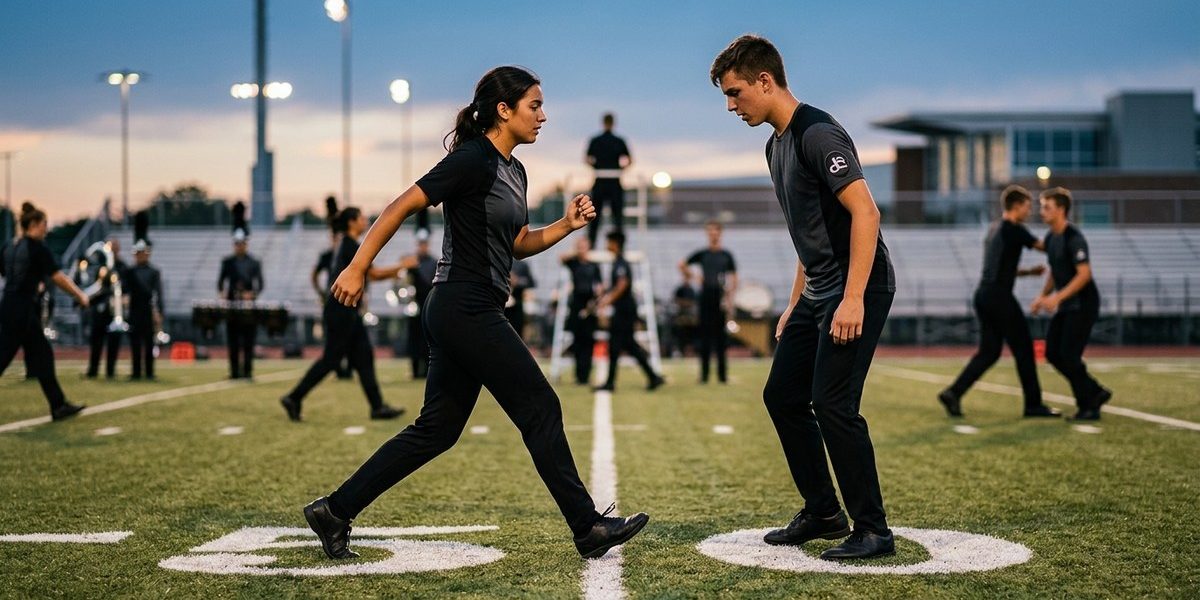
Striking precision and confident movement on the field start with solid fundamentals. Many marching arts members find themselves stuck in routines that lack focus or fail to target key technical weaknesses. The good news is that with intentional, focused marching technique drills, you can see noticeable improvements in posture, timing, foot placement, and overall visual impact. Building these skills requires consistency, awareness, and a good set of drills designed to challenge and refine your craft.
Focused marching technique drills help members develop better posture, timing, and footwork. Consistent practice targeting fundamentals results in more confident and precise movements on the field, elevating overall performance quality.
Why Focused Drills Are Essential for Improvement
Marching is a complex skill that combines body movement, timing, and visual expression. Without targeted drills, it’s easy to develop bad habits or plateau. Focused drills break down the movement into manageable components, allowing members to isolate and improve specific aspects of their technique. This approach ensures steady progress and builds a foundation that supports more advanced visual and musical performance.
Practical Steps to Implement Effective Marching Technique Drills
-
Identify Your Weaknesses
Begin by analyzing your current marching and visual style. Are your steps uneven? Is your posture slouched? Do your transitions feel sluggish? Seek feedback from instructors or peers, and use video recordings to spot inconsistencies.
Once you know where to improve, you can select drills that target those specific issues. -
Choose Focused Drills That Address Fundamentals
Select drills that reinforce key marching skills. For example: - Posture and Alignment: Practice body awareness drills that focus on maintaining a tall, relaxed posture.
- Foot Placement and Precision: Use mark-time drills with a metronome to develop consistent step size and placement.
- Timing and Rhythm: Incorporate slow and fast step drills to solidify internal sense of timing.
-
Transitions and Movements: Focus on fluidly changing formations with drills that emphasize smooth, controlled movements.
-
Integrate Drills into Daily Practice
Consistency is the secret. Dedicate specific time blocks for these drills during rehearsals or individual practice sessions. - Use a mirror or record yourself to check form.
- Gradually increase complexity and speed while maintaining accuracy.
- Combine drills with music or visual cues to simulate performance conditions.
Sample Focused Drilling Sequence
- Warm-up with Body Awareness
Start with simple posture checks. Stand tall, relax shoulders, and align head over hips. - Foot Placement Drill
Perform mark-time steps at a slow tempo with a metronome. Focus on foot placement directly under the hips. - Posture Hold
Hold a straight posture for 30 seconds to build muscle memory. - Transition Practice
Move from a halt to a step, then to a turn, emphasizing control and smoothness. - Rhythm Variations
Practice stepping in sync with different tempos, then add accents to develop dynamic control. - Full-Form Walkthrough
Apply all drills in a full marching sequence, checking alignment, timing, and transitions.
Common Mistakes to Watch Out For
| Technique | Mistake | Correction Tip |
|---|---|---|
| Posture | Slouching or leaning forward | Engage core muscles and regularly check alignment in a mirror |
| Foot Placement | Step too wide or narrow | Use a consistent stride length and mark time to reinforce accuracy |
| Timing | Rushing or dragging | Practice with a metronome, gradually increasing tempo |
| Transitions | Jerky or uncontrolled | Break down transitions into small steps, then combine smoothly |
| Visual Focus | Looking down or wandering | Keep eyes level and focused on a fixed point ahead |
Expert Advice for Precision and Consistency
“The key to mastering marching technique is breaking down movements into simple, repeatable drills. Focus on quality over quantity, and always analyze your form. Over time, these small improvements add up to a polished, confident performance on the field.” — Marching arts instructor with 20 years of experience
How to Make Drills Part of Your Routine
Building excellence in marching takes deliberate effort. Incorporate drills into your daily practice by setting clear goals. For instance, dedicate 10 minutes each session to posture and foot placement. Use visual cues like mirrors or video recordings to verify progress. Remember, consistency beats intensity. Regular, focused work will lead to faster mastery.
Additional Tips for Effective Drill Practice
- Use a metronome to maintain consistent timing.
- Record your practice to track improvements over time.
- Vary drills to keep sessions engaging and comprehensive.
- Work with peers or instructors for feedback and motivation.
- Warm up thoroughly to prevent injury and promote better movement control.
Staying Motivated With Your Marching Progress
Seeing tangible results from your focused drills can be highly motivating. Celebrate small wins like improved posture or steadier steps. Keep challenging yourself by gradually increasing drill difficulty or speed. Remember that mastery is a journey. Every practice session is an opportunity to refine your craft and boost your confidence.
Keeping Your Technique Sharp for the Long Run
Maintaining good marching fundamentals requires ongoing reinforcement. Schedule regular drills to prevent slacking or bad habits from creeping in. Stay attentive to your body and posture, especially during long rehearsals. Incorporate mental rehearsal of drills during downtime or travel. This mental practice helps embed skills deep into muscle memory.
Final Notes for Marching Arts Members
Achieving polished marching technique is within reach when you adopt a disciplined, focused approach. Select drills that target your specific needs and practice them consistently. Use visual and audio cues to monitor your progress. Over time, your movements will become more precise, confident, and visually compelling. Keep pushing forward, and your on-field performance will reflect the hard work you put into mastering your fundamentals.
Technique as the Foundation of Impactful Performance
Solid marching technique is the backbone of a compelling visual presentation. When each step is deliberate, aligned, and timed, the entire ensemble appears synchronized and confident. These focused drills are tools to unlock your potential and elevate your performance to new heights. Remember to stay patient and persistent. Small, consistent efforts lead to remarkable progress.
By applying these targeted marching technique drills regularly, you will develop a more natural, effortless style. Your movements will be more aligned, your timing sharper, and your transitions smoother. This foundation supports every aspect of your visual and musical expression. Keep practicing with purpose, and soon the field will be your canvas for confident, captivating movement.