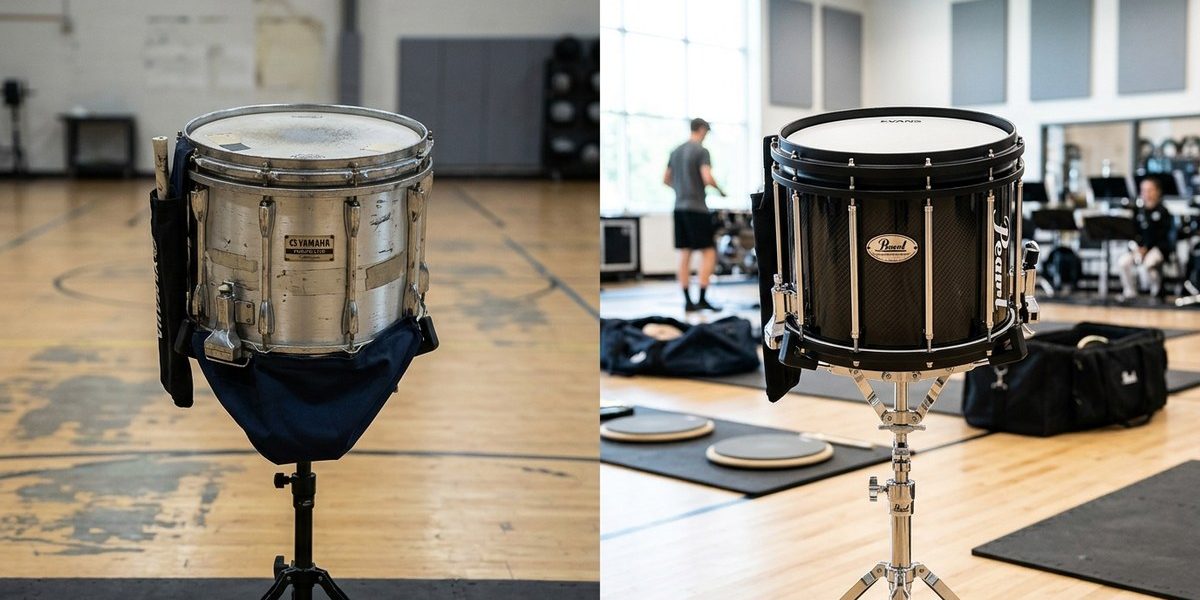
Your first marching snare drum probably came as part of a package deal. Maybe it was included with a school rental, or a parent grabbed the cheapest option online. It got you started, and that matters. But if you have been playing for a season or two and feel like your sound is thin, your rim shots rattle, or your hands are working twice as hard as they should, that drum might be the problem. The good news is you do not need to spend thousands to get a real upgrade. You just need to know what to look for.
Entry-level marching snares often use thin steel shells and low-quality hardware that choke your sound and limit dynamic range. Upgrading to a drum with a multi-ply maple or hybrid shell, reinforced lugs, and a reliable strainer transforms your articulation, projection, and control. The Yamaha SFZ or a used Pearl Championship series will outperform most new budget snares for less than you think.
Signs Your Current Snare Is Working Against You
You do not need to be a drum tech to notice when something is off. If you recognize any of these signs, your drum is likely holding you back.
- The shell rings or buzzes when you play fortissimo. Cheap steel shells vibrate in ways that muddy your attack. You want a shell that resonates clearly, not one that adds unwanted overtones.
- Your rim shots sound flat. A thin, poorly reinforced rim will never produce that crisp, cutting crack you hear from top drumlines.
- The strainer feels flimsy or slips mid-practice. If your snares disengage when you lay into a backbeat, the mechanism is failing.
- The drum is too heavy for its size. Some budget drums pack on weight with cheap materials, making marching harder than it needs to be.
- You cannot get a consistent tuning across the head. Tension rods that strip or pull unevenly are a clear sign of low-grade hardware.
If any of these sound familiar, you are ready for an upgrade.
What Makes a Marching Snare Drum Good for Beginners and Intermediates?
The best marching snare drum for beginners is not the cheapest one. It is the one that lets you grow without fighting your equipment. Here is what to prioritize.
Shell Material and Construction
The shell is the heart of the drum. Most high school and college lines use drums made from multiple plies of maple or a maple and birch hybrid. These shells provide a warm, focused tone that projects well outdoors. They also handle the tension of marching heads without distorting.
Avoid single-ply or thin steel shells for serious marching. They might be fine for a practice pad, but they cannot deliver the clarity and punch you need on the field.
Hardware That Holds Up
Marching is physically demanding. You need lugs that do not snap, a strainer that stays engaged, and a butt plate that can take abuse. Look for drums with die-cast or heavy-duty zinc lugs. The strainer should be a positive-locking design, not a simple lever that can be knocked off.
Weight and Balance
A good marching snare should feel balanced on the harness. Top-tier drums like the Yamaha SFZ or the Pearl Championship series use lightweight yet strong materials to keep the weight manageable. If you are a smaller player, this makes a huge difference during long rehearsals.
Head Compatibility
Your drum should accept standard 14-inch marching snare heads. Some budget drums use odd sizes that limit your head choices. Stick with a standard 14×12 inch size for the best selection of heads from Remo, Evans, or Aquarian.
The Best Marching Snare Drums for Beginners and Intermediates in 2026
These drums represent the sweet spot between cost and performance. They are used by high school lines, independent groups, and even some DCI corps.
| Drum Model | Shell Material | Weight | Price Range (Used) | Best For |
|---|---|---|---|---|
| Yamaha SFZ 14×12 | 6-ply maple/birch hybrid | Light | $400-$600 | All-around performance, great projection |
| Pearl Championship 14×12 | 6-ply maple | Medium | $350-$550 | Warm tone, classic feel |
| Mapex Marching Snare 14×12 | 6-ply maple | Medium | $300-$450 | Budget-friendly, solid hardware |
| Dynasty DS-2 14×12 | 6-ply maple | Medium | $200-$350 | Used workhorse, very durable |
Why These Drums Stand Out
The Yamaha SFZ is probably the most common drum on DCI and WGI finals tapes. Its hybrid shell gives you attack and warmth in one package. The Pearl Championship line has been a staple for decades and offers a round, musical tone that blends well in ensemble. Mapex offers a more affordable entry point without sacrificing hardware quality. The Dynasty DS-2 is a classic that you can often find used for a steal.
How to Choose the Right One for You
Follow this numbered process to make the best decision.
- Set a budget. Decide how much you can spend. Used drums in good condition are often better than new budget drums. Check local marketplaces and music store listings.
- List your priorities. Do you need the lightest drum possible? Are you chasing a specific tone? Write down what matters most.
- Test before you buy. If you can, play the drum. Listen for clarity at different dynamics. Check the hardware for any wobble or play.
- Inspect the strainer and snares. Make sure the mechanism engages fully and the snares lie flat across the head.
- Consider the harness. A great drum on a bad harness is still uncomfortable. Factor in the cost of a good harness if yours is worn out.
- Buy from a reputable source. Stick with music stores, online retailers with return policies, or trusted sellers in drum corps forums.
Common Mistakes When Upgrading
Even experienced players make these errors. Avoid them to get the most out of your new drum.
| Mistake | Why It Hurts | Better Approach |
|---|---|---|
| Buying a drum with a damaged shell | Cracks or warps ruin sound permanently | Always inspect the shell under good light |
| Ignoring the strainer quality | A bad strainer makes the drum unplayable | Test the mechanism multiple times |
| Choosing a drum that is too heavy | Fatigue leads to poor technique | Prioritize weight if you march long shows |
| Not checking head tension rods | Stripped rods prevent even tuning | Turn each rod by hand to check for smoothness |
| Forgetting the snare bed | A shallow or missing snare bed kills snare response | Look for a clean, deep snare bed on the bottom |
Expert Advice on Making the Switch
“Your drum is your voice on the field. If it is fighting you, you will never sound as good as you can. Spend your money on a used professional drum instead of a new beginner one. The difference is night and day.” – Former DCI snare section leader, 2018-2020
That advice holds true. A used Yamaha SFZ or Pearl Championship will serve you better for years than a brand new budget drum. The build quality and sound are simply in a different class.
What to Do After You Upgrade
Once you have a better drum, do not just set it up and play. Take these steps to get the most out of it.
- Install fresh heads. A new drum deserves new heads. Go with a Remo Black Max or Evans MX1 for a balanced sound.
- Tune carefully. Use a drum dial or your ear to get even tension across all rods. A well-tuned drum sounds effortless.
- Adjust your snares. The snare tension should be tight enough to respond but loose enough to let the drum breathe.
- Practice with purpose. Your new drum will reveal flaws in your technique. Use that as motivation to clean up your strokes and dynamics. You might find our guide on how to fix uneven double stroke rolls on snare drum helpful as you adjust.
- Maintain the hardware. Wipe down the shell and hardware after each use. Check the tension rods regularly.
Your Next Step Toward Better Sound
Your equipment should never be the reason you cannot improve. If your current marching snare drum is holding you back, the fix is simpler than you think. Focus on a used professional model with a quality shell and reliable hardware. The Yamaha SFZ and Pearl Championship lines are excellent starting points. With a better drum, your technique will shine through, and your sound will cut the way it should.
Take the time to find the right drum. Your hands, your ears, and your drumline will thank you.