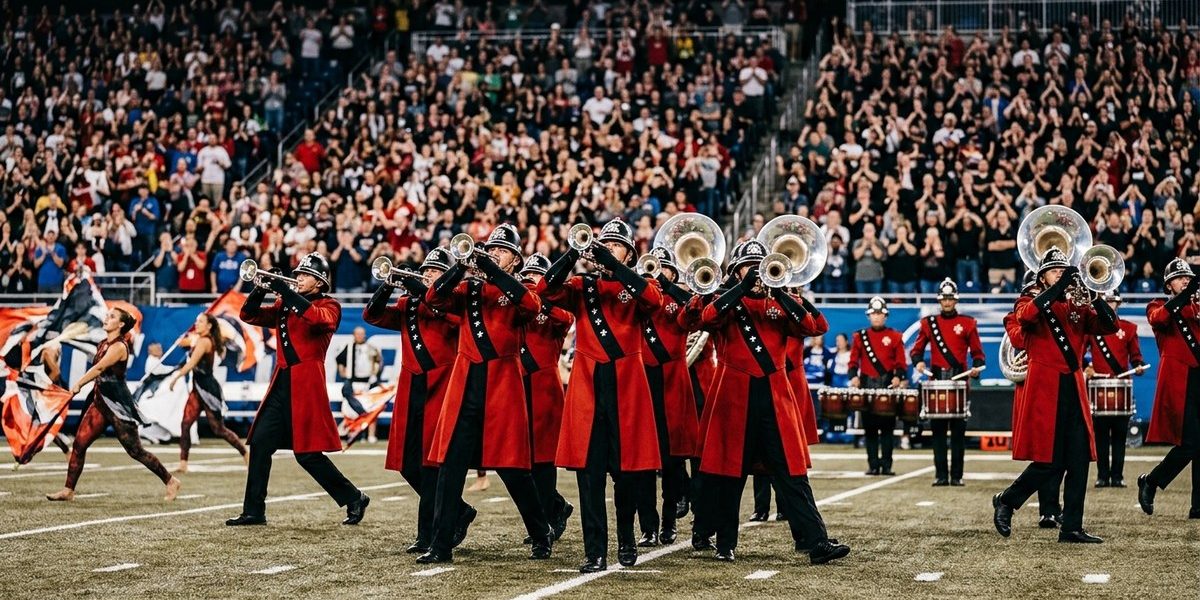
The Boston Crusaders stepped onto the field in 2018 with a show that turned heads and made jaws drop. Goliath wasn’t just another biblical story told through music and movement. It was a brass showcase that redefined what fans expected from the corps in crimson and white.
Boston Crusaders 2018 Goliath featured aggressive brass writing, powerful dynamic contrasts, and technical demands that pushed performers to their limits. The show’s brass impact came from strategic orchestration, fearless volume control, and moments of vulnerability that balanced the show’s dominant warrior theme. It earned the corps a fifth-place finish at [DCI Finals](https://www.dci.org/) and remains a fan favorite for its raw emotional power.
The Brass Writing That Made Goliath Unforgettable
The 2018 brass book didn’t hold back. Arranger Gino Cipriani crafted lines that demanded both technical precision and emotional commitment from every player.
The opener hit like a punch. Low brass laid down a foundation that felt more like an earthquake than a musical phrase. Mellophones and baritones carried aggressive counterlines that built tension from the first measure.
High brass had their moment too. Soprano lines soared above the ensemble with piercing clarity. These weren’t decorative flourishes. They were battle cries that cut through the texture and grabbed attention.
The contrast between loud and soft became a storytelling tool. One moment the brass section roared at fortissimo. The next they pulled back to barely audible pianissimo. This dynamic range kept audiences on edge throughout the entire 11 minutes.
Three Brass Moments That Defined the Show
-
The opening statement established the warrior theme immediately. Contrabasses and tubas created a rumbling foundation while the entire brass line built upward in a massive crescendo that announced the corps’ presence.
-
The ballad vulnerability showed a different side of the giant. Soft, sustained chords from the entire brass section created space for reflection. This wasn’t the aggressive warrior anymore. It was a character with depth and humanity.
-
The closer push brought everything together. The brass section threw everything they had into the final 90 seconds. Volume, technique, and emotion merged into a wall of sound that left audiences breathless.
How the Corps Built That Signature Sound
Building the Goliath brass sound required more than just playing loud. The corps focused on specific techniques that created their distinctive tone quality.
Breath support became non-negotiable. Players worked on sustaining phrases at extreme volumes without losing tone quality. The breathing exercises that brass players practice became daily requirements.
Section balance mattered just as much as individual technique. Low brass couldn’t overpower the mellophones. Sopranos needed to project without sounding shrill. Every section had to listen across the ensemble and adjust in real time.
Articulation clarity separated good performances from great ones. Even at maximum volume, every note needed a clear attack and release. Sloppy articulation would have turned powerful moments into muddy noise.
“The brass staff pushed us to find power without tension. We had to play aggressively without forcing the sound. That balance took months to develop.” – 2018 Boston Crusaders brass member
Breaking Down the Technical Demands
The brass book threw challenges at performers from multiple angles. Understanding these demands helps explain why the show made such an impact.
| Technical Element | Challenge | Solution Approach |
|---|---|---|
| Dynamic Range | Extreme shifts between ff and pp | Controlled air speed, embouchure flexibility |
| Endurance | Sustained high volume passages | Strategic breathing, efficient technique |
| Intonation | Maintaining pitch at extreme dynamics | Constant listening, air support adjustments |
| Articulation | Clean attacks at fast tempos | Tongue precision, air consistency |
| Blend | Unified sound across all sections | Section rehearsals, individual tone work |
The Orchestration Choices That Created Impact
Cipriani made specific orchestration decisions that amplified the show’s emotional punch. These weren’t random choices. Each decision served the narrative.
Unison passages created moments of overwhelming power. When the entire brass line played the same rhythm, the impact was visceral. These moments felt like the giant taking a step forward.
Layered textures added complexity during transitional sections. Different sections entered at staggered times, building intensity gradually rather than hitting peak volume immediately.
Exposed solos and duets provided contrast to the full ensemble moments. A single mellophone or a pair of baritones could carry an entire phrase, showing vulnerability before the next powerful statement.
The front ensemble supported these choices without competing. The pit added color and texture but never fought the brass for attention. This balance let the brass shine when it mattered most.
Why the Ballad Changed Everything
The middle ballad section shifted the show’s entire trajectory. After aggressive opening statements, the corps pulled back completely.
Soft brass chords created space for introspection. The warrior giant revealed his humanity. This wasn’t weakness. It was depth.
The soprano soloist carried the emotional weight of this section. Exposed and vulnerable, the solo line floated above sustained pads from the rest of the brass. Every note mattered. Every breath was audible.
This contrast made the return to power even more effective. When the brass section built back to forte, it felt earned rather than forced. The emotional journey gave the volume meaning beyond just playing loud.
Common Mistakes Corps Make That Boston Avoided
Many corps try to create powerful brass moments but fall into predictable traps. Boston’s approach in 2018 sidestepped these issues.
- Playing loud without control creates noise instead of impact
- Ignoring dynamic contrast makes everything sound the same
- Sacrificing tone quality for volume loses the audience
- Rushing through soft passages to get back to loud parts
- Forgetting that silence has power between phrases
Boston understood that power comes from contrast. The soft moments made the loud moments matter. The silences made the sound more impactful.
The Visual Program That Supported the Brass
The visual design didn’t compete with the brass. It amplified it. When the brass section roared, the drill created shapes that reinforced the power. When they pulled back, the visual program created space and stillness.
Body movement matched the musical intensity. Aggressive passages featured sharp, angular movements. Softer sections used flowing, sustained motion. This coordination between sound and movement created a unified artistic statement.
The guard work added another layer without cluttering the field. Flag tosses punctuated brass hits. Weapon work created visual rhythm that matched musical phrases. Everything served the same narrative goal.
How Goliath Influenced Modern Brass Writing
The 2018 show left its mark on how designers approach brass books. Several trends in modern drum corps trace back to choices Boston made that summer.
Extreme dynamic contrast became more common. Corps realized that pulling back to near silence made the loud moments more effective. The all-loud-all-the-time approach started feeling dated.
Aggressive low brass writing gained popularity. Designers started giving contrabasses and tubas more prominent melodic material instead of just holding down roots and fifths.
Emotional vulnerability found its place in traditionally powerful shows. Designers learned they could tell warrior stories while still showing human depth.
The show proved that technical difficulty and emotional impact weren’t mutually exclusive. A brass book could demand everything from performers while still moving audiences to tears.
Practice Strategies That Built the Sound
The brass section didn’t achieve their sound by accident. Specific practice approaches developed the technical skills and ensemble unity the show required.
Individual practice focused on fundamentals. Players worked on building a solid practice routine that addressed tone quality, articulation, and endurance separately before combining them.
Section rehearsals built unity within each part. Sopranos worked on matching sound and phrasing. Low brass focused on creating a unified foundation. Mellophones and baritones developed their counterline identity.
Full ensemble rehearsals brought everything together. The brass staff emphasized listening across sections. Players learned to adjust their sound based on what they heard around them, not just their own section.
The staff also addressed common warmup mistakes that could have undermined the sound quality they were building.
The Scoring Impact at Finals
Goliath earned Boston Crusaders a fifth-place finish at the 2018 DCI World Championships. The brass caption specifically received high marks for execution and effect.
Judges praised the dynamic control and tonal quality throughout the show. The corps demonstrated that volume didn’t have to come at the expense of characteristic sound.
The ensemble achievement scores reflected the unified approach to the brass book. All sections worked together rather than competing for attention.
Effect judges responded to the emotional journey. The show’s arc from aggressive power to vulnerable humanity and back to triumphant strength resonated with audiences and judges alike.
Comparing Goliath to Other Powerful Brass Shows
Boston’s 2018 production sits alongside other memorable brass-focused shows in drum corps history. Each approached power differently.
Bluecoats 2014 Tilt used asymmetry and unexpected angles to create impact. Their brass writing supported visual innovation rather than leading it.
Carolina Crown’s 2013 E=mc² built power through sustained intensity and relentless energy. Their approach was more consistent volume rather than extreme contrast.
The Cavaliers’ 2002 Frameworks demonstrated power through precision and architectural design. Their brass writing supported geometric visual concepts.
Goliath stood out by combining aggressive power with emotional vulnerability. The brass book told a complete character story rather than just showcasing technical ability.
The Fan Response That Made It a Favorite
Audiences connected with Goliath in ways that extended beyond the competitive season. The show developed a passionate fan following that continues years later.
Social media reactions during the 2018 season showed fans responding to specific brass moments. The opener and closer generated particular excitement. Video clips of these sections spread widely among drum corps communities.
Fan forums discussed the brass writing extensively. Performers and educators analyzed the orchestration choices. Amateur brass players tried to recreate the sound in their own programs.
The show’s accessibility played a role in its popularity. The biblical narrative gave audiences a clear story to follow. The brass writing supported that story without requiring technical knowledge to appreciate.
What Current Corps Can Learn From the Approach
Modern corps looking to create impactful brass moments can study several aspects of the Goliath approach.
Contrast creates impact more effectively than constant volume. Give your brass section moments to pull back so the powerful sections hit harder.
Emotional depth strengthens aggressive themes. Showing vulnerability doesn’t weaken a warrior narrative. It makes the power more meaningful.
Technical demands should serve the story. Difficulty for its own sake doesn’t move audiences. Difficulty that supports emotional expression does.
Section balance matters as much as individual skill. A unified sound at mezzo forte beats an unbalanced sound at fortissimo every time.
Strategic orchestration amplifies natural strengths. Know what your brass section does best and write to highlight those abilities.
Why This Show Still Resonates With Brass Players
Years after the 2018 season, brass players still study and discuss Goliath. The show offers lessons that extend beyond that specific summer.
The brass book demonstrates how technical demands can enhance rather than detract from musical expression. Players learn that difficulty serves artistry, not the other way around.
The dynamic control required teaches valuable skills about air management and tone production. These fundamentals transfer to any musical context beyond drum corps.
The emotional commitment the show demanded reminds performers that technique alone doesn’t move audiences. You have to believe in what you’re playing and commit fully to the character.
For brass educators, the show provides a model of how to build power without sacrificing characteristic sound. The Boston brass staff proved you can have both volume and quality.
The Lasting Impact on the Corps Identity
Goliath marked a turning point for Boston Crusaders. The corps had always been competitive, but this show established them as a brass powerhouse in the modern era.
The success influenced programming decisions in subsequent seasons. The corps continued pursuing shows that featured the brass section prominently while maintaining emotional depth.
Recruitment benefited from the show’s popularity. Young brass players wanted to be part of a corps known for powerful, expressive brass writing. The 2018 season created momentum that carried forward.
The show also influenced how fans and judges perceived the corps. Boston became known for taking risks and committing fully to bold artistic choices. That reputation opened doors for future creative exploration.
How the Brass Section Stays Powerful Through an Entire Season
Maintaining the level of performance Goliath demanded required careful attention to physical and mental endurance throughout the summer.
Progressive intensity during spring training built endurance gradually. The brass staff didn’t expect full performance intensity on day one. They built toward it systematically.
Recovery time between shows prevented burnout. The corps scheduled lighter rehearsals after particularly demanding performances. Rest became part of the training plan, not a luxury.
Individual maintenance kept players healthy. Members learned to recognize fatigue and address it before it became injury. Small adjustments to technique prevented larger problems.
Mental preparation mattered as much as physical readiness. The emotional demands of the show required psychological stamina. The staff addressed mental health and stress management throughout the season.
Understanding how to prevent lip fatigue became essential for every brass player in the corps.
The Design Team Behind the Sound
The creative team for Goliants brought specific expertise that shaped the final product.
Gino Cipriani’s brass arrangements combined technical demands with musical expression. His understanding of what made brass writing effective at the highest level showed in every phrase.
The brass caption heads translated those arrangements into teachable concepts. They broke down complex passages into manageable components that members could master progressively.
The design team collaborated rather than working in silos. Visual designers, brass staff, and percussion coordinators communicated constantly to ensure all elements supported the same artistic vision.
This collaborative approach prevented the common problem of different captions competing for attention. Everything served the story.
Breaking Down the Closer That Brought Audiences to Their Feet
The final 90 seconds of Goliath delivered everything fans wanted. The brass section pulled out all the stops for a finish that earned standing ovations throughout the season.
The buildup started subtly. Sustained brass chords created anticipation. The volume increased gradually rather than jumping immediately to maximum intensity.
Rhythmic hits punctuated the melodic line. These accents gave the closer a driving pulse that built excitement. Each hit felt inevitable yet still surprising.
The final chord held longer than expected. The brass section sustained maximum volume and maintained pitch center while the visual program completed its final form. That sustained power created a lasting impression that lingered after the sound cut off.
Fans still discuss unforgettable closer moments from various shows, and Goliath’s finish consistently makes the list.
What Made the Risk Worth Taking
Programming a show this aggressive and demanding carried significant risk. The brass book could have overwhelmed performers or alienated audiences if executed poorly.
The corps committed fully to the concept. Half measures wouldn’t work with a show called Goliath. The performers, staff, and administration all bought into the vision completely.
The risk paid off because the execution matched the ambition. The brass section delivered on the promises the arrangements made. Technical mastery met emotional commitment.
The audience response validated the approach. Fans didn’t just appreciate the show. They connected with it emotionally and remembered it years later.
Bringing the Giant to Life Through Sound
Boston Crusaders 2018 Goliath succeeded because the brass section didn’t just play notes. They embodied a character and told a story through sound.
The aggressive power represented the giant’s physical dominance. The soft vulnerability showed his humanity. The triumphant conclusion demonstrated his ultimate victory, not just over others but over his own limitations.
This complete character arc, told primarily through brass writing and performance, created an experience that transcended typical drum corps shows. It became a narrative that audiences could follow and feel invested in.
The technical demands served that story rather than existing for their own sake. Every difficult passage, every extreme dynamic, every sustained high note contributed to the character development.
That’s why the show remains a fan favorite. It wasn’t just impressive. It was meaningful. The brass impact came from understanding that power without purpose is just noise, but power in service of a story becomes art.