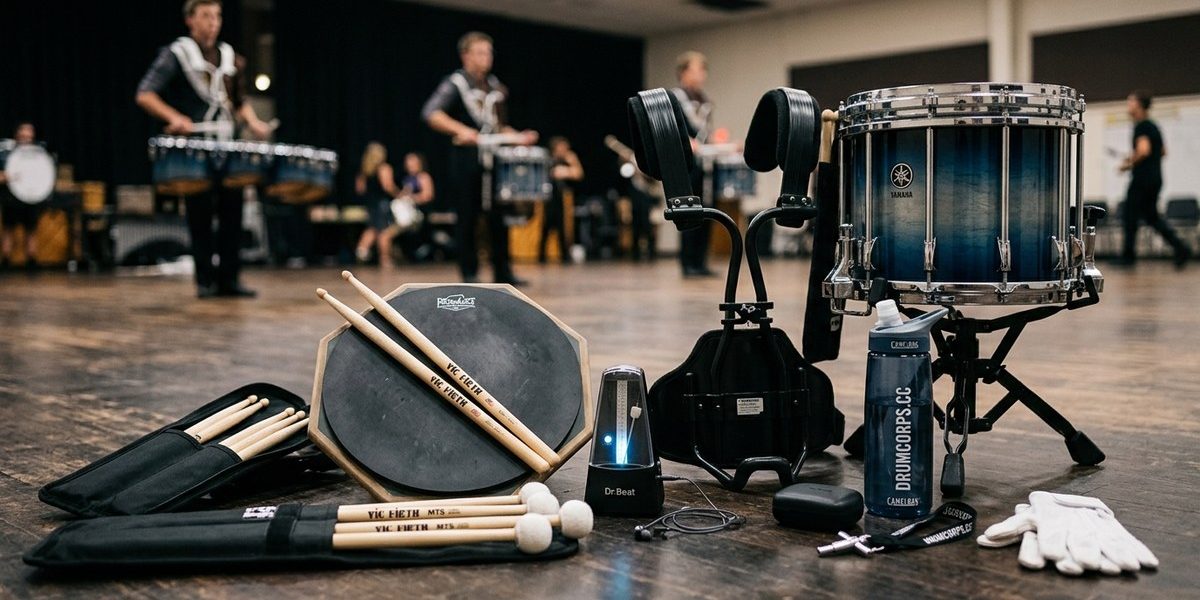
Getting ready for a marching season involves more than just rehearsing routines and perfecting your sound. It’s about ensuring you have the right gear to perform confidently and maintain your instrument in top shape. From sticks to tuning accessories, every piece of equipment plays a role in your success on the field. Proper gear makes rehearsals more productive and performances more polished. Let’s explore the marching percussion gear essentials every percussionist should consider.
The Core Equipment Every Percussionist Needs
The foundation of your marching percussion gear is designed to support your playing, protect your instrument, and help you stay comfortable during long rehearsals and shows. Investing in quality equipment will pay off in sound quality and durability.
1. Quality Drumsticks and Mallets
Your sticks and mallets are your primary tools. Choosing the right size and weight depends on your instrument and playing style. A typical marching snare player prefers sticks with a length of about 16 inches and a diameter of .690 inches. For quads and other percussion instruments, consider specialized mallets that produce the desired tone and allow for control during fast passages.
2. Tuning and Maintenance Accessories
Keeping your drums sounding their best is key. Essential tools include a high tension drum key, tuning fork, and a drum dampening system. Regularly tuning your drums prevents sound inconsistencies and ensures a professional performance. For outdoor gigs, consider weather-resistant drum heads and moisture control devices to maintain pitch.
3. Protective Gear and Accessories
Protecting your hands and sticks is vital. Vinyl stick tape can improve grip and reduce blisters during intense practice sessions. Additionally, marching gloves help with grip and prevent slipping, especially in humid conditions. For snare drums, a high-quality drum strap or harness system distributes weight evenly, reducing fatigue.
Practical Processes for Gear Preparation
Getting your gear ready for the season involves a few straightforward steps. Follow this process to ensure your equipment is always performance-ready.
- Inspect and replace worn sticks and mallets regularly to avoid breakage during performances.
- Tune your drums consistently, using a tuning fork or electronic tuner, before each rehearsal.
- Apply stick tape or gloves to improve grip, especially during long rehearsals or hot days.
Scanning the Gear Checklist
For quick reference, here’s a list of essential items every marching percussionist should have:
- Practice pads for off-field warmups
- Spare sticks and mallets of different sizes
- Tuning tools and moisture control products
- Stick tape and gloves
- Drum heads and tuning keys
- Harnesses or straps for bass and tenor drums
Techniques and Mistakes to Avoid
Proper technique is crucial in percussion performance. Here’s a quick comparison table to clarify common practices versus mistakes:
| Technique | Common Mistake |
|---|---|
| Maintaining relaxed grip | Clenching sticks, causing fatigue |
| Consistent tuning | Ignoring regular maintenance |
| Using appropriate stick size | Using oversized or undersized sticks |
| Proper stick height | Holding sticks too high or low |
| Applying even pressure | Uneven articulation or sound |
Expert advice: “Always check your equipment before every rehearsal. Small issues like loose tuning or worn sticks can affect your entire performance,” says percussion coach Lisa Martinez.
Additional Gear That Enhances Your Performance
Beyond the basics, certain accessories can help you achieve a more polished sound and improve your comfort on the field.
- Weather-resistant cases protect your gear during outdoor performances.
- Dampening materials like gels or tapes can help control unwanted overtones.
- Portable tuning devices allow quick adjustments during competitions.
- Footwear suited for marching provides stability and reduces fatigue.
Maintaining Your Equipment for Peak Performance
Proper maintenance extends the lifespan of your gear and keeps your sound consistent. Here are key tips:
- Regularly clean and inspect drum heads for dents or tears.
- Tighten hardware and replace worn parts promptly.
- Store your equipment in a climate-controlled environment when not in use.
- Use weather-resistant covers during outdoor rehearsals and performances.
Final Tips for a Smooth Season
Organize your gear at the start of each season. Label your sticks, mallets, and accessories for easy identification. Practice with your equipment regularly to develop muscle memory and comfort. Remember, the right gear combined with good techniques makes a visible difference in your overall performance.
Gear Up for Success on the Field
Having the right marching percussion gear creates a solid foundation for a successful season. It boosts confidence, enhances sound, and reduces the risk of equipment failure. Spend time selecting quality items and maintaining your gear diligently. With proper preparation, you’ll be able to focus on delivering your best performance every time.
Your Path to a Seamless Season
Approach your gear setup with care and attention. Invest in what matters most for your instrument and playing style. Keep your equipment in excellent condition and always be prepared with backups. This simple yet effective approach helps you avoid last-minute surprises and keeps your focus where it belongs — on the music and performance.