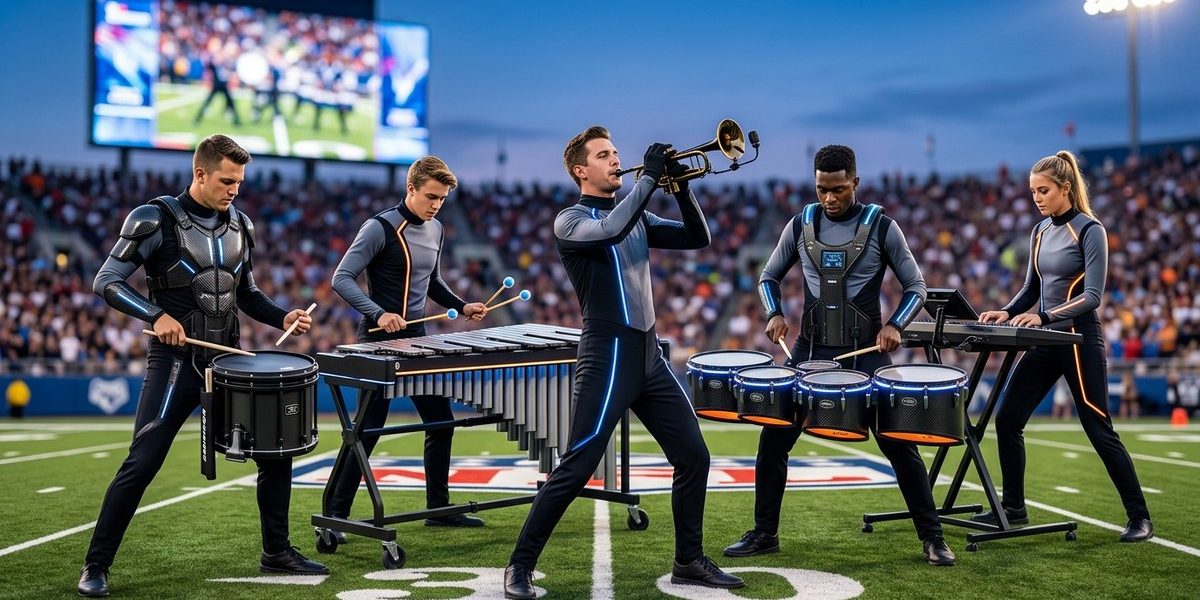
The 2026 drum corps season is here, and if you have been watching early season rehearsals or following corps social media feeds, you have probably noticed something different. The gear looks sharper, sounds cleaner, and in some cases, feels almost futuristic. Design teams and caption heads are pushing equipment boundaries in ways that would have seemed unlikely just a few years ago. Whether you are marching this summer or just following from the stands, understanding these shifts will help you spot the innovations shaping the activity right now.
Five major gear trends are reshaping the 2026 drum corps landscape: smart wearable tech for real time performance feedback, sustainable uniform materials that reduce environmental impact, hybrid brass instruments blending acoustic and digital sound, lightweight carbon fiber percussion carriers, and modular pit setups designed for faster transitions. Each trend reflects a deeper shift toward efficiency, durability, and artistic flexibility.
Smart Wearables Are Becoming Standard Issue
The most talked about trend this season is the rise of smart wearable technology. Several top twelve corps have started issuing members sensor equipped wristbands and in ear monitoring systems that track heart rate, breathing patterns, and even muscle fatigue during rehearsal blocks.
Why does this matter for drum corps? Because the physical demands of a ten minute show are extreme. A brass player holding a fortissimo passage while moving at a run needs to manage oxygen intake carefully. Smart bands give caption heads real time data on which members might be pushing into red zones. That allows techs to adjust pacing during ensemble blocks before injuries happen.
Some corps are also using small clip on accelerometers that attach to drumsticks and mallets. These devices measure stroke angle, velocity, and consistency. Percussion techs can review data after a run and identify which players are dropping stick heights or flamming during difficult passages.
This is not about surveillance. It is about giving members better feedback. If you are a snare drummer struggling with consistency on a specific drill move, seeing your actual stick height data on a screen can be more helpful than a tech telling you to play lower.
Sustainable Uniforms That Actually Last
Uniforms have always been a point of pride in drum corps. But this year, sustainability is driving design choices in a major way. Several corps have partnered with manufacturers to create uniforms made from recycled polyester and plant based dyes. The fabrics are lighter, breathe better under hot stadium lights, and hold color longer after repeated washing.
The old approach of replacing full uniforms every two or three seasons is fading. Corps are investing in modular uniform systems. Think interchangeable jacket panels, zip on sashes, and reversible bibbers. A single base uniform can transform from a traditional military style look to a contemporary aesthetic by swapping a few pieces. That saves money and reduces textile waste.
One designer told us that the average 2026 uniform weighs about 15 percent less than its 2022 counterpart. That might not sound like much, but after a full tour of 90 plus shows, every ounce counts. Members report feeling less restricted in their upper body movement, which helps with horn carriage and visual phrasing.
Hybrid Brass Instruments Bridge Acoustic and Digital
This trend might surprise traditionalists. Several corps are experimenting with hybrid brass instruments that include embedded digital pickups and small onboard processors. These are not electronic replacements. They are acoustic brass horns with the ability to blend in subtle digital layers or adjust tuning on the fly.
Here is how it works. A small sensor mounted inside the bell captures the acoustic waveform. A processor can add a touch of reverb or a harmonic overtone that helps the section sound more unified across the field. The player still buzzes and breathes normally. The digital layer is just a polish.
The biggest benefit is intonation. Outdoor performances are at the mercy of temperature and wind. A digital tuner that adjusts pitch in real time can help a brass line stay locked in even when conditions change mid show. Some purists are skeptical. But early feedback from brass caption heads suggests that when used sparingly, the effect is subtle and powerful.
If you are a brass player looking to improve your own sound, check out our guide on 5 Essential Breathing Exercises Every Brass Player Should Master. It pairs well with understanding how these new horns support your air stream.
Lightweight Carbon Fiber Carriers for Battery
Percussion carriers have been a pain point for decades. Metal frames are heavy. They dig into shoulders. They limit movement. The 2026 season is seeing a major shift toward carbon fiber and reinforced polymer carriers for snare drums, tenors, and bass drums.
These new carriers are dramatically lighter. A tenor carrier that used to weigh twelve pounds now comes in under seven. The material absorbs shock better, so the drum feels more stable during fast drill moves. And because carbon fiber does not rust or corrode, the gear lasts longer in humid summer conditions.
The real game changer is ergonomic adjustability. Older carriers had limited points of adjustment. New designs allow players to dial in the fit for their exact torso length and shoulder width. That means less fatigue during long rehearsal days and fewer chronic injuries over the course of a season.
Drumline members who have switched to carbon fiber carriers report feeling fresher during the third run of a show block. That extra energy translates directly into cleaner playing and better visual performance.
Modular Pit Setups for Faster Transitions
Front ensemble gear is getting a modular makeover. In 2026, several corps are using a new system of interlocking stage platforms and instrument carts that allow pit crews to reconfigure setups in under two minutes.
Traditionally, changing the pit layout between shows or during a performance required multiple people lifting and moving heavy equipment. The new system uses wheeled carts with locking mechanisms that snap together like building blocks. Each cart holds a specific instrument or group of instruments. Crews roll them into position, lock them in place, and the setup is ready.
This trend has two major effects. First, it allows designers to write more dynamic front ensemble staging. Instruments can shift positions mid show to create visual interest or support a storytelling moment. Second, it reduces setup time at competitions, which gives members more time to warm up and focus.
For pit percussionists, this means learning to adapt to changing positions on the field. If you want to build that flexibility into your individual practice, our guide on How to Build a Perfect 30-Minute Individual Practice Routine offers a solid framework.
How These Trends Affect Your Gear Choices
If you are a current member or someone preparing for auditions next season, these trends should influence how you think about your own equipment. You do not need to buy the most expensive carbon fiber carrier or a hybrid brass horn. But understanding where the activity is heading helps you make smarter purchases.
Here is a simple checklist to guide your gear decisions:
- Look for modularity. Can your uniform pieces be swapped or adjusted? Will your carrier fit your body type?
- Prioritize weight. Lighter gear reduces fatigue. Every ounce matters over a ten hour rehearsal day.
- Consider durability. Materials like carbon fiber and recycled polyester hold up better than traditional options.
- Embrace data. If you can afford a simple smart band or a practice pad with sensors, the feedback will improve your playing faster than guesswork.
Comparing Old Gear to New Gear
To make the differences clearer, here is a breakdown of how traditional equipment stacks up against the 2026 trends.
| Gear Category | Traditional Option | 2026 Trend Option | Key Advantage |
|---|---|---|---|
| Uniform | Heavy polyester, single piece | Modular recycled fabric, interchangeable panels | Weight reduction, breathability, cost savings |
| Brass instrument | Standard acoustic Bb horn | Acoustic horn with digital pickup | Real time intonation correction, blended sound |
| Percussion carrier | Steel or aluminum frame | Carbon fiber reinforced frame | 40 percent lighter, better ergonomics |
| Pit setup | Individual stands and tables | Locking wheeled carts | Faster transitions, flexible staging |
| Performance tracking | Verbal feedback from techs | Wearable sensor with data logging | Objective measurement of effort and technique |
What This Means for Your Marching Future
The 2026 drum corps gear trends are not just about having shiny new toys. They reflect a deeper shift in how the activity approaches performance and member wellness. Smart wearables help prevent injuries. Sustainable uniforms cut costs and environmental impact. Hybrid horns improve sound quality. Lightweight carriers protect your body. Modular pits give designers more creative freedom.
If you are planning to audition for a corps in the next year or two, start paying attention to these developments now. Watch rehearsal footage from this season. Notice which corps are using new gear and how it affects their sound and movement. Talk to members at camps about what they like and dislike about their equipment.
For more context on how these trends fit into the bigger picture, read our analysis of How Drum Corps Are Using AI to Design Their 2026 Shows. It pairs nicely with this gear focused look.
Gear Up for the Season Ahead
The best approach to the 2026 season is to stay curious. Try new equipment when you can. Ask questions. Pay attention to what works for the top corps and what does not. Gear will keep evolving, but your fundamentals are what carry you through. Use the tools available to you, whether that is a smart band or a lighter carrier, and keep building the skills that matter most.
Now get out there and make some noise.