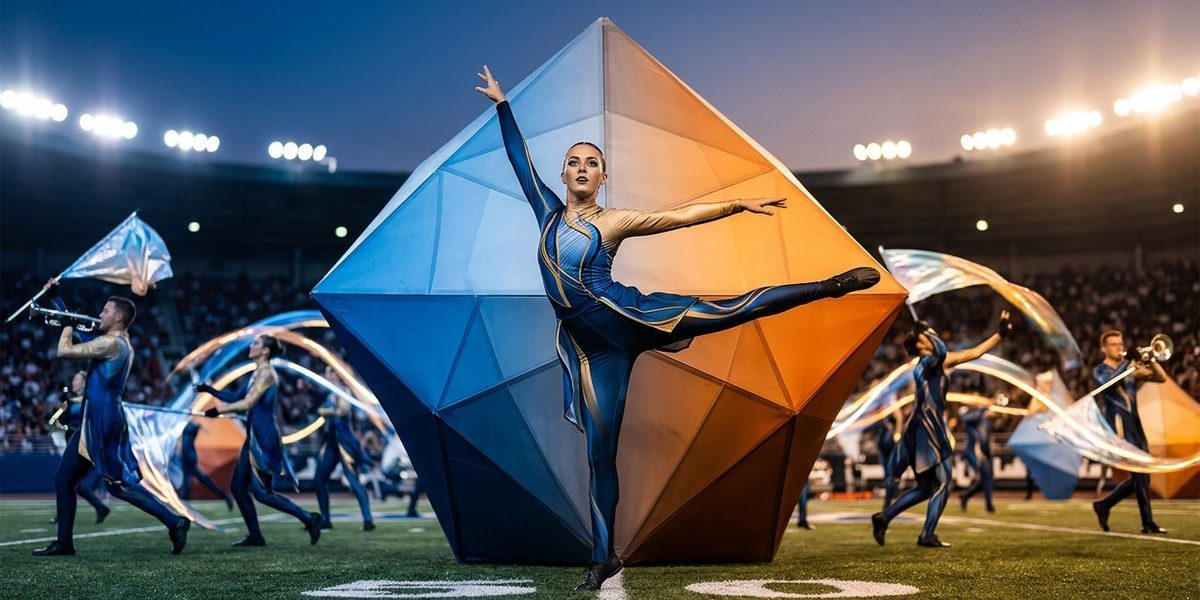
The first time you see the 2026 Blue Devils Equinox, something feels different. It is not just the music, though the arrangement is stunning. It is not just the drill, though the geometry is flawless. It is the way the story moves through space. Every step, every pause, every glance from the performers feels intentional. This show did not just win on execution. It won because it changed how we think about visual storytelling in drum corps.
The 2026 Blue Devils Equinox redefined visual storytelling by treating every performer as a narrative agent, not just a dot on a grid. Through layered motion, negative space, and emotional pacing, the corps created a show where the field itself became a character. Designers and fans can learn from these techniques to build more human, more powerful productions.
The Shift From Precision to Presence
For years, drum corps visual design has been about one thing: perfection. Straight lines. Exact intervals. Uniform angles. The Blue Devils themselves built a dynasty on that kind of precision. But with Equinox, they made a subtle but powerful pivot.
The show still has moments of surgical accuracy. But those moments serve a larger purpose. They frame the spaces in between. The empty parts of the field become just as important as the crowded ones. Performers hold still not because they are waiting, but because their stillness carries meaning.
Think of it like a conversation. In normal speech, the words matter. But the pauses, the breaths, the silence between sentences, that is where the real emotion lives. Equinox applied that idea to the football field.
“We stopped asking ‘where should they stand?’ and started asking ‘what should they feel?'” said one of the show’s visual designers in a post-season interview. “Once we answered that, the drill wrote itself.”
Three Techniques That Changed the Game
The 2026 Blue Devils Equinox visual storytelling relied on three core techniques. Each one broke away from traditional drum corps design.
-
Performer-led narrative focus. Instead of using the entire ensemble to create one massive shape, the designers isolated small groups or even single performers to carry key emotional beats. A single horn player walking slowly across the back sideline told the story of a character leaving something behind. The audience followed that one person, not the whole corps.
-
Negative space as a storytelling tool. The field often had large empty zones. These gaps were not mistakes. They were intentional pauses that let the audience breathe. When the corps finally filled those spaces, the impact hit harder. The contrast between empty and full became a visual rhythm.
-
Layered motion speeds. Not everyone moved at the same tempo. Some sections marched in 8-to-5 while others moved at half speed or held still. This created a sense of depth, like looking at a painting where the foreground and background move at different rates. It made the field feel three-dimensional.
These techniques did not just look cool. They served the story. The show’s theme, centered on the idea of balance and change, came through in every visual choice.
How to Apply Equinox Principles to Your Own Design
If you are a show designer or a visual caption head, you might wonder how to bring these ideas into your own work. The good news is that you do not need a championship budget. You just need a shift in mindset.
Here is a practical process you can use:
-
Identify your story’s emotional beats. Before you write a single drill set, map out the emotional arc of your show. Where does the conflict live? Where is the resolution? Mark those moments on your timeline.
-
Assign narrative roles to performers. Not everyone is a background mover. Give specific performers or small groups a job that advances the story. Maybe a single guard member represents a memory. Maybe a brass player walking alone signals isolation.
-
Choreograph the pauses. Plan where the field will be empty. Decide how long the silence lasts. Then watch what happens when you fill it. The timing of those fills is everything.
-
Layer your tempos. Experiment with different movement speeds across the ensemble. Use half-time or double-time to create visual texture. Make sure the audience can see the difference clearly from the stands.
-
Rehearse with intention. Run the show without music. Just watch the visual arc. If a moment feels flat, change the spacing or the speed. Trust your eyes.
This approach works for any size ensemble. A high school marching band can use these same ideas to tell a clearer story. The scale changes, but the principles stay the same.
Techniques and Common Mistakes in Visual Storytelling
Understanding what works is only half the battle. Knowing what to avoid is just as important. Here is a table that breaks down effective techniques versus common mistakes.
| Effective Technique | Common Mistake | Why It Matters |
|---|---|---|
| Isolating a single performer for emotional weight | Keeping the entire ensemble in constant motion | The audience needs a focal point to connect with the story |
| Using negative space to create contrast | Filling every yard line with bodies | Empty space gives the eye a place to rest and makes entrances more powerful |
| Varying movement speeds across sections | Marching every phrase at the same tempo | Layered motion creates depth and visual interest |
| Pausing for dramatic effect | Rushing through transitions | A held moment can speak louder than any drill move |
| Letting performers use subtle body language | Keeping everyone in rigid show position | Human movement builds empathy and emotional connection |
The biggest takeaway here is simple. Visual storytelling is not about how much you do. It is about what you choose to do and when you choose to stop.
What Designers Can Learn From Equinox
If you are a show designer, you already know that every season brings new pressure. Judges want innovation. Fans want entertainment. Performers want a show they can believe in. The 2026 Blue Devils Equinox proves that these three things are not in conflict.
The show’s visual package earned some of the highest scores in DCI history. But it also connected with audiences in a way that felt personal. Fans did not just watch the show. They felt it.
One reason for that connection is the way Equinox treated its performers as people, not as pieces on a chessboard. The choreography allowed for individual expression within the ensemble. A horn player could shift their weight. A guard member could turn their head at a specific moment. These small choices added up to a performance that felt alive.
For designers, the lesson is clear. You can build a show that is both technically brilliant and emotionally resonant. The two are not opposites. They are partners.
The Role of Unison and Contrast
Unison is a powerful tool in drum corps. When 80 people move exactly the same way at the same time, it sends a message of unity and power. Equinox used unison sparingly, which made those moments hit harder.
But the real magic came from contrast. The show moved between chaos and order, between stillness and motion, between loud and quiet. These shifts did not feel random. They felt like the natural rhythm of a story.
Think about a movie. A great director does not keep the camera moving all the time. They hold on a close-up. They let the silence stretch. Then they cut to action. Equinox did the same thing on a football field.
If you want to improve your own visual storytelling, start by mapping out your contrast points. Where does the show feel chaotic? Where does it feel calm? How do you move from one to the other? The answers will guide your design.
Applying These Ideas to Your Practice
You do not have to be a designer to use these lessons. If you are a performer, you can bring the same awareness to your own marching. Pay attention to the spaces between the notes. Notice how your body language affects the story.
Here are a few ways to practice with intention:
- Watch a video of Equinox with the sound off. Focus only on the visual arc. Notice where your eyes go.
- Rehearse a single transition from your own show. Try it at half speed. See if the story still reads.
- Ask a friend to watch your section and describe what they think is happening. If their answer matches your intent, you are on the right track.
For more on building consistency in your own practice, check out how to build a perfect 30-minute individual practice routine. It will help you bring that same intentionality to your daily work.
Why Equinox Stands Alone
Every season, a few shows get called “game changers.” But most of them change the game in small ways. A new sound. A new prop. A new uniform. Equinox changed the game by changing the question.
Instead of asking “how do we move from point A to point B?” the designers asked “how do we make the audience feel something at point A and something different at point B?” That shift in thinking opened up a whole new vocabulary of visual storytelling.
The show also benefited from a design team that trusted the performers. The members were not just executing counts. They were acting. They were reacting. They were telling a story with their whole bodies.
If you watch the show from the stands, you might not notice every detail. But you will feel the difference. That is the mark of great visual storytelling. It works even when you do not know why.
The Future of Visual Storytelling in Drum Corps
The 2026 Blue Devils Equinox did not just set a new standard. It opened a door. Other corps are already studying the footage. Designers are taking notes. The next few seasons will likely see more shows that prioritize narrative over geometry, emotion over precision.
That does not mean precision is dead. Far from it. The best shows will combine both. They will use the discipline of traditional marching to frame the freedom of human expression.
If you are a fan, get ready for a new era. If you are a designer, start experimenting. If you are a performer, know that your role is bigger than your dot on the field. You are a storyteller.
For more inspiration, take a look at what made the 2026 bluecoats reverie the most emotionally gripping show of the season. It pairs beautifully with the lessons from Equinox.
Building Your Own Visual Vocabulary
The best way to honor what Equinox achieved is to apply its lessons. Start small. Pick one moment in your next show and ask yourself: what is the story here? Then design around that answer.
You might find that the most powerful moments are not the loudest or the fastest. They are the ones where the field goes quiet, where one person walks alone, where the audience leans forward to see what happens next.
That is the legacy of the 2026 Blue Devils Equinox. It reminded us that visual storytelling is not about filling space. It is about making space matter.
So go ahead. Map out your emotional beats. Choreograph your pauses. Trust your performers to carry the story. The field is waiting.