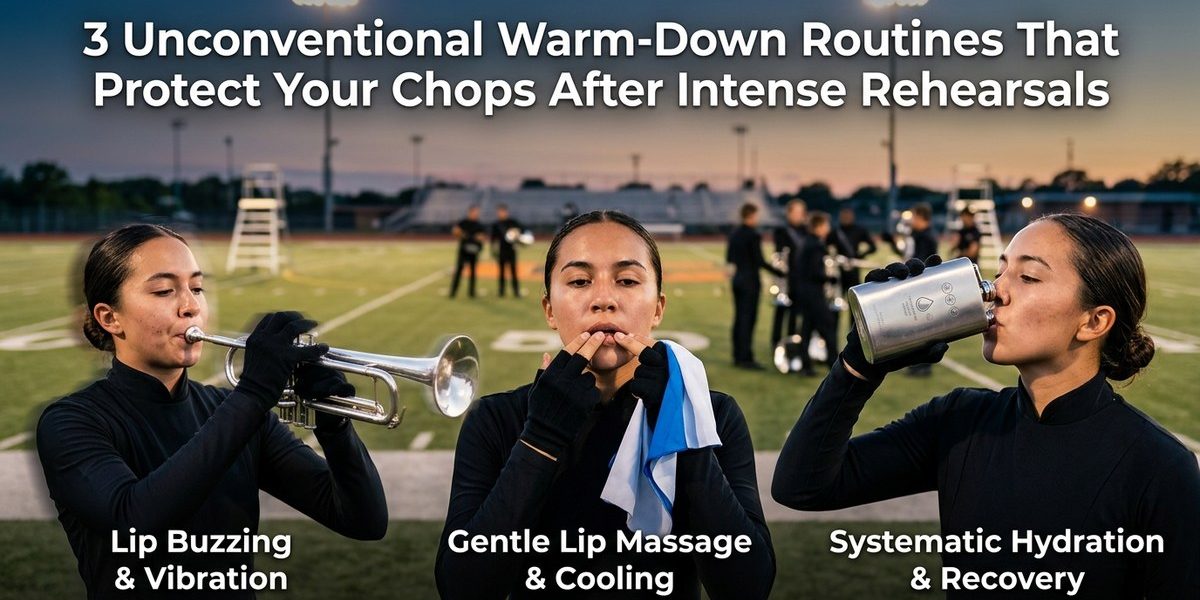
Musicians often focus heavily on warming up before a performance or rehearsal. But equally important is cooling down afterward. A proper warm-down routine can help protect your chops, prevent fatigue, and keep your skills sharp for the next session. While traditional stretching and light playing are common, some unconventional routines can offer even better results. These methods are friendly, approachable, and designed specifically for performers who want to safeguard their skills while avoiding routine stagnation.
Unconventional warm-down routines for musicians include gentle breathing exercises, active relaxation techniques, and mindful movement practices that help reduce fatigue, promote recovery, and protect your chops after intense rehearsals or performances.
Rethinking the Cool-Down: Why Unconventional routines matter
Most musicians rely on simple stretches or light playing to wind down. While these are helpful, they might not address all aspects of physical and mental recovery. Unconventional routines are designed to target specific areas that often get overlooked. They can help reduce tension, improve circulation, and reinforce good habits that prevent injury. Incorporating these unique approaches can make a noticeable difference in your longevity and overall performance quality.
1. Practice mindful breathing to reset and relax
Breathing exercises are typically associated with warm-ups, but they are equally beneficial after a long rehearsal. Mindful breathing helps slow your heart rate, relax tense muscles, and clear your mind.
- Sit comfortably or lie down in a quiet space.
- Inhale deeply through your nose for a count of four.
- Hold your breath for a count of four.
- Exhale slowly through your mouth for a count of six.
- Repeat this cycle for five minutes.
This process promotes oxygen flow, flushes out fatigue-related toxins, and calms your nervous system. Regular practice can also improve your control during performances.
2. Use active relaxation techniques like progressive muscle relaxation
Progressive muscle relaxation involves systematically tensing and relaxing muscle groups to release residual tension.
- Start at your feet, tense the muscles for five seconds.
- Release and notice the sensation of relaxation.
- Move upward through your calves, thighs, abdomen, chest, arms, neck, and face.
- Spend about ten minutes on this full-body routine.
This approach helps you become more aware of tension buildup and teaches your muscles to relax on command. It’s especially effective after intense rehearsals that leave muscles tight or sore.
3. Incorporate gentle movement routines like tai chi or qigong
Unconventional movement practices such as tai chi or qigong focus on slow, controlled motions that promote energy flow and balance.
- Practice simple forms or sequences for ten to fifteen minutes.
- Focus on smooth, flowing movements that extend your range of motion.
- Pay attention to your breathing and posture.
These routines improve circulation, reduce stiffness, and soothe the nervous system. They also foster mental clarity, making them ideal for winding down while maintaining physical readiness.
4. Engage in visualization and mental rehearsal
Mental practices are often overlooked during cool-down but can be powerful.
- Find a quiet space and close your eyes.
- Visualize your upcoming performance or a recent successful rehearsal.
- Experience the movements, sound, and emotions vividly.
- Use this time to reinforce muscle memory and build confidence.
Visualization reduces stress, enhances focus, and supports muscle recovery by creating a calm, positive mental state.
5. Try active recovery with low-impact cardio
Light activity promotes blood flow, which helps clear metabolic waste and supplies nutrients to muscles.
- Walk at a gentle pace or do slow cycling for ten minutes.
- Keep the intensity low and focus on relaxed breathing.
- Avoid strenuous activity that could cause additional fatigue.
This active recovery approach helps your muscles transition smoothly from intense activity to rest, reducing soreness and stiffness.
Comparing techniques and common mistakes
| Technique | Benefits | Common Mistakes |
|---|---|---|
| Mindful breathing | Calms nerves, enhances oxygen flow | Holding breath too long, forcing deep breaths |
| Progressive muscle relaxation | Releases residual tension | Tensing muscles for too long, rushing through the routine |
| Tai chi or qigong | Improves circulation, mental clarity | Rushing movements, neglecting proper form |
| Visualization | Reinforces muscle memory, reduces stress | Not visualizing vividly enough, rushing the process |
| Active recovery (light cardio) | Promotes circulation, reduces soreness | Overdoing intensity, ignoring body signals |
Expert insight on unconventional recovery
“Implementing gentle, mindful routines after rehearsals helps musicians recover faster and stay injury-free. These methods foster both physical relaxation and mental focus, which are vital for maintaining performance longevity,” emphasizes Dr. Lisa Moreno, a sports medicine specialist specializing in performing arts health.
Practical steps for your post-rehearsal routine
- Spend five minutes on mindful breathing to reset your nervous system.
- Follow with ten minutes of progressive muscle relaxation, focusing on areas that feel tight.
- Incorporate five minutes of tai chi or qigong, emphasizing slow, controlled movements.
- Visualize your next performance or recent success for five minutes to reinforce confidence.
- Finish with a low-impact activity like walking for ten minutes to promote circulation.
Adapting routines to fit your schedule
These routines can be easily tailored to your available time and environment. For instance, if you’re traveling, focus on breathing and visualization to maximize benefits in minimal space. At home, add in gentle movements or muscle relaxation for a comprehensive recovery.
Final thoughts on protecting your chops
Protecting your skills requires more than just warm-ups. Incorporating unconventional routines into your cool-down can significantly enhance recovery, prevent fatigue, and extend your performing career. These approaches are approachable, effective, and suited for all performance levels. Give them a try after your next rehearsal and see how your body and mind thank you.
Keep your chops healthy with mindful routines
Finding time for these unconventional recovery methods can make a real difference in your playing longevity. Consistency is key. By integrating gentle breathing, relaxation, and mindful movement into your post-rehearsal habits, you ensure your skills stay sharp and resilient. Protect your craft and enjoy the journey of continuous improvement.