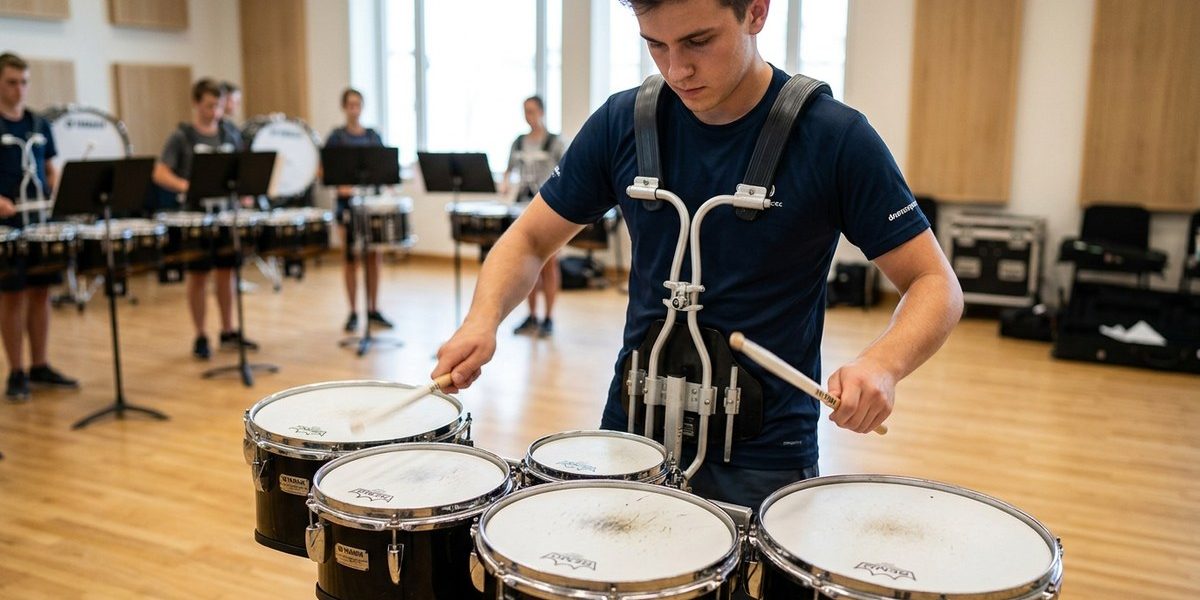
Getting a smooth, even sound on your tenor drums can feel frustrating at times. You might notice your sweeps sound uneven, with inconsistent attack or volume shifts. This issue can impact your overall performance and make your playing less polished. But the good news is that most uneven sweeps come down to technique and practice habits. Understanding why this happens and applying targeted drills can make a noticeable difference.
Uneven tenor sweeps often stem from inconsistent stroke technique, tension, or improper hand positioning. Focusing on specific drills can help develop control, coordination, and a more balanced sound. Regular practice of these drills will lead to smoother, more even sweeps and improved overall tone quality.
Why your tenor sweeps sound uneven
Several factors contribute to uneven tenor drum sweeps. Most commonly, it relates to how the strokes are executed. When your strokes are inconsistent, your sound will reflect that. Here are the main reasons behind this issue:
- Inconsistent stroke technique: Variations in the way you strike the drum — such as stroke speed, angle, or height — can cause unevenness.
- Tension in the hands or arms: Excess tension leads to stiff strokes, making it harder to control dynamic levels and produce even sounds.
- Poor hand positioning: Incorrect grip or wrist movement can create inconsistencies.
- Lack of control over rebound: Not allowing the stick to rebound naturally can force you into uneven stroke patterns.
- Fatigue or lack of focus: Tired muscles or distracted practice can lead to sloppy strokes.
Understanding these causes helps target specific areas for improvement. Improving your technique is not about practicing harder but practicing smarter with intentional drills.
Three drills to fix uneven tenor sweeps
Implementing focused drills into your practice routine can significantly improve your sweep consistency. Here are three effective drills designed to develop control, balance, and even sound production.
1. Slow, Controlled Strokes
This drill emphasizes precision over speed. Play each stroke slowly while maintaining a relaxed grip. Focus on:
- Keeping your wrist loose
- Using a consistent stroke height
- Maintaining a steady tempo
Start with a metronome set at a slow tempo, such as 60 bpm. Play a series of strokes, ensuring each one sounds the same in volume and attack. Gradually increase the tempo as control improves.
2. Rebound Control Exercises
Controlled rebounds help produce even sweeps. Here’s how to do it:
- Play a stroke with moderate force.
- Let the stick rebound naturally, avoiding extra arm movement.
- Focus on feeling the stick bounce evenly each time.
- Repeat for 20 to 30 strokes, aiming for uniform rebound sound.
This drill trains your muscles to trust the stick’s natural rebound, reducing tension and improving control.
3. Dynamic Range Sweeps
This drill develops control over volume and attack consistency:
- Play a series of strokes starting softly.
- Gradually increase to a loud dynamic.
- Then, decrease back to soft.
- Keep each stroke even in sound quality, regardless of volume.
Use a metronome to keep timing steady. This helps you learn how to control your stick’s impact and produce balanced sounds across different dynamics.
Common mistakes that lead to uneven sweeps
| Mistakes | Effects | How to fix it |
|---|---|---|
| Using excessive tension | Stiff strokes, inconsistent sound | Relax hands and wrists; stay loose during play |
| Uneven stroke height | Volume fluctuations and uneven sound | Practice with slow, deliberate strokes to build awareness |
| Poor wrist motion | Inconsistent attack and rebound | Focus on wrist control; avoid arm-driven strokes |
| Rushing through strokes | Loss of control and unevenness | Use a metronome; slow down to focus on control |
| Not practicing rebound control | Loss of rebound consistency | Include rebound drills in daily practice |
Techniques to improve sweep consistency
| Technique | Common mistake it addresses | How to implement |
|---|---|---|
| Relaxed grip | Tension in hands | Use light grips and focus on relaxation during play |
| Wrist-driven strokes | Over-reliance on arm motion | Engage wrist for control and finesse |
| Stick angle alignment | Inconsistent strike angles | Keep sticks at a consistent angle for each stroke |
| Rebound focus | Lack of rebound control | Practice rebound exercises daily |
| Slow practice with metronome | Speed without control | Always start slow and increase tempo gradually |
“The key to smooth, even sweeps is control. When your strokes are relaxed and consistent, your sound will improve dramatically.” — Percussion educator
Additional tips for balancing your tenor sweeps
- Always start with a relaxed, comfortable grip.
- Use your wrists rather than your arms for stroke control.
- Keep your focus on producing a clean, balanced attack each time.
- Incorporate mental awareness by listening closely to each stroke.
- Record your practice to identify inconsistencies and track progress.
When to focus on drills during your practice
Set aside dedicated time for sweep drills. Starting your session with slow, controlled exercises warms up your muscles and builds muscle memory. As your control improves, gradually incorporate more dynamic and faster sweeps. Consistency in practice is essential. Doing these drills daily, even for just 10 minutes, can lead to lasting improvements.
Fine-tuning your technique for a more even sound
Regularly assess your technique by recording practice sessions. Listen for inconsistencies in attack, volume, and rebound. Adjust your grip, wrist motion, and stroke height accordingly. Remember to stay relaxed and avoid forcing your strokes. Over time, rhythmic control and muscle memory will help produce smooth, even sweeps.
Moving forward with confidence
Fixing uneven tenor sweeps is a process. Focus on control before speed. Incorporate these drills into your routine and be patient with your progress. The more you understand your physical movements, the better your sound will become. With consistent effort, your sweeps will sound more balanced, polished, and professional.
Keep your sound steady and your technique sharp
Uneven sweeps often hide underlying technical issues. By practicing deliberate, controlled drills, you develop the coordination and muscle memory needed for smooth, even strokes. Remember, good tone quality on your tenor drums is about consistency and control, not just speed. Stay relaxed, listen critically, and make incremental adjustments. Your sound will improve with each focused practice session.
Building a resilient and even playing style
Maintaining a steady, even sound on your tenor drums requires patience and mindful practice. Keep working on these drills regularly, and don’t get discouraged by setbacks. Progress may be gradual, but consistent effort pays off. Soon, your sweeps will become more fluid and even, elevating your overall performance.
Practicing with intention and awareness will help you develop the control necessary for a clean, balanced sound. Remember, every great player was once working through similar challenges. Stick with your drills and trust your progress. Your tenor playing will thank you for it.