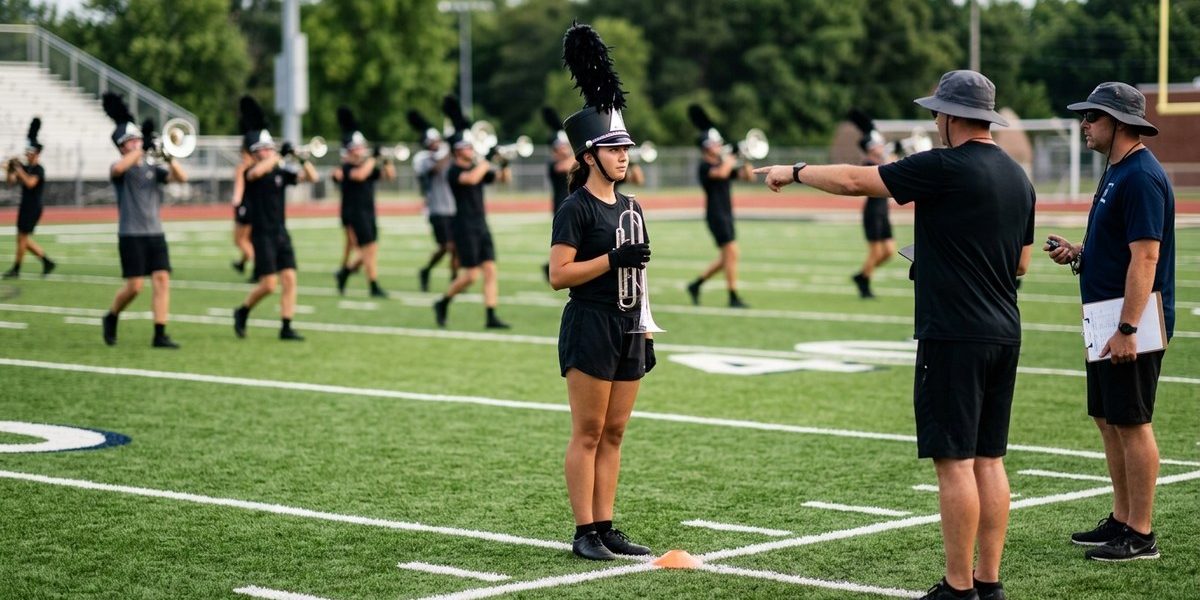
Struggling with drill callouts during rehearsals or performances is a common challenge for marching band directors, instructors, and students. When everyone is moving in sync, it feels effortless. But when drill coordinates are confusing or miscalled, it can throw off the entire ensemble. Understanding drill coordinates in marching band ensemble is key to making your rehearsals more efficient and your shows more polished. This guide will help you decode those coordinates, use them effectively, and improve your overall coordination.
Knowing how to interpret and communicate drill coordinates accurately enhances ensemble cohesion. Clear callouts prevent confusion, allowing for precise movements and a more unified performance. Mastery of drill coordinates benefits directors, instructors, and students by streamlining rehearsal processes and boosting confidence on the field.
What Are Drill Coordinates in Marching Band Ensemble?
Drill coordinates are the specific numerical or letter designations assigned to positions and movements on the marching field. They serve as a map for the ensemble to follow during rehearsals and performances. Think of them as the GPS coordinates of your drill. They tell performers where to be and when to be there. These coordinates are essential for achieving tight choreography, smooth transitions, and visual impact.
In marching band, drill coordinates often come in the form of grid references, like “front sideline,” “center field,” or specific numbers like “2-4” or “3-2.” Some ensembles use coordinate systems similar to Cartesian grids, with X and Y axes, while others employ a more straightforward numbering method.
Understanding drill coordinates in marching band ensemble enhances communication during rehearsals. When everyone speaks the same language about positioning and movements, it reduces errors. It also helps in cleaning up complex formations and ensuring that visual cues align perfectly with musical cues.
How To Decode and Use Drill Coordinates Effectively
Mastering drill coordinates involves more than just memorizing numbers. It requires understanding how they relate to the field and how to communicate them clearly. Here are the practical steps to get started:
- Learn Your Grid System
Most drill charts are based on a coordinate grid. - The field is divided into sections, often with numbers or letters.
- Coordinates like “2-4” refer to a specific spot on the grid.
- Get familiar with your ensemble’s standard grid conventions.
- Study your drill chart regularly to visualize positions.
-
Use a field map to connect coordinates with actual field locations.
-
Practice Visualizing Coordinates
- Use a scaled drawing of your field to mark positions.
- Practice translating coordinates from the chart to the field.
- Visualize moving from one coordinate to another.
- Incorporate verbal callouts during rehearsals.
-
Encourage students to visualize their location before moving.
-
Communicate Clearly During Rehearsals
- Use consistent language when calling out formations.
- Break down complex movements into smaller coordinate changes.
- Confirm understanding with your ensemble.
- Use hand signals or visual cues aligned with coordinates.
- Record rehearsals to review callout clarity.
Techniques for Effective Callouts
| Technique | Description | Common Mistakes | How to Improve |
|---|---|---|---|
| Precise language | Use exact coordinate references | Saying “over there” | Stick to specific numbers or letters |
| Confirm understanding | Ask performers to repeat or acknowledge | Assuming comprehension | Use a call and response method |
| Visual cues | Combine verbal callouts with gestures | Relying on words alone | Use field markings or flags for clarity |
| Consistent terminology | Maintain uniform language | Switching terms mid-season | Develop a glossary and stick to it |
Expert tip: “The key to effective drill callouts is consistency. Whether you call out ‘2-4’ or ‘center front,’ everyone should know exactly what that means. Practice your callouts as much as you practice your drill.”
Common Challenges and How to Overcome Them
Even with the best intentions, miscommunication about drill coordinates can happen. Here are some frequent issues and solutions:
-
Misinterpretation of Coordinates
Sometimes performers misunderstand the grid system. To fix this, conduct regular field mapping sessions. Use a large field diagram and have everyone point to their assigned coordinate. -
Inconsistent Callouts
Different instructors might call the same position differently. To avoid confusion, develop a standardized set of terms and train your ensemble to use them. -
Difficulty Visualizing Positions
Visualizing complex formations can be hard. Use diagrams, videos, and on-field markers to help performers internalize positions. -
Timing Discrepancies
When callouts are not synchronized with music or movement, confusion ensues. Practice with a metronome and reinforce callouts during slow, deliberate rehearsals.
Techniques to Improve Coordination
- Use a drill chart with clear coordinate labels.
- Incorporate field walk-throughs where performers mark their positions physically.
- Record rehearsals to identify areas of miscommunication.
- Hold visualization drills to strengthen mental mapping of the field.
- Regularly review and update your coordinate system as formations evolve.
| Mistake | Effect | Fix |
|---|---|---|
| Vague callouts | Confusion and misalignment | Use specific coordinates |
| No rehearsal of callouts | Slow reaction times | Practice callouts separately |
| Ignoring visual cues | Missed formations | Combine verbal and visual signals |
Improving Callouts Through Practice and Technology
Technology can be a big help in mastering drill coordinates. Digital tools like drill chart software often include features to simulate formations and run-throughs.
- Use drill design software to visualize formations before rehearsals.
- Record rehearsals with video analysis to review callout clarity.
- Use apps that allow for real-time coordinate sharing with performers.
- Encourage performers to study drill charts outside of rehearsals.
- Employ visual aids like flags, lights, or markers that correlate with coordinate points.
Remember: “The more familiar your ensemble is with the coordinates, the less they’ll rely on your callouts. Encourage self-study and visualization to build confidence.”
Final Tips for Mastering Drill Coordinates in Your Ensemble
- Keep your coordinate system simple and consistent.
- Regularly review formations with your ensemble.
- Use visual cues to reinforce verbal callouts.
- Practice transitions slowly to ensure understanding.
- Incorporate drills that focus solely on positioning and movement.
By developing a clear understanding of drill coordinates in marching band ensemble, you can drastically improve the accuracy of callouts and the overall visual effect of your show. When everyone knows exactly where they are and what to do, the ensemble moves as one. This level of coordination creates a powerful impression on judges and audiences alike.
Bringing It All Together for Better Performances
Mastering drill coordinates is a step toward more confident rehearsals and sharper performances. Start by familiarizing yourself with your specific grid system and practice translating those coordinates into real on-field positions. Use consistent language and visual cues for callouts. With regular practice and attention to detail, your ensemble will perform with greater precision and cohesion.
Keep practicing these techniques, stay patient, and remember that effective communication is the backbone of a successful marching show. Your performers will thank you for making the process clear and straightforward, leading to more polished and impactful performances.