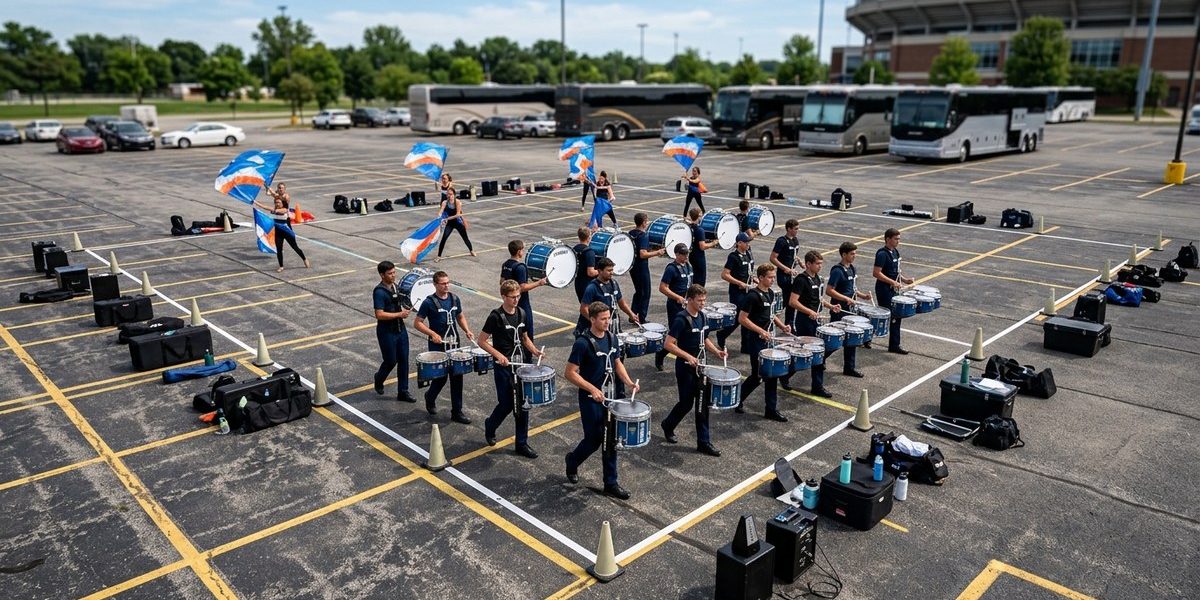
Practicing in a parking lot presents unique challenges and opportunities for visual and music professionals in the marching arts. Limited space, unpredictable weather, and surface conditions can make rehearsals tricky. Yet, with the right strategies, you can turn even a modest parking lot into a productive space for honing your skills. Whether you’re a seasoned instructor or a dedicated hobbyist, this parking lot practice guide emphasizes practical steps to maximize your environment and keep progress steady.
Optimizing parking lot space for visual and music work requires careful planning, adaptable routines, and safety awareness. Focus on strategic layout, efficient use of limited area, and weather-ready practices to ensure consistent progress in your rehearsals.
Creating a Practical Layout for Limited Space
Getting the most from a small parking lot starts with a smart layout. Use the available space to set up zones that target different rehearsal needs. For example, designate one area for marching drills, another for visual technique, and a third for musical focus. If space allows, mark these zones with cones or tape to maintain spatial awareness. This setup helps avoid congestion and keeps routines flowing smoothly.
Tips for effective parking lot layout:
- Use chalk, tape, or cones to define boundaries clearly.
- Arrange your equipment and stands in a way that minimizes movement.
- Keep pathways clear to prevent tripping hazards.
- Incorporate visual markers for spacing during marching or choreography.
Maximizing Practice Time and Space Efficiency
Time is a valuable resource in any rehearsal. When space is limited, focus on exercises that offer the greatest benefit in the shortest time. Here are practical processes to follow:
- Prioritize your goals. Break down your practice session into specific objectives like precision marching, visual clarity, or musical accuracy.
- Plan your drills. Select exercises that require minimal movement but deliver maximum impact. For example, practicing small visual sequences or breathing exercises in place.
- Use interval training. Alternate between focused work and brief rest periods to keep energy levels high and avoid fatigue.
- Rotate stations. If multiple groups are practicing, rotate them through different zones to prevent bottlenecks.
- Keep equipment portable. Use lightweight stands, markers, and music sheets to set up and break down quickly.
Scanning list:
- Focus on exercises that reinforce essential skills.
- Limit the number of drills to avoid overcrowding.
- Use visual cues to guide movement and positioning.
- Incorporate mental practice when physical space is tight.
Techniques for Practicing Visuals Without a Field
Visual work benefits from spatial awareness and body control. In a parking lot, consider these techniques to simulate field conditions:
- Practice marching in small, tight formations.
- Use mirrors or video recordings to analyze posture and alignment.
- Perform isolated visual gestures or transitions in place.
- Incorporate slow-motion drills to refine movements.
| Technique | Purpose | Common Mistakes |
|---|---|---|
| Small formation marching | Improve spatial control | Overextending movements, losing balance |
| Mirror/recording analysis | Correct posture and timing | Relying solely on visuals, ignoring feel |
| Visual gesture drills | Enhance clarity and precision | Rushing transitions, poor body alignment |
| Slow-motion drills | Increase muscle memory | Forgetting to maintain rhythm or posture |
“Practicing visuals in a confined space requires focus on body awareness and deliberate movements. Use mirrors or recordings to gain insight and adapt your routines accordingly.” — Visual arts coach
Developing an Effective Music Practice Routine
Music work in a parking lot can be as productive as in a dedicated rehearsal hall. To make the most of limited space:
- Play along with a portable metronome or backing track.
- Break down difficult passages into smaller segments.
- Practice sight-reading exercises to build flexibility.
- Use a music stand that’s easy to set up and transport.
- Incorporate breathing and warm-up routines before playing.
Practical process:
- Warm up with breathing and physical stretches.
- Focus on challenging sections, repeating them slowly.
- Gradually increase tempo while maintaining accuracy.
- Record and review to identify areas for improvement.
- End with cool-down exercises to prevent fatigue.
Bulleted list for quick scanning:
- Use portable metronomes and backing tracks.
- Break down complex passages into manageable chunks.
- Incorporate warm-ups and cool-downs.
- Record sessions to track progress.
- Adapt routines for weather and surface conditions.
Common Mistakes and How to Avoid Them
| Mistake | How to Correct | Tips |
|---|---|---|
| Overcrowding practice area | Use markers and schedule sessions | Rotate groups if necessary |
| Rushing through drills | Focus on precision over speed | Practice slowly, then increase gradually |
| Ignoring safety hazards | Clear debris and secure equipment | Always inspect surface before starting |
| Not adapting to weather | Bring appropriate gear | Practice indoors or under shelter when possible |
| Forgetting to warm up | Incorporate warm-up routines | Spend at least five minutes on physical prep |
Expert Advice for Parking Lot Practice Success
“Maximize your limited space by focusing on quality over quantity. Short, deliberate drills with clear objectives will keep your progress steady even in tight or weather-challenged environments.” — Marching arts instructor
Staying Safe and Prepared During Outdoor Practice
Safety is paramount in any outdoor setting. Always inspect the surface for cracks, debris, or uneven patches. Wear appropriate footwear to prevent slips or injuries. Have water, weather protection, and first aid supplies on hand. When practicing in a parking lot, consider the flow of traffic and avoid practicing near moving vehicles.
Making the Most of Your Parking Lot Sessions
Consistency beats intensity when working in small spaces. Regular, focused sessions build muscle memory and spatial awareness over time. Incorporate visual and musical exercises into your routine, and don’t forget to adjust based on weather or surface conditions. The key lies in deliberate practice and smart planning.
Visual and Musical Growth Beyond the Parking Lot
Using parking lot practice as a supplement allows you to reinforce skills even outside formal rehearsals. Keep a journal of your progress, record your sessions, and set achievable goals. Over time, these small, intentional efforts translate into bigger gains on the field and stage.
Final Words for Your Practice Journey
Limited space need not hold back your growth. With strategic planning, adaptable routines, and safety awareness, your parking lot can become a valuable rehearsal space. Keep experimenting with exercises, stay committed, and enjoy the process of refining your craft wherever you are. Your progress depends on the intention behind each session, not the size of your environment.