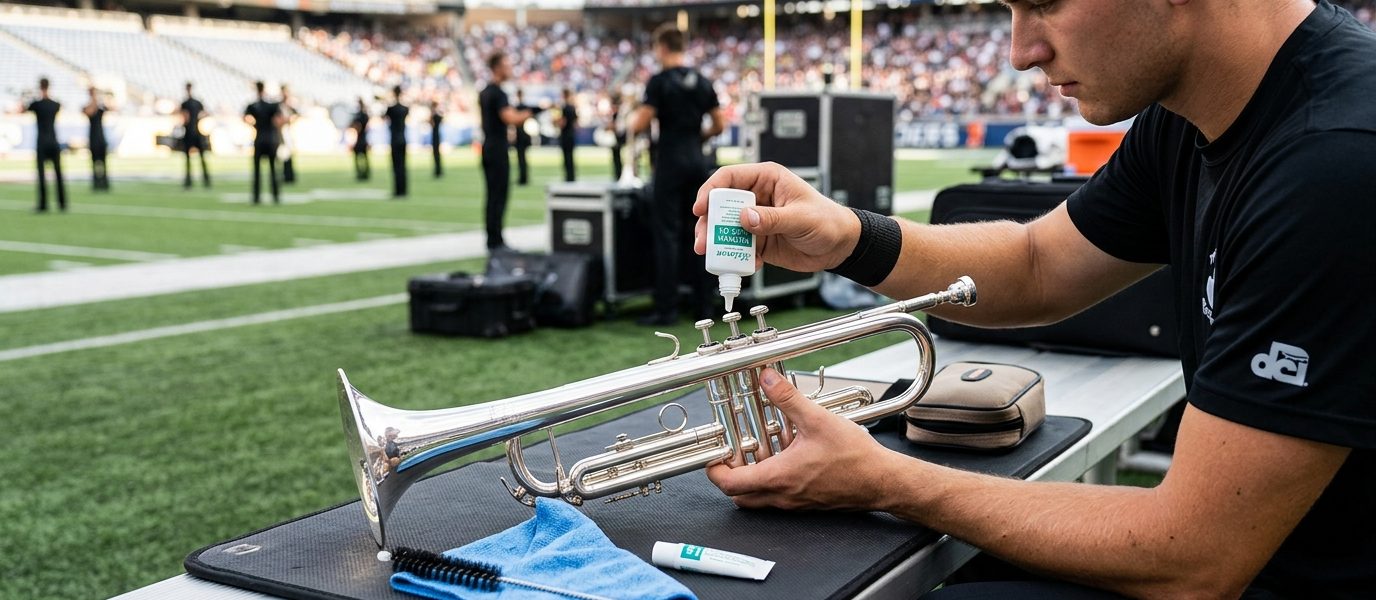
Your trumpet valve just stuck mid-phrase during the ballad. You’ve got 30 seconds before the next rep starts, and your section leader is already looking your way. This scenario plays out on practice fields and in stadiums every summer, but it doesn’t have to happen to you.
Proper marching brass instrument maintenance during tour season requires daily valve oiling, weekly slide greasing, and consistent cleaning routines. Instruments face extreme conditions during summer tours including heat, humidity, dust, and constant travel. A structured maintenance schedule prevents performance issues, extends instrument life, and helps you avoid embarrassing malfunctions during shows. Most problems stem from neglect rather than defects, making consistent care your best defense against mechanical failures.
Why Tour Season Destroys Instruments Faster
Tour season puts your brass through conditions it never faces in a climate-controlled band room.
You’re playing outdoors in 95-degree heat. Sweat drips into your horn. Dust from the practice field gets everywhere. Your instrument rides in a truck for hours, bouncing over highways. Then you unpack it and play a two-hour block in full sun.
This cycle repeats daily for weeks or months.
The combination of heat, moisture, dirt, and vibration creates the perfect storm for mechanical problems. Valves stick. Slides seize. Spit valves leak. Tuning slides refuse to move.
Your instrument needs different care during tour than it does during fall marching band season. The intensity and duration demand more frequent attention.
Daily Maintenance That Takes Five Minutes
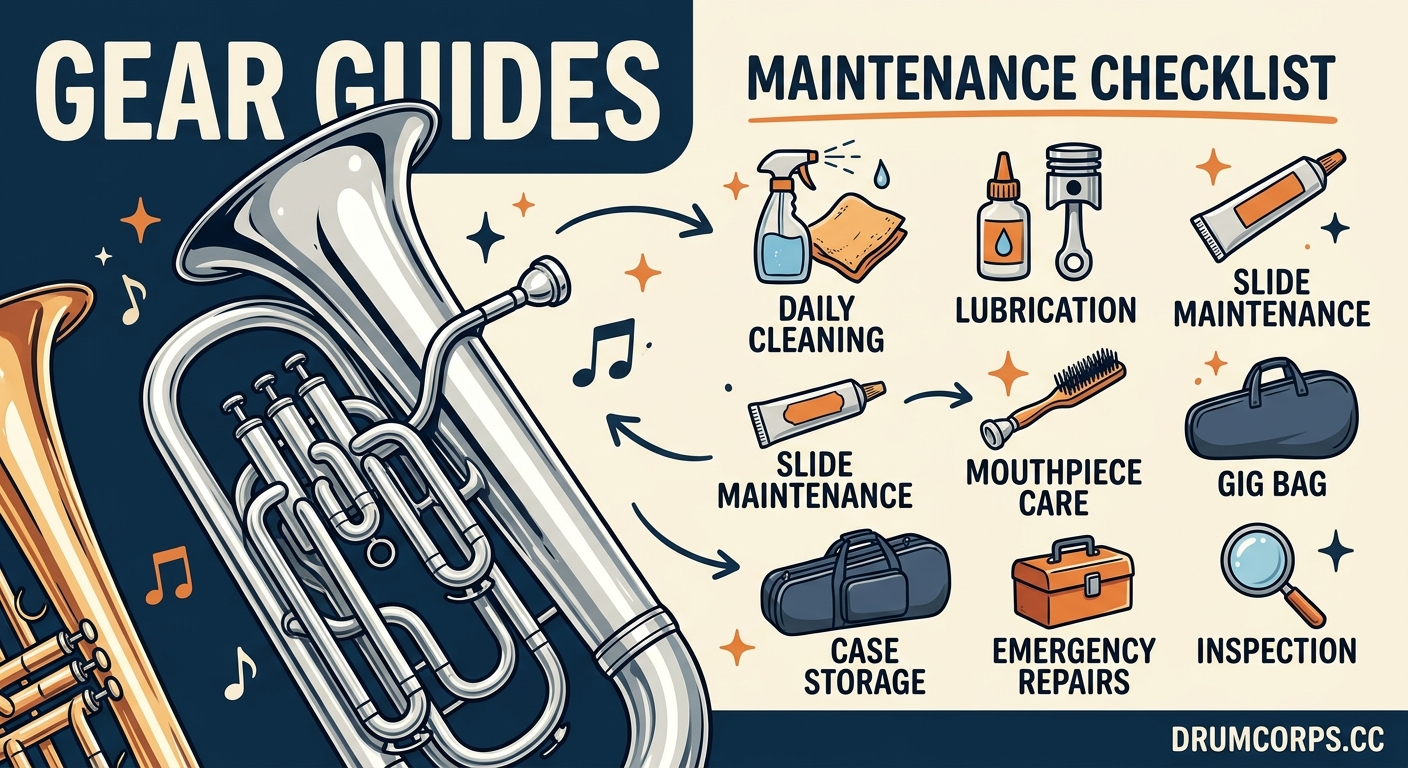
These tasks should happen every single day you play, preferably right after rehearsal while everything is still fresh.
Oil Those Valves
Pull each valve out one at a time. Wipe it down with a clean cloth. Apply three drops of valve oil. Reinsert the valve, making sure the number lines up correctly. Work it up and down a few times.
Do this for all three valves on trumpets and mellophones, or all four on euphoniums and tubas.
Hot weather makes oil evaporate faster. You might need to oil twice daily during particularly brutal rehearsal blocks.
Empty All the Spit
This sounds obvious, but you’d be surprised how many people skip it.
Open every water key. Blow through the horn to force out condensation. Wipe the outside where moisture collects.
Leaving moisture inside creates two problems. First, it corrodes the metal over time. Second, it creates a breeding ground for bacteria and mold that can make you sick.
Wipe Down the Exterior
Use a microfiber cloth to remove fingerprints, sunscreen residue, and bug spray. These substances eat through lacquer if left on the surface.
Pay special attention to areas where your hands grip the instrument. The oils from your skin are surprisingly corrosive.
Weekly Deep Cleaning Schedule
Pick one day each week for more thorough maintenance. Sunday evenings work well for most corps and bands.
- Remove all slides and valves
- Rinse each piece under lukewarm water
- Use a flexible brush to clean inside valve casings
- Clean slides with a slide cleaning brush
- Dry everything completely with a lint-free cloth
- Apply fresh slide grease to all tuning slides
- Oil valves before reassembling
This process takes about 20 minutes. It prevents 90% of the mechanical issues you’ll encounter.
“I tell my brass section that weekly cleaning isn’t optional. The students who skip it are always the ones with stuck slides two weeks into tour. Then they’re borrowing someone else’s horn or sitting out of rehearsal while we fix it.” – Mike Torres, brass caption head
The Right Products for the Job
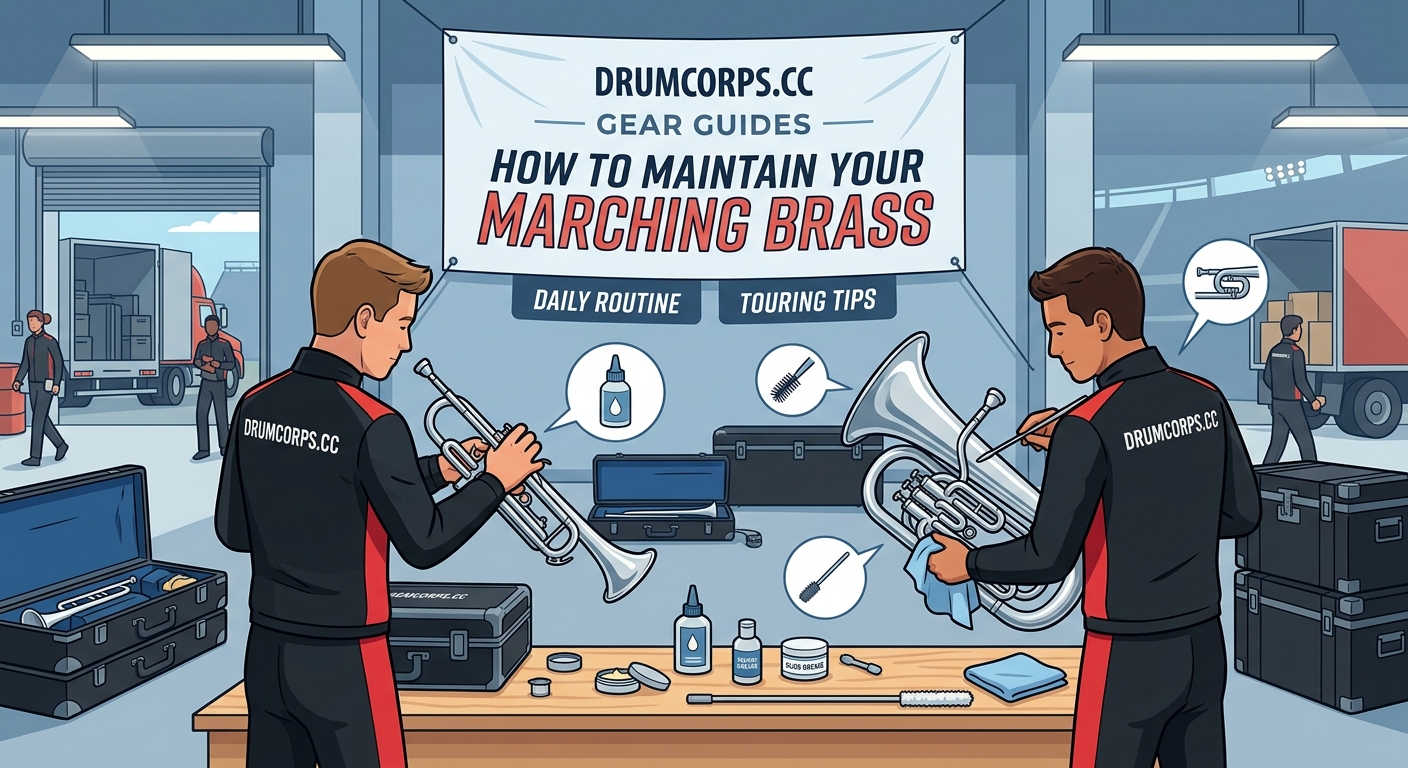
Not all lubricants are created equal. Using the wrong products can cause more harm than good.
Valve Oil Options
- Synthetic valve oil: Lasts longer in hot weather, doesn’t gum up as fast
- Traditional petroleum-based oil: Cheaper but needs more frequent application
- Light machine oil: Works in a pinch but isn’t formulated for brass instruments
Stick with synthetic during tour season. The extra cost pays off in fewer stuck valves.
Slide Grease Choices
Tuning slides need grease, not oil. Grease stays in place and provides the right amount of resistance.
Use lanolin-based grease for main tuning slides. It handles temperature extremes better than petroleum jelly. For tight slides that barely move, a small amount of slide cream works better than traditional grease.
Never use WD-40, cooking oil, or other household lubricants. They damage the metal and attract dirt.
Common Mistakes That Ruin Instruments
| Mistake | Why It’s Bad | Better Approach |
|---|---|---|
| Over-oiling valves | Creates sticky buildup | Three drops per valve, once or twice daily |
| Forcing stuck slides | Bends or breaks the tubing | Soak in warm water, get help from a tech |
| Skipping cleaning after outdoor rehearsal | Dirt and pollen act like sandpaper | At minimum, flush with water daily |
| Using too much slide grease | Collects debris, makes slides sluggish | Thin layer is enough |
| Leaving instrument in hot vehicle | Heat warps metal and damages lacquer | Always bring your horn inside |
| Sharing mouthpieces without cleaning | Spreads illness through the section | Use mouthpiece sanitizer or alcohol wipes |
Protecting Your Horn During Travel

The bus ride between shows subjects your instrument to constant vibration and temperature changes.
Always use a proper case. Gig bags don’t provide enough protection for tour conditions. Hard cases with foam padding are worth the investment.
Store your case with the bell facing up. This prevents weight from pressing on delicate parts. If you have to stack cases, put smaller instruments on top.
Never leave your instrument in direct sunlight, even in a case. The interior of a case can reach 140 degrees on a sunny day. That kind of heat warps metal and destroys valve alignment.
Emergency Fixes on the Road
Sometimes problems happen despite your best efforts. Here’s how to handle common issues when you’re miles from a repair shop.
Stuck Valve
Don’t force it. Remove the valve cap and bottom cap. Gently tap the valve casing with a plastic mallet or the heel of your hand. If it still won’t move, soak the entire instrument in lukewarm water for 30 minutes.
Once freed, clean thoroughly and apply fresh oil.
Frozen Slide
Run warm (not hot) water over the stuck area for several minutes. The metal will expand slightly and often releases. If that doesn’t work, get help from your instructor or tech. Forcing it will bend the tubing.
Leaking Water Key
The cork probably dried out and cracked. Temporary fix: wrap the cork with Teflon tape (the white plumbing tape). This buys you a few days until you can replace the cork properly.
Bent Tubing
Don’t try to bend it back yourself. Play carefully and get it to a repair tech as soon as possible. Amateur attempts at straightening usually make the damage worse.
What to Pack in Your Maintenance Kit

Keep these items in your equipment bag at all times:
- Valve oil (carry a backup bottle)
- Slide grease
- Microfiber cleaning cloths (at least three)
- Flexible cleaning snake
- Mouthpiece brush
- Small screwdriver set
- Teflon tape
- Extra water key corks
- Backup mouthpiece
This kit handles 95% of situations you’ll encounter. The total cost is under $50, and everything fits in a gallon freezer bag.
Dealing with Extreme Weather Conditions
Hot and Humid Days
Humidity accelerates corrosion. Clean your instrument more frequently. Consider using a moisture-absorbing packet in your case overnight.
Your valves might feel sluggish in high humidity. Don’t over-oil to compensate. Instead, make sure you’re cleaning out the old oil that has collected moisture and turned gummy.
Dusty Fields
Dust is the enemy of moving parts. After rehearsing in dusty conditions, flush your instrument with water before oiling valves. Otherwise, you’re just turning dust into grinding paste.
Cover your case when it’s open on the sideline. A small towel works fine.
Rain and Wet Conditions
Water from rain won’t hurt your brass instrument, but you need to dry it thoroughly afterward. Remove all slides and valves. Use a cloth to dry every surface. Leave everything disassembled for an hour to air dry completely.
Pay special attention to felt pads and cork bumpers. These take longer to dry and can develop mold if put away wet.
How Often to Visit a Professional Tech
Even with perfect daily care, professional maintenance matters.
Get a full cleaning and inspection before tour starts. A tech can spot problems you’ll miss: worn valve felts, loose braces, small dents that affect tuning.
During a long tour (six weeks or more), schedule a mid-season checkup if possible. Many corps arrange for a tech to visit during a free day.
After tour ends, get another full service. This removes built-up grime from hard-to-reach areas and addresses any wear from the season.
Professional cleanings cost $40 to $80 depending on your instrument size. This investment prevents expensive repairs down the road.
Teaching Younger Members Good Habits
If you’re a veteran member or parent, you can help rookies avoid common mistakes.
Show them the proper way to oil valves. Many first-year members apply oil randomly without removing the valve, which doesn’t actually lubricate anything.
Demonstrate how to check if slides are moving freely. Slides should glide smoothly with gentle pressure. If someone is muscling their tuning slide, something is wrong.
Create a buddy system where experienced members check in with rookies about maintenance. Peer accountability works better than lectures from staff.
Keeping Your Horn Performance-Ready
Your instrument is your voice on the field. Treat it with the respect it deserves.
Marching brass instrument maintenance isn’t complicated, but it does require consistency. The members with the fewest mechanical problems aren’t lucky. They’re the ones who oil valves every day, clean thoroughly every week, and address small issues before they become big ones.
Five minutes of daily care prevents hours of frustration and keeps you playing when it matters most. Your section is counting on you to be ready for every rep, every run-through, and every performance. Don’t let a stuck valve be the reason you miss a note.
Start tonight. Oil those valves. Wipe down your horn. Set a reminder for your weekly cleaning. Your instrument will reward you with reliable performance all season long.