You just got accepted to your first drum corps. Congratulations.
Now you need to pack your stick bag. But what actually goes in there?
The difference between showing up prepared and scrambling during a rehearsal break comes down to what you carry. Professional drummers know this. They’ve learned through years of experience which items earn their space in a stick bag and which just add weight.
This guide walks you through every essential item, from the obvious to the overlooked.
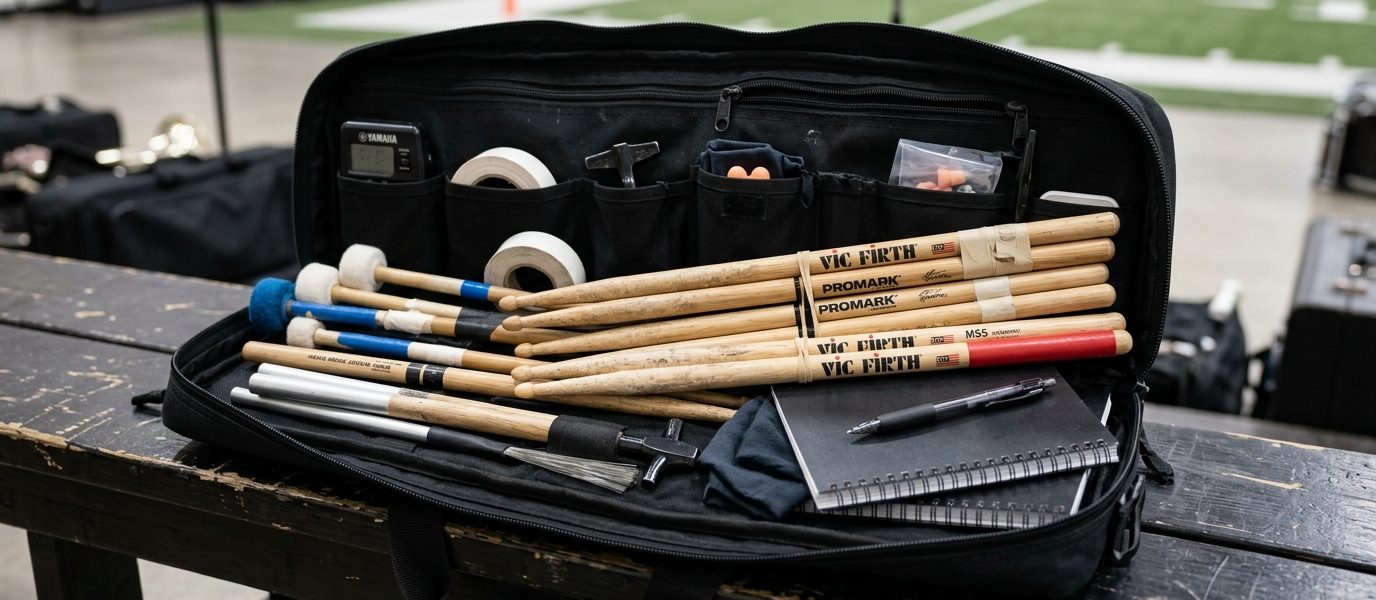
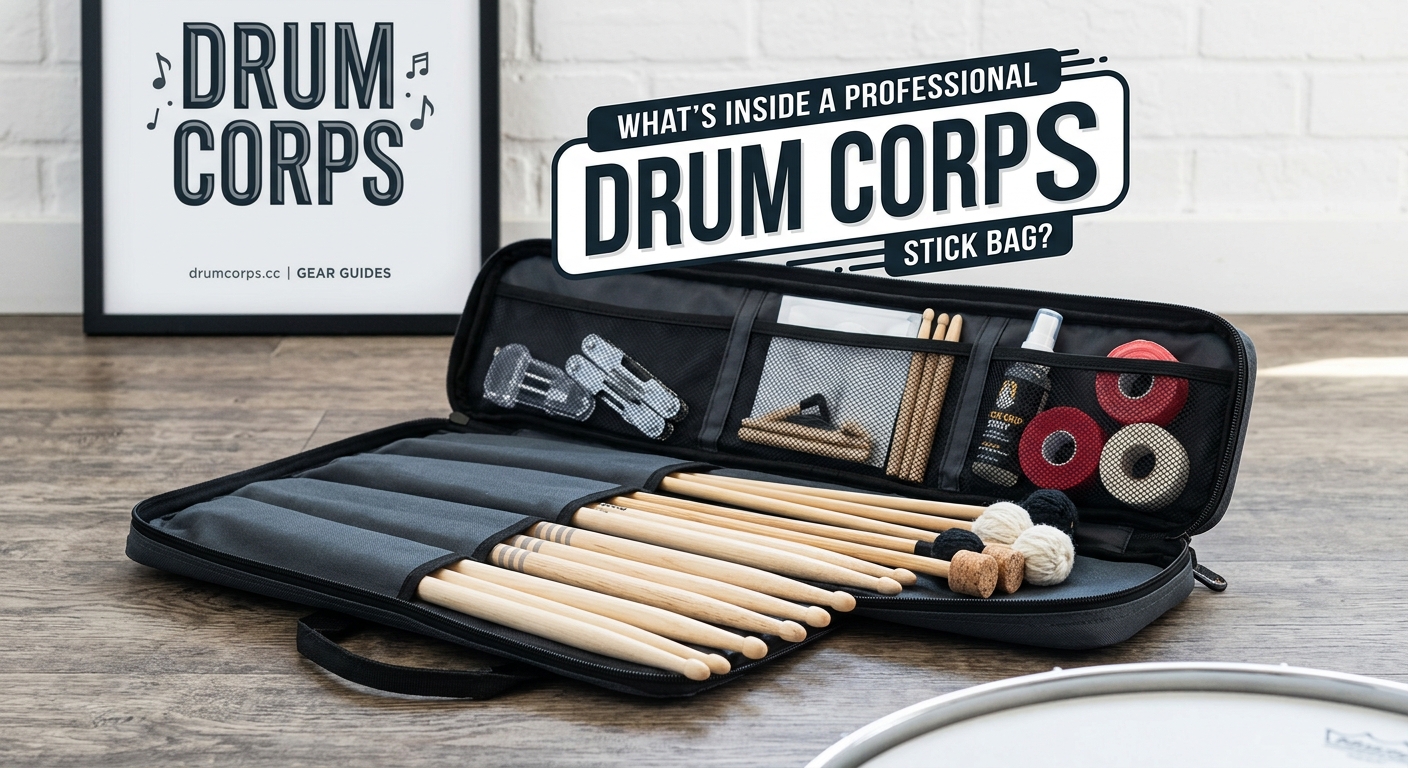
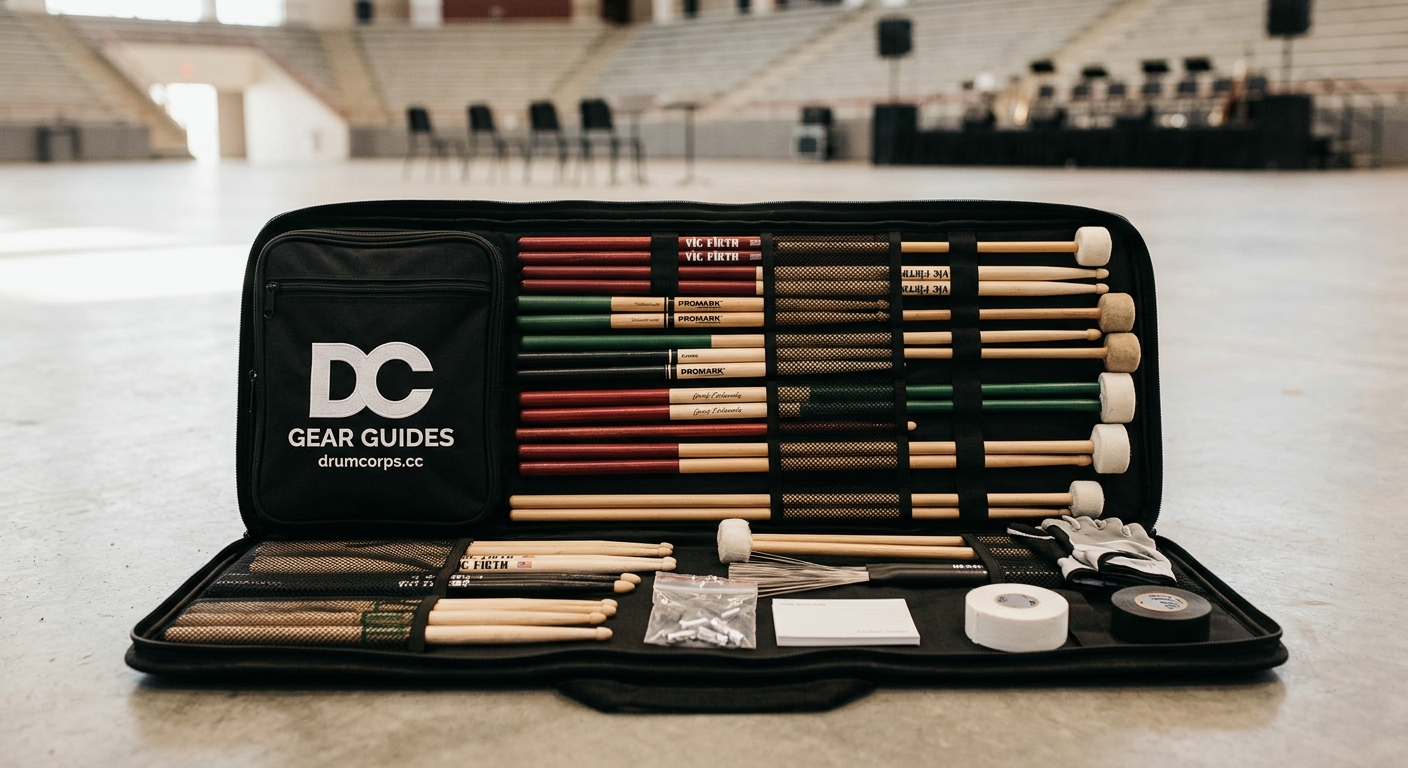
A professional drum stick bag contains more than just sticks. It holds backup pairs, maintenance tools, practice pads, tuning keys, tape, and personal care items. The best stick bags balance preparedness with portability, ensuring you can handle equipment failures, weather changes, and last-minute adjustments without leaving the rehearsal field. Organization matters as much as the items themselves.
The obvious essentials you can’t forget
Let’s start with the non-negotiables. These items form the foundation of every drummer’s stick bag, regardless of skill level or ensemble type.
Multiple pairs of sticks
You need at least three pairs of your primary sticks. Not two. Three minimum.
Sticks break. They crack during warm-ups. They splinter mid-phrase. They roll under equipment trucks and disappear forever.
Keep one pair in your hands, one pair ready as immediate backup, and one pair sealed in case both primaries fail. Many professionals carry four to six pairs during tour season.
Match your sticks carefully. Weight and balance variations between pairs can throw off your technique, especially during fast passages or exercises that build speed and accuracy.
Practice pad
Your practice pad lives in your stick bag. Always.
Rehearsal schedules include downtime. Bus rides stretch for hours. You’ll have 15-minute breaks between blocks. A practice pad lets you stay warm and work on technique without needing a full drum setup.
Choose a pad that matches your playing surface. Snare drummers want a pad with realistic rebound. Tenor players benefit from multi-surface pads that simulate drum-to-drum transitions.
Size matters for portability. An 8-inch pad fits most stick bags. A 12-inch pad offers more playing area but takes up valuable space.
Tuning key
This small tool prevents big problems.
Heads loosen during transport. Temperature changes affect tension. A loose lug kills your sound quality and can damage the drum if left unaddressed.
Keep your tuning key on a carabiner clipped inside your bag. You’ll never lose it, and you can access it without digging through pockets.
Maintenance and repair items that save rehearsals
Equipment fails at the worst possible times. The items in this section help you handle problems without running to the equipment truck or missing a rep.
Drum key multitool
Standard tuning keys work fine until you need to adjust a carrier, tighten a mounting bracket, or fix a loose tension rod.
A multitool designed for marching percussion includes Phillips and flathead screwdriver bits, hex keys, and sometimes a small wrench. One tool handles most field repairs.
Stick tape and grip tape
Tape serves multiple purposes in a stick bag.
Stick tape repairs cracked sticks temporarily. It won’t save a badly damaged stick, but it can extend the life of a pair with minor splitting until you can replace them.
Grip tape improves control in humid conditions. Some drummers prefer the feel of tape over bare wood. Others use it only when their hands sweat during outdoor rehearsals.
Athletic tape works in a pinch, but purpose-made stick tape adheres better and doesn’t leave residue.
Replacement parts specific to your instrument
Snare drummers need extra snare wires and straps. Tenor players should carry spare tension rods. Bass drummers benefit from backup mallets.
Know which parts fail most often on your specific drum model. Carry those items.
“The best drummers I’ve worked with never ask the tech crew for basic parts. They handle small repairs themselves and save the techs for serious problems. That self-sufficiency shows professionalism.” – Veteran percussion instructor
Weather protection and comfort items
Outdoor rehearsals mean exposure to sun, rain, wind, and temperature extremes. Your stick bag should help you handle all of it.
Sunscreen and lip balm
Eight-hour rehearsals under summer sun will destroy your skin. Sunscreen prevents burns that make it painful to hold sticks or wear your carrier the next day.
Lip balm matters more than you think. Chapped lips crack and bleed. That’s distracting during a run-through and potentially messy on your uniform.
Choose products that won’t melt in heat. Stick-style sunscreen and wax-based lip balm hold up better than lotions.
Small towel or shammy
Sweat drips onto drums. Rain soaks playing surfaces. Both create problems.
A microfiber towel dries your hands between reps. It wipes down drums when moisture affects rebound. It cleans your sticks when they get grimy.
Roll it tight and secure it with a rubber band. It takes up minimal space.
Hand care items
Blisters happen. Calluses crack. Dry skin splits.
Keep a small container of hand balm in your stick bag. Apply it after rehearsals, not before. Greasy hands slip on sticks.
Some drummers carry liquid bandage for hot spots that form during long rehearsals. It creates a protective barrier without the bulk of traditional bandages.
If you’re dealing with grip issues that affect your speed, hand care becomes even more important.
Practice and training tools
Your stick bag doubles as a portable practice station. These items support skill development during downtime.
Metronome or metronome app
Timing doesn’t improve by accident. It requires focused practice with a reliable tempo reference.
A physical metronome works without batteries or phone signal. It’s reliable but adds weight.
Most drummers use metronome apps instead. They offer more features, visual feedback, and subdivision options. Just keep your phone charged.
Whether you practice with a metronome every day depends on your goals, but having one available matters.
Stick height guide or reference card
Consistent stick heights create visual clarity and tonal consistency. Many corps provide laminated cards showing required heights for different dynamics.
Keep yours in an outside pocket for easy reference. Check it during water breaks when you’re working on matching heights with your section.
Practice routine notes
Building a perfect 30-minute individual practice routine helps, but only if you remember what to practice.
Write down your current focus areas. List the specific exercises you’re working on. Note problem spots in the show music.
A small notebook or index cards keep this information organized and accessible.
Organization tools that prevent chaos
A well-packed stick bag saves time and reduces stress. These items help you stay organized.
Zippered pouches or bags
Loose items migrate to the bottom of your stick bag. They tangle with sticks. They fall out when you grab something else.
Use small zippered pouches to group similar items:
- One for maintenance tools and tape
- One for personal care items
- One for small practice tools and accessories
Clear pouches let you see contents without opening them. Mesh pouches weigh less and dry faster if they get wet.
Carabiners and clips
Attach frequently used items to the inside of your bag with carabiners. Your tuning key, a small towel, and your water bottle holder all benefit from this approach.
Items on clips don’t get buried. You can grab them without looking.
Labels or color coding
If you’re carrying multiple types of sticks or mallets, label them. Use colored tape or write directly on the stick bag compartments.
This matters most during performances when you need to switch sticks between movements. Fumbling through your bag wastes time and looks unprofessional.
The complete stick bag packing list
Here’s everything in one place, organized by priority level.
| Priority | Item | Why It Matters |
|---|---|---|
| Critical | 3+ pairs of primary sticks | Handle breaks and losses |
| Critical | Practice pad | Maintain technique during downtime |
| Critical | Tuning key | Fix loose heads immediately |
| High | Stick tape | Temporary repairs extend stick life |
| High | Sunscreen and lip balm | Prevent painful skin damage |
| High | Small towel | Manage sweat and moisture |
| High | Metronome or app | Support focused practice |
| Medium | Multitool | Handle various repairs |
| Medium | Hand care items | Prevent and treat blisters |
| Medium | Zippered pouches | Keep items organized |
| Medium | Water bottle | Stay hydrated during rehearsals |
| Low | Backup sticks (different models) | Adapt to specific needs |
| Low | Notebook | Track practice goals |
| Low | Snacks | Maintain energy between meals |
How to pack your stick bag efficiently
Throwing items randomly into your bag creates problems. Follow this process for better organization.
-
Place your practice pad flat against the back panel. This creates a stable base and protects the pad from damage.
-
Stand sticks vertically along one side. Group them by type if you carry multiple models. This prevents them from rolling around and makes selection easier.
-
Use pouches for small items and place them in remaining spaces. Fill gaps strategically so nothing shifts during transport.
-
Attach frequently used items to clips or carabiners. Keep your tuning key and towel accessible without opening the main compartment.
-
Store your water bottle in an outside pocket. This prevents leaks from soaking other items and makes hydration easier during breaks.
-
Review and reorganize weekly. Remove items you haven’t used. Replace depleted supplies. Adjust based on changing needs.
Common stick bag mistakes and how to avoid them
Even experienced drummers make these errors. Learn from them instead of repeating them.
Overpacking
More items don’t equal better preparedness. They equal a heavier bag and harder access to what you actually need.
Evaluate each item honestly. If you haven’t used it in two weeks of rehearsals, remove it. The exception is emergency items like first aid supplies, which you keep hoping to never need.
Underpacking backups
The opposite problem also exists. Showing up with one pair of sticks and no tape is asking for trouble.
Balance portability with preparedness. Two backup pairs of sticks weigh almost nothing. They could save your rehearsal.
Ignoring bag maintenance
Stick bags get dirty. They collect rosin dust, dirt from fields, and debris from equipment trucks.
Empty your bag completely once a month. Shake out loose material. Wipe down the interior. Check for damage to zippers or straps.
A clean, well-maintained bag lasts longer and keeps your gear in better condition.
Forgetting personal needs
Your stick bag supports your performance, which means it should support you as a person too.
If you need specific medications, keep them in your bag. If you wear glasses, pack a cleaning cloth. If you use hearing protection, store it somewhere accessible.
The best stick bag setup is personal. It reflects your specific needs and playing situation.
Customizing your setup for different situations
What you pack changes based on where you’re playing and what you’re doing.
Rehearsal vs. performance
Rehearsals allow for larger bags with more items. You have access to equipment trucks and can swap items between breaks.
Performances demand streamlined bags. You need only what fits in your designated storage area. Focus on essentials and emergency items.
Indoor vs. outdoor
Indoor rehearsals eliminate weather concerns. You can skip sunscreen and rain protection.
Outdoor situations require more preparation. Add items that handle sun, heat, humidity, and sudden weather changes.
Local vs. tour
Local rehearsals let you restock easily. You can run home for forgotten items or replace used supplies.
Tour demands complete self-sufficiency. Pack extra quantities of consumables like tape and hand care products. You won’t have easy access to stores.
Building your stick bag over time
You don’t need to buy everything at once. Start with critical items and add others as you identify needs.
Month one priorities
Get your sticks, practice pad, and tuning key first. These three items let you function at basic rehearsals.
Add stick tape and a small towel next. These prevent common problems and cost very little.
Month two additions
Invest in quality pouches for organization. Add sunscreen and hand care items before outdoor rehearsals begin.
Consider a multitool if you’re comfortable doing basic maintenance on your equipment.
Long-term upgrades
Replace your practice pad when it wears out. Upgrade to a better quality model that more closely matches your playing surface.
Add specialized items based on your instrument and section requirements. Tenor players might need different tools than snare drummers.
Listen to section leaders and techs. They’ll mention items that solve problems you haven’t encountered yet.
What experienced drummers always carry
Talk to veterans who’ve marched multiple seasons. Their stick bags reveal patterns.
They carry more backup sticks than beginners. They’ve learned that equipment fails at critical moments.
They keep maintenance items accessible. They don’t want to dig through their bag during a short break.
They pack for worst-case scenarios. Rain protection, emergency repair supplies, and extra consumables give them confidence.
They organize ruthlessly. Every item has a designated spot. They can find anything without looking.
They customize based on experience. Their bags reflect lessons learned through seasons of rehearsals and performances.
Your stick bag reflects your preparation
What you carry matters. It shows whether you take your role seriously.
A well-stocked stick bag means you won’t ask section mates for tape during a break. You won’t borrow sticks when yours break. You won’t miss a rep because you can’t fix a minor equipment issue.
That independence benefits everyone. Your section runs smoother. Your techs can focus on bigger problems. You build confidence in your ability to handle challenges.
Start with the essentials. Add items as you identify needs. Organize everything so you can find it under pressure. Review and adjust regularly based on what you actually use.
The goal isn’t carrying the most items. It’s carrying the right items, organized well, so you’re ready for whatever happens during rehearsal or performance.
Your stick bag is one of the few things you control completely in drum corps. Make it count.