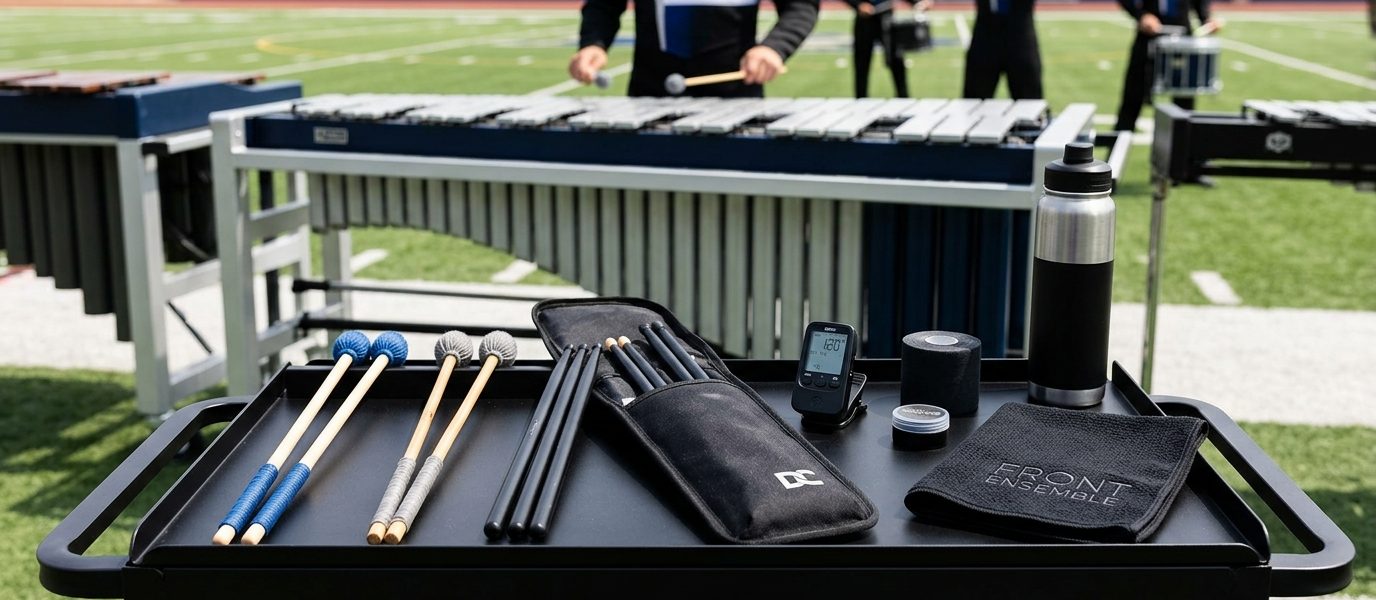
You’re about to march your first season with a drum corps front ensemble. You’ve got your mallets, your music, and your determination. But walk into any championship pit setup and you’ll notice something right away: the members who look comfortable and confident have more than just talent. They’ve invested in the right accessories that make long rehearsals bearable and performances consistent. The difference between struggling through a show and nailing every rep often comes down to the small things you bring to the floor.
Successful drum corps pit percussionists rely on specific accessories beyond their instruments. Quality mallets, protective cases, tuning tools, proper footwear, weather protection, music organization systems, and maintenance supplies form the foundation of professional front ensemble performance. Investing in these essentials early prevents equipment damage, reduces performance anxiety, and helps you meet the physical demands of a full season.
Professional mallets make all the difference
Your corps will likely provide instrument assignments, but mallet selection often falls on you. And this matters more than most rookies realize.
Different instruments demand different mallets. Marimba requires graduated hardness across registers. Vibraphone needs specific yarn wraps for clarity. Xylophone mallets must articulate cleanly without cracking the bars.
Most corps members carry at least six pairs:
- Soft marimba mallets for ballads
- Medium marimba mallets for general playing
- Hard xylophone mallets for articulation passages
- Vibraphone mallets with appropriate cord
- Glockenspiel mallets for bell parts
- Specialty mallets for effects and auxiliary instruments
Budget around $200 for a starter set. Professional brands like Innovative Percussion, Vic Firth, and Encore produce reliable options. Cheap mallets wear out fast, sound inconsistent, and can actually damage instruments.
Store mallets in a dedicated bag with individual slots. Tossing them loose in a backpack ruins the yarn wrapping and bends shafts. A proper mallet bag keeps everything organized during setup changes and protects your investment.
Replace mallets when you notice uneven wear, exposed cores, or bent shafts. Playing on damaged mallets trains bad technique and produces inconsistent tone quality.
Cases and bags that survive tour life
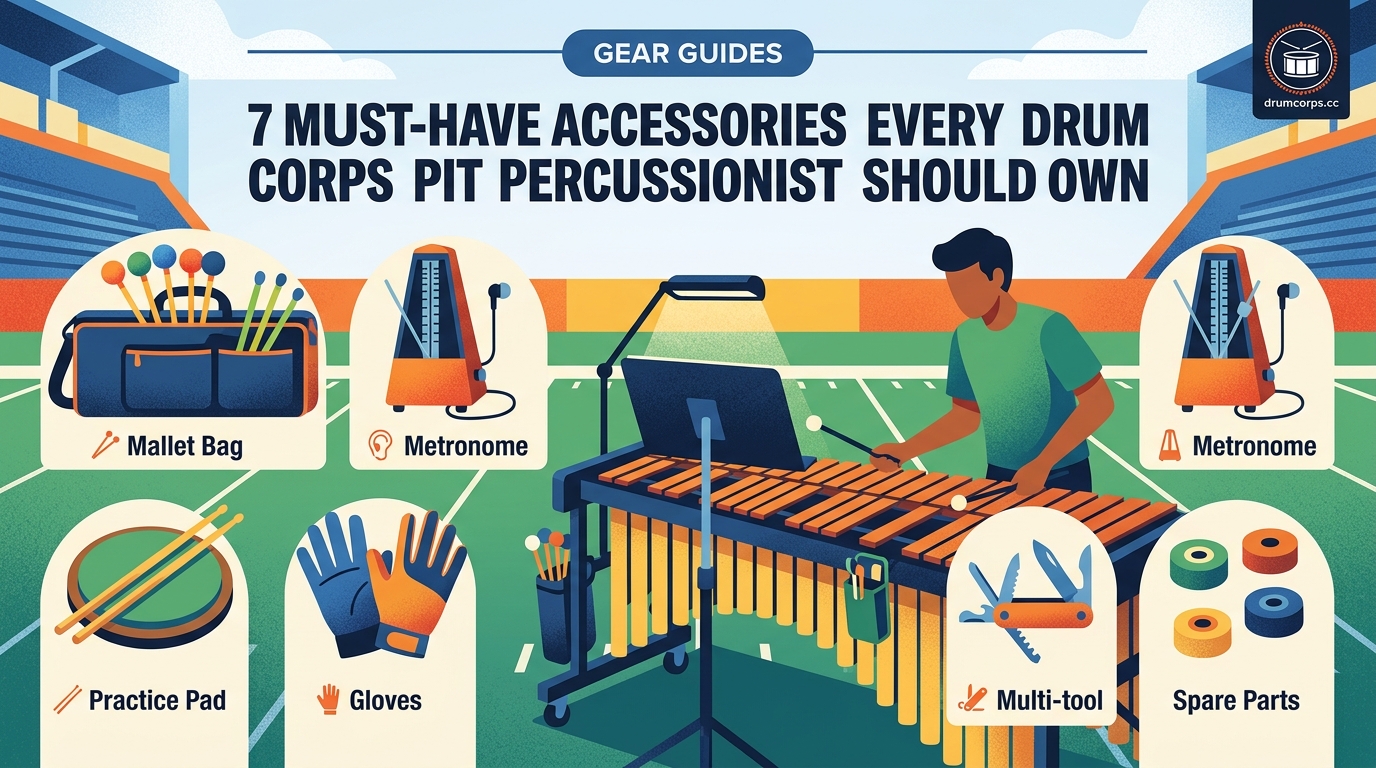
Drum corps tours are brutal on equipment. You’re loading and unloading trucks daily, setting up on different surfaces, and dealing with weather extremes.
A quality mallet bag is non-negotiable. Look for padded compartments, reinforced stitching, and water-resistant exterior fabric. The bag should hold at least eight pairs of mallets plus accessories like tuning forks and small tools.
Accessory pouches keep smaller items organized. You’ll need storage for:
- Spare drum keys
- Tuning wrenches
- Metronome or tuning app backup
- Extra music clips
- Pencils and erasers
- Tape and adhesive supplies
Many pit members use small tool bags from hardware stores. They’re cheaper than music-specific options and often more durable.
Protect your personal instruments if you’re bringing any. Hard shell cases prevent damage during transport. Even if you’re using corps-provided instruments, you might bring practice pads or personal marimbas for warmup.
Label everything. Seriously. In the chaos of load-in and strike, identical black bags disappear. Use bright tape, luggage tags, or permanent marker with your name and phone number.
Tuning tools you’ll actually use
Front ensemble members share responsibility for instrument maintenance. That means you need tuning and adjustment tools ready at every rehearsal.
Start with a chromatic tuner. Phone apps work, but dedicated tuners respond faster and work without draining your battery. Clip-on tuners attach directly to instruments for accurate readings in loud environments.
Drum keys are essential. Timpani, auxiliary percussion, and even some mallet instruments require regular tuning adjustments. Keep at least two drum keys in your bag. You’ll lose one eventually.
A basic tool kit should include:
- Small adjustable wrench
- Phillips and flathead screwdrivers
- Allen wrench set
- Needle-nose pliers
- Wire cutters
These tools fix loose hardware, adjust pedal tension, and handle emergency repairs. You won’t use them every day, but when you need them, you really need them.
Lubricants and cleaning supplies prevent bigger problems. Pedal mechanisms need occasional oil. Resonators collect dust. Bar rails require cleaning to prevent damping issues. A microfiber cloth and small bottle of instrument oil cost less than $15 and solve most maintenance needs.
Weather can wreak havoc on tuning. Temperature and humidity changes affect both wooden and metal instruments. Check tuning before every block, especially when moving between indoor and outdoor rehearsals.
Footwear that handles the floor
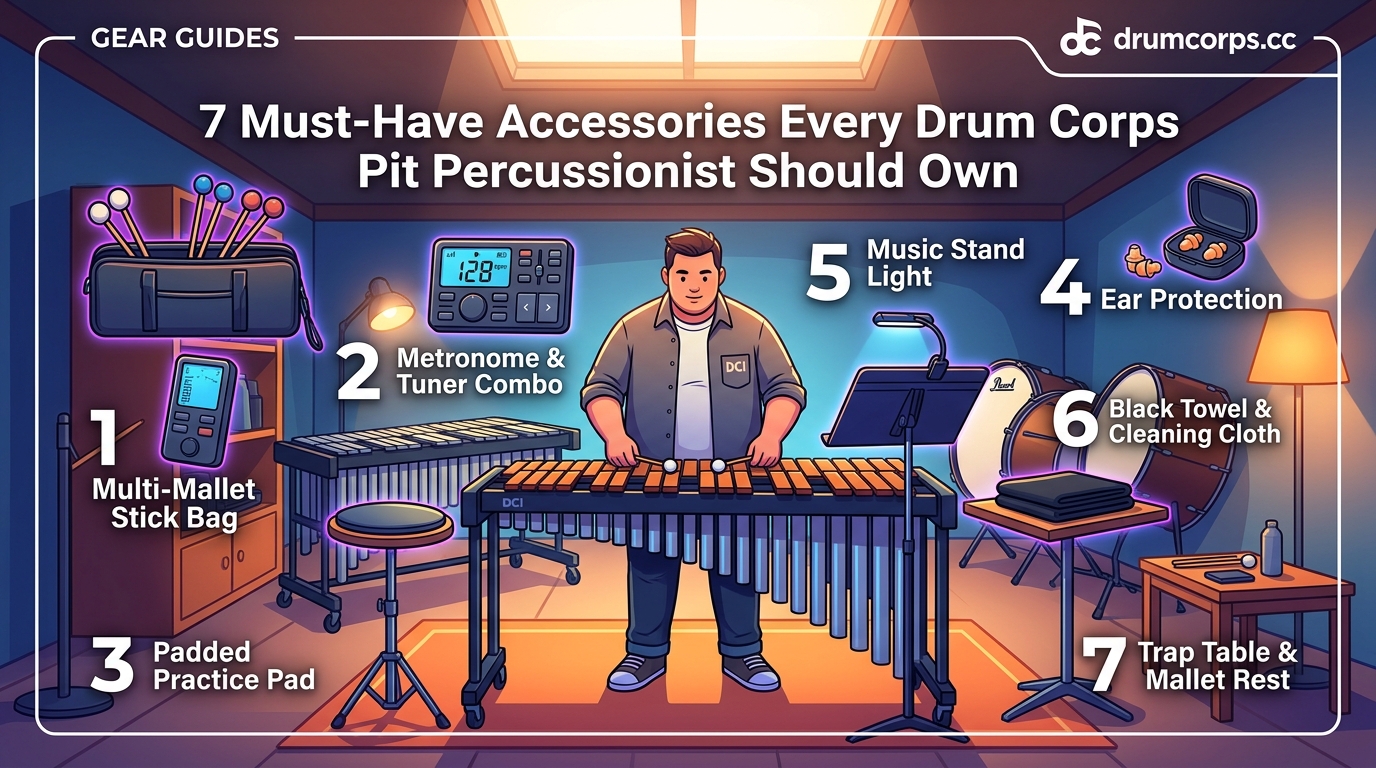
Pit percussion isn’t stationary. You’re moving between instruments, sometimes running during transitions, always on your feet for hours.
Proper shoes prevent injuries and improve performance. Your corps likely has uniform shoe requirements, but you’ll also need rehearsal footwear.
Look for shoes with:
- Non-marking soles for gym floors
- Good arch support for long days
- Flexibility for quick movements
- Durability for daily wear
Many members prefer cross-training shoes or lightweight basketball shoes. They provide support without the bulk of running shoes.
Break in new shoes before camp. Blisters during the first week of rehearsal make everything harder. Wear your rehearsal shoes around campus or during regular practice for at least a week before departure.
Bring backup pairs. One pair won’t survive a full season. Having a second pair lets you rotate daily, extending the life of both and giving wet shoes time to dry.
Insoles make a huge difference for members with foot issues. Over-the-counter options work for most people, but custom orthotics help if you have specific needs. Talk to your doctor before camp if you have concerns.
Some corps allow members to wear compression socks during rehearsal. They reduce swelling and fatigue during long blocks. Check your corps’ uniform policy before investing.
Weather protection for outdoor rehearsals
Summer weather varies wildly. You’ll rehearse in blazing sun, sudden storms, and everything between.
Sun protection is critical. You’re outside for 8-12 hours daily during camps and tour. Sunscreen, hats, and sunglasses prevent burns and heat exhaustion.
Apply broad-spectrum SPF 50+ every two hours. Sweat and time degrade protection. Keep a small bottle in your bag for reapplication during breaks.
Wide-brimmed hats provide shade during water breaks. Baseball caps work but don’t protect ears and neck. Some members use cooling towels that stay cold when wet.
Rain happens. A lot. Protect your music and personal items with waterproof bags or covers. Large ziplock bags work in a pinch for music folders. Dedicated rain covers fit over mallet bags and backpacks.
Many members keep a complete change of clothes in their bag. Wet socks and shoes cause blisters and discomfort. Having dry options improves focus and prevents minor issues from becoming major problems.
Staying hydrated requires planning. Bring a large water bottle, at least 32 ounces. Insulated bottles keep water cold longer. Refill during every break. Dehydration kills performance and can land you in the medical tent.
Music organization systems that work
You’ll receive hundreds of pages of music throughout the season. Keeping it organized and accessible determines whether you can make changes during rehearsal or waste time searching.
Three-ring binders with sheet protectors remain the standard. They’re simple, reliable, and let you flip pages without tearing. Use one binder per instrument or section of the show.
Label everything clearly. Use tabs to separate warm-ups, exercises, and show music. Color-coding helps some members find parts faster during intense rehearsal blocks.
Page turning becomes an issue during performance. Some passages require both hands continuously. Solutions include:
- Memorize sections where you can’t turn pages
- Use an assistant to turn pages during performance
- Tape music to stands in a continuous fold
- Photograph music for digital backup and reference
Many corps now allow tablets for rehearsal (though not always for performance). Apps like forScore let you organize, annotate, and turn pages with a foot pedal. Check your corps’ electronics policy before investing in this setup.
Pencils stay with your music at all times. You’ll make constant adjustments to stickings, dynamics, and notes. Mechanical pencils don’t need sharpening. Keep several in your binder and bag.
Erasers matter as much as pencils. White plastic erasers remove marks cleanly without tearing paper. The pink erasers on pencil ends smudge and damage sheet protectors.
Make backup copies of all music. Store digital files in cloud storage. Keep physical copies separate from your performance binder. Losing music the day before a show creates unnecessary stress.
Maintenance supplies for daily care
Instruments need regular attention. As a section, you’ll share maintenance responsibilities. Having your own supplies means you’re never waiting on someone else.
Cleaning cloths remove fingerprints, dust, and moisture. Microfiber works best because it doesn’t scratch. Keep one in your mallet bag and another in your personal kit.
Bar polish maintains marimba and vibraphone appearance. Use it sparingly. Too much polish leaves residue that affects tone. Once weekly is usually sufficient.
Pedal maintenance prevents squeaks and sticking. Timpani pedals need occasional lubrication. Vibraphone damper pedals require adjustment to prevent buzzing. A small bottle of instrument oil handles most needs.
Replacement parts save rehearsal time. Extra felt strips, rubber bumpers, and cord for mallets let you fix minor issues immediately instead of waiting for staff.
Tape has countless uses. Gaffer’s tape secures cables, marks positions, and makes emergency repairs. Electrical tape wraps mallet handles for better grip. Masking tape labels equipment. Keep a roll of each in your bag.
Cable management matters in modern pits. Many setups include electronics, microphones, and monitors. Velcro cable ties keep wires organized and prevent tripping hazards. You can pick up a pack for under $10.
| Accessory Type | Primary Use | Approximate Cost | Replacement Frequency |
|---|---|---|---|
| Professional mallets | Tone production | $150-300 for full set | Every 1-2 seasons |
| Mallet bag | Organization and protection | $40-80 | Multiple seasons |
| Tuning tools | Instrument maintenance | $30-60 | Rarely needs replacement |
| Rehearsal shoes | Injury prevention | $60-120 | 2-3 pairs per season |
| Weather protection | Health and equipment safety | $20-50 | As needed |
| Music organization | Efficiency and preparation | $15-40 | Annually |
| Maintenance supplies | Daily instrument care | $30-60 | Throughout season |
Building your accessory collection strategically
You don’t need everything immediately. Prioritize based on your corps’ schedule and requirements.
Before your first camp, get:
- One complete set of mallets for your primary instrument
- A quality mallet bag
- Rehearsal shoes
- Basic tuning tools
- Sun protection
Add these after your first camp:
- Additional mallet pairs for secondary instruments
- Comprehensive tool kit
- Weather protection gear
- Backup shoes
- Advanced music organization system
Budget around $400-600 for essential first-year accessories. This seems like a lot, but spreading purchases across several months makes it manageable. Many members use graduation money, summer job earnings, or fundraising to cover costs.
Buy quality items that last. Cheap alternatives fail when you need them most. A $15 mallet bag might save money initially but won’t survive tour. A $60 professional bag lasts multiple seasons.
Ask veterans what they actually use. Every corps has slightly different needs based on show design and equipment. Your section leaders can recommend specific brands and items that work best for your ensemble.
Some corps offer equipment packages or group discounts with sponsors. Take advantage of these opportunities. Buying through your organization often saves 20-30% compared to retail prices.
“The members who succeed in drum corps are the ones who show up prepared. That doesn’t just mean knowing your music. It means having the right tools to do your job every single day, in any condition. Your accessories aren’t optional. They’re part of being a professional performer.” — Front ensemble caption head, seven-time DCI finalist
Common mistakes to avoid
New members often over-pack or under-prepare. Finding the balance takes experience, but you can avoid common pitfalls.
Don’t bring instruments your corps provides. You’re not helping by showing up with your own marimba when the corps has professional equipment. Save the space and weight for actual necessities.
Don’t skip maintenance supplies thinking someone else will handle it. Shared responsibility means everyone contributes. Being the member without basic tools makes you dependent on others.
Don’t cheap out on shoes. Your feet carry you through 12-hour days. Saving $20 on shoes costs you in pain, blisters, and potential injury. This isn’t the place to economize.
Don’t forget backup everything. Lost or damaged items happen constantly during tour. Having replacements prevents small problems from derailing rehearsals.
Don’t ignore corps-specific requirements. Every organization has particular needs based on their equipment and show design. Read communications carefully and ask questions before making purchases.
Don’t wait until the last minute. Shipping delays, sizing issues, and availability problems happen. Order accessories at least three weeks before you need them. This gives you time to test everything and make returns if necessary.
How accessories connect to better performance
The relationship between equipment and performance isn’t always obvious to new members. But experienced pit percussionists know that proper accessories directly impact execution.
Quality mallets produce consistent tone. When you’re not fighting your equipment, you can focus on musicality and technique. This shows in cleaner runs, better balance, and more confident playing.
Organization reduces mental load. Knowing exactly where your music and tools are means less stress during transitions. This mental clarity helps you stay present and responsive during rehearsal.
Proper footwear prevents fatigue. When your feet don’t hurt, you move more confidently between instruments. This improves visual effect and lets you take more aggressive stickings without worrying about stability.
Weather protection keeps you healthy. Missing rehearsal because of sunburn or dehydration hurts your development and your section. Staying healthy means more reps, faster improvement, and better performance.
Maintenance supplies extend instrument life. Well-maintained instruments sound better and respond more predictably. This benefits everyone in the section and contributes to overall ensemble quality.
Smart members also understand how building a perfect 30-minute individual practice routine complements having the right accessories. The tools support the work, but consistent practice habits make the real difference.
Gear that grows with you
Your needs will change as you gain experience. First-year members focus on basics. Veterans add specialized tools for specific techniques or instruments.
Many members expand their mallet collections significantly by their second season. You’ll develop preferences for specific weights, lengths, and wrappings. Building a larger selection lets you fine-tune tone for different passages.
Advanced tuning equipment becomes more valuable as you take on section leadership roles. Strobe tuners, frequency analyzers, and precision measurement tools help when you’re responsible for entire instrument setups.
Recording equipment helps serious members analyze their playing. Small portable recorders or quality phone setups let you review rehearsals and identify areas for improvement. This self-assessment accelerates development.
Some veterans invest in personal practice instruments. A small practice marimba or vibraphone at home dramatically increases productive practice time. This investment makes sense if you’re pursuing music beyond drum corps.
Electronics knowledge becomes valuable in modern front ensembles. Understanding signal flow, microphone placement, and mixing basics helps you troubleshoot issues and communicate with audio staff. This doesn’t require expensive gear, just willingness to learn.
Making accessories work for your budget
Drum corps is expensive. Adding hundreds of dollars in accessories on top of tuition, travel, and other costs creates real financial pressure for many families.
Start with absolute essentials. You can perform with basic mallets, a simple bag, and decent shoes. Add other items as budget allows throughout the season.
Buy used when possible. Many members sell gear after aging out. Facebook groups, corps alumni networks, and music education forums often have excellent used equipment at significant discounts.
Share costs with section mates. Maintenance supplies, tool kits, and some accessories can be split among multiple members. This reduces individual expense while ensuring everyone has access.
Look for student discounts. Many music retailers offer 10-15% off with a student ID. Some manufacturers have education pricing programs. Always ask before purchasing.
Time purchases strategically. Black Friday, end-of-season sales, and back-to-school promotions offer significant savings. Planning ahead lets you take advantage of these opportunities.
Consider fundraising specifically for equipment. Some members do this separately from corps tuition fundraising. Small amounts from multiple sources add up faster than you’d expect.
Talk to your caption head if finances are a genuine barrier. Many corps have equipment assistance programs or loaner items for members who need help. Don’t let pride prevent you from asking for support.
Gear that supports the whole season
Tour season tests everything. Heat, humidity, travel, and constant use reveal quality differences fast.
Durability matters more than aesthetics. Gear that looks great but falls apart after two weeks wastes money. Read reviews from actual marching members, not just concert percussionists.
Versatility extends value. Items that serve multiple purposes reduce what you need to carry. A good mallet bag with tool pockets eliminates need for separate storage. Shoes that work for rehearsal and performance save packing space.
Repairability saves money long-term. Some accessories can be fixed when damaged. Mallets can be re-wrapped. Bags can be stitched. Tools can be sharpened. Items that can be maintained last multiple seasons.
Weight becomes a factor during tour. You’re carrying your gear daily, often long distances. Lighter options that maintain quality make life easier. Every pound matters when you’re walking from bus to stadium in summer heat.
Weather resistance protects your investment. Accessories that handle moisture, heat, and sun exposure last longer and perform more consistently. This matters more than most members realize until they experience their first outdoor rehearsal in a downpour.
The best drum corps pit percussion accessories become extensions of your performance preparation. They’re not just gear. They’re tools that let you focus on what matters: making music, supporting your section, and delivering performances you’re proud of. Start with essentials, build your collection thoughtfully, and take care of everything you invest in. Your future self, three weeks into tour with perfectly organized music and comfortable feet, will thank you.