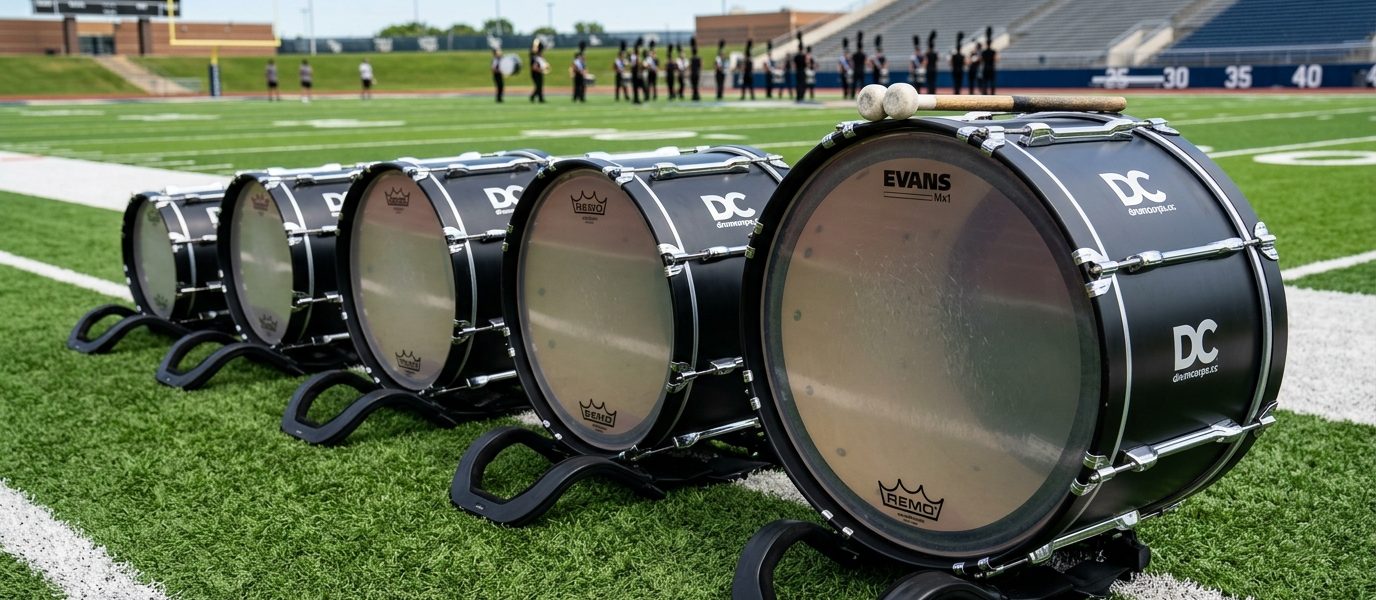
Your bass line sounds muddy during the opener. The bottom bass lacks punch. The top bass rings out too long. You check tuning, watch stick heights, and drill the players harder. Nothing changes.
The problem isn’t your students. It’s the heads.
Most school ensembles inherit old equipment, buy the cheapest replacements, or never change heads until they split. Professional marching bass drum heads transform your sound overnight. They give you control over tone, projection, and consistency that budget options simply can’t deliver.
Professional marching bass drum heads deliver clearer tone, better tuning stability, and longer lifespan than entry-level options. Choose heads based on your ensemble’s size, musical demands, and climate conditions. Two-ply reinforced heads offer durability for outdoor use, while single-ply clear heads provide maximum resonance for indoor performances. Proper selection directly impacts your bass line’s blend, articulation, and overall sound quality.
Why Your Ensemble Deserves Better Than Stock Heads
Factory heads on most school drums are designed to survive shipping, not marching season.
They use thinner film. They lack reinforcement rings. They warp in heat and crack in cold. Your students work hard to develop technique, but inferior heads mask their progress.
Professional heads solve three critical problems. First, they stay in tune longer. You spend less time adjusting tension and more time teaching musicality. Second, they produce consistent tone across all five or six drums in your bass line. Third, they withstand weather extremes that destroy cheaper alternatives.
Budget heads might save you fifty dollars per drum. But you’ll replace them twice as often, retune constantly, and never achieve the clarity your arrangements deserve.
The difference becomes obvious during outdoor rehearsals. Professional heads maintain tension through temperature swings. They respond evenly across the playing surface. They give your students the feedback they need to develop clean technique.
Understanding Construction Types
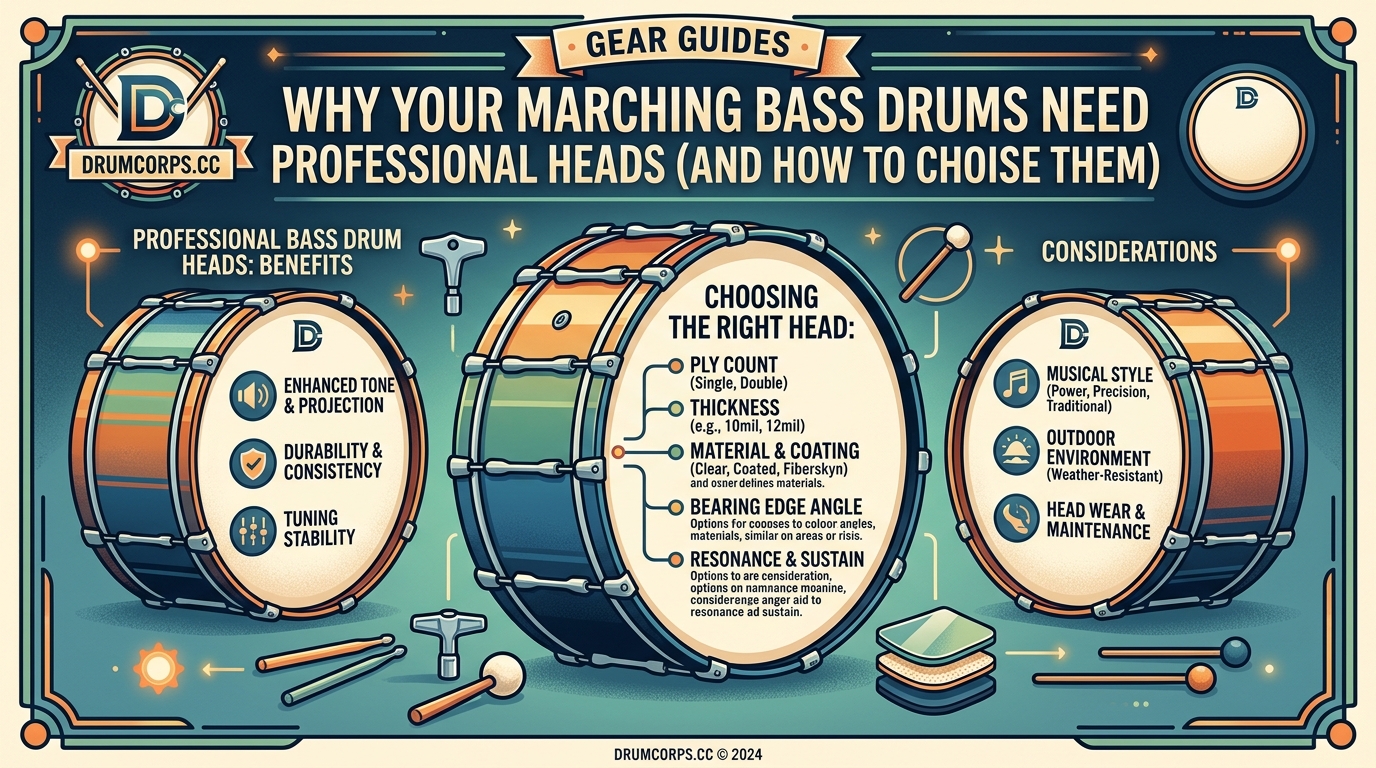
Marching bass drum heads come in three main categories.
Single-ply clear heads use one layer of film, typically 10 to 12 mil thick. They offer maximum resonance and sustain. You hear every overtone. They work beautifully for indoor performances and concert settings where you want rich, full tone.
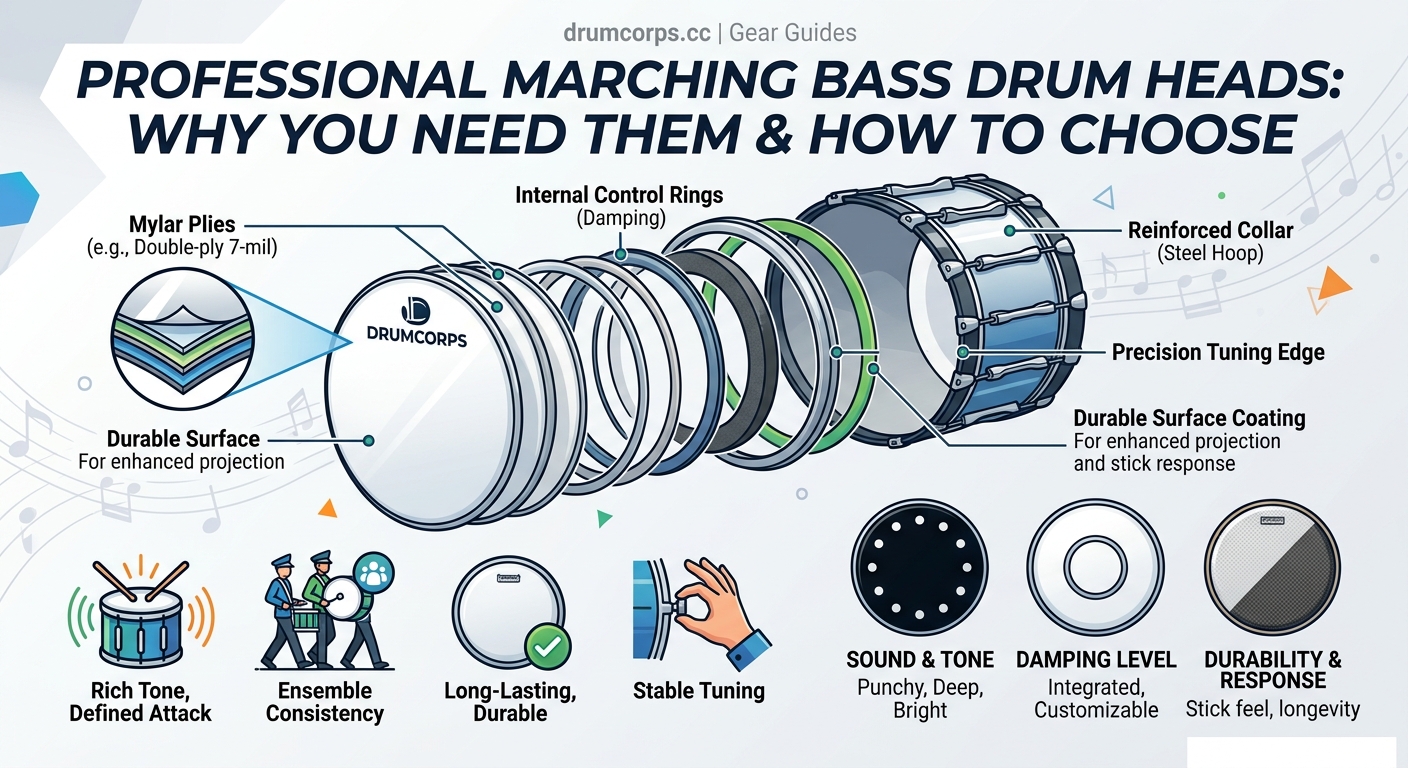
Two-ply reinforced heads bond two layers of film together, often with a thin layer of oil between them. This construction dampens overtones naturally. You get focused, punchy sound with shorter decay. Most competitive bass lines use two-ply heads because they project clearly in stadiums and cut through brass and winds.
Pre-damped heads add foam or felt rings to control sustain without external muffling. They’re convenient but limit your tuning options. You can’t remove the damping if your musical demands change.
| Head Type | Thickness | Sustain | Best Use Case |
|---|---|---|---|
| Single-ply clear | 10-12 mil | Long | Indoor concerts, lyrical passages |
| Two-ply reinforced | 14-20 mil | Medium | Outdoor marching, general use |
| Pre-damped | Varies | Short | High-tempo shows, tight articulation |
Most directors find two-ply heads offer the best balance. They handle outdoor conditions while still providing enough tone color for musical expression.
Selecting the Right Thickness for Each Drum
Your bass line needs graduated tone from top to bottom.
The top bass (smallest drum) should sing clearly without excessive boom. Use a thinner head here, around 14 mil. It responds quickly to light playing and produces defined articulation.
Middle basses benefit from medium-weight heads, typically 16 to 18 mil. They bridge the gap between the crisp top voice and the foundational bottom drums.
Bottom basses require the heaviest heads, often 20 mil or more. Thick film controls the massive air column inside large drums. Without proper weight, bottom basses sound flabby and undefined.
“Matching head weight to drum size is the single biggest factor in creating a blended bass line. I see too many programs put identical heads on every drum and wonder why they can’t tune the line. Physics matters.” — Caption head with 15 years of competitive experience
This graduated approach creates natural voice separation. Each drum occupies its own frequency range without fighting for sonic space.
How Climate Affects Your Choice
Your location determines which heads will survive the season.
Hot, humid climates stress drum heads constantly. Heat expands the film. Humidity softens the bearing edge contact. Two-ply heads with UV-resistant coating hold up better than single-ply options. Look for heads specifically marketed for outdoor marching use.
Cold weather brings different challenges. Film becomes brittle below 40 degrees. Tension drops as temperatures fall. If you march in fall championships or late-season competitions, choose heads designed for temperature stability. Some manufacturers add plasticizers that maintain flexibility in cold conditions.
Dry climates cause less head failure but create tuning drift. Low humidity allows heads to lose moisture, changing their tension characteristics over weeks. You’ll need to check tuning more frequently, but most professional heads handle dry conditions well.
Schools in variable climates face the toughest decisions. You might rehearse in 95-degree August heat and perform at 50-degree October championships. Two-ply reinforced heads with all-weather construction give you the best chance of consistent performance across temperature ranges.
Steps to Match Heads to Your Musical Demands
Choosing the right heads requires analyzing your show music.
-
Review your bass feature sections and identify the fastest passages. If your top bass plays rapid 32nd notes, you need heads that respond instantly without excessive ring.
-
Listen to your ballad moments and determine how much sustain enhances the musical effect. Lyrical sections often benefit from longer decay, while aggressive battery breaks need tight, controlled tone.
-
Consider your rehearsal schedule and estimate total playing hours. Bands that rehearse 20 hours per week need more durable heads than ensembles practicing 6 hours weekly.
-
Factor in your performance venues and whether you’ll play primarily outdoors, indoors, or both. Stadium shows demand projection. Gym performances need controlled volume.
-
Set your budget per drum and calculate total cost for the entire bass line. Professional heads range from $40 to $80 each. Multiply by the number of drums and plan for both batter and resonant sides.
This systematic approach prevents impulse purchases. You’ll select heads that actually support your musical goals rather than chasing brand names or copying other programs.
Batter Versus Resonant Side Considerations
Both sides of your bass drums affect tone.
The batter head (strike side) receives the mallet impact. It controls attack, articulation, and initial tone color. This is where you invest in the highest quality. The batter head does the hardest work and wears out fastest.
The resonant head (bottom side) shapes sustain and overall tone quality. Many directors save money here by using slightly thinner or less expensive heads. That’s a reasonable compromise if budget is tight.
However, matching both sides with professional heads gives you maximum tuning flexibility. You can create precise tension relationships between top and bottom. This control lets you fine-tune each drum’s voice within the line.
Some programs use clear resonant heads and coated batter heads. The coating adds slight dampening and changes the feel under the mallet. Most marching applications stick with clear heads on both sides for maximum projection.
Never mix brands between batter and resonant. Different manufacturers use different film compositions. Mixing them creates unpredictable tuning behavior and tonal inconsistencies.
Common Mistakes That Waste Your Investment
Even expensive heads fail when installed incorrectly.
The biggest error is over-tensioning. Directors crank heads tight trying to eliminate wrinkles or achieve high pitch. Excessive tension stretches the film beyond its elastic limit. The head loses resilience and develops dead spots.
Uneven tensioning creates another problem. If you tighten one side of the head more than the opposite side, the bearing edge makes uneven contact. The drum produces uneven tone and won’t tune properly.
Ignoring bearing edge condition wastes money on heads. Nicks, dents, or warped edges prevent proper head seating. The best heads in the world can’t compensate for damaged bearing edges. Inspect edges before installing new heads and sand out any imperfections.
Leaving heads on too long is false economy. Worn heads lose tonal clarity and tuning stability. They make your students work harder for worse results. Plan to replace heads annually for competitive programs, every 18 months for less intensive use.
Breaking In New Heads Properly
Fresh heads need preparation before performance.
Install the head and bring it up to pitch gradually. Don’t crank it to full tension immediately. Let the film settle onto the bearing edge over several hours.
Play the drum gently for the first rehearsal. Light playing helps the head stretch evenly. Aggressive playing on brand-new heads can create uneven stress patterns.
Retune after 24 hours. New heads stretch and settle during the first day. You’ll need to add tension to return to your target pitch.
Repeat this process over three to five days. By the end of the break-in period, the head will hold pitch consistently. You’re ready for full-volume rehearsals and performances.
Skipping break-in causes premature failure. Heads that aren’t properly seated develop pressure points. These weak spots fail under the stress of marching season.
Tuning Strategy for Professional Results
Great heads only deliver results when tuned correctly.
Start with the resonant head. Bring it up to medium-low tension, just above wrinkle-free. This becomes your foundation.
Add the batter head and tune it slightly higher than the resonant side. This relationship produces focused tone with controlled sustain. The exact interval depends on your musical preference, but most bass lines tune batter heads a minor third to perfect fourth above resonant heads.
Tune top to bottom in descending intervals. Your top bass should be noticeably higher than bass two. Bass two should be clearly higher than bass three. Maintain consistent interval spacing between all drums.
Use a drum dial or tension watch for precision. These tools measure head tension at each lug. Equal tension around the drum ensures even tone and prevents warping.
Check tuning before every rehearsal during the first month of the season. Heads settle and weather changes affect tension. Consistent monitoring prevents small problems from becoming major issues.
The relationship between tuning and head selection matters more than most directors realize. Professional heads give you the tension range and stability to actually achieve your tuning goals. Budget heads often can’t reach the necessary pitch or won’t stay there.
When to Replace Rather Than Repair
Heads have a finite lifespan.
Visible damage requires immediate replacement. Cracks, tears, or punctures can’t be repaired. They’ll expand under playing stress and fail during performance.
Dents or permanent deformation also mean it’s time for new heads. Once the film loses its shape, it won’t produce even tone. You’ll chase tuning problems that can’t be solved.
Loss of tone clarity signals worn-out heads even without visible damage. If your drums sound dull or muffled despite proper tuning, the film has lost its resonance. Fresh heads restore brightness and projection.
Inability to hold pitch indicates stretched film. Heads that constantly go flat have exceeded their elastic limit. No amount of tensioning will fix them.
Plan replacement as preventive maintenance, not emergency repair. Order new heads before the old ones fail. You’ll avoid last-minute panic and ensure your bass line sounds its best throughout the season.
Professional heads last longer than budget options, but they still wear out. Factor replacement costs into your annual percussion budget. Competitive programs should budget for new heads each season. Less intensive ensembles can extend to 18 months with proper care.
Matching Heads to Specific Performance Situations
Different events demand different approaches.
Championship performances require your most reliable setup. Install fresh professional heads at least two weeks before finals. This gives them time to break in and stabilize. You want zero surprises on the most important day of the season.
Exhibition shows and parades allow more experimentation. These lower-stakes events are perfect for testing new head combinations or trying different tuning approaches. You can gather data about how different setups perform without risking competitive results.
Indoor concerts benefit from single-ply heads if your ensemble performs both marching and concert seasons. The extra resonance suits concert hall acoustics. Just remember you’ll need to swap back to two-ply heads before outdoor rehearsals resume.
Recording sessions reveal every flaw in your heads. Studios capture overtones and inconsistencies that audiences might miss. Use your newest, most evenly-tuned heads for recording. The investment pays off in professional-sounding documentation.
Some programs maintain two complete sets of heads. One set handles daily rehearsals and takes the beating of regular use. The second set stays fresh for competitions and performances. This approach maximizes both durability and sound quality, though it doubles your investment.
Budget Planning for Multi-Year Success
Smart purchasing spreads costs over time.
Start with your top bass. It’s the most exposed voice and benefits most from premium heads. A single upgrade demonstrates the difference to your students and administration.
Add one drum per year if budget is extremely tight. Replace bass two the next season, then bass three, and so on. This gradual approach is better than buying cheap heads for the entire line.
Buy batter heads first. They wear faster and affect tone more than resonant heads. You can defer resonant head upgrades until the following season.
Look for educator discounts and bulk pricing. Many manufacturers offer 10 to 20 percent discounts for school purchases. Buying heads for your entire battery at once often qualifies for additional savings.
Consider fundraising specifically for percussion equipment. Parents and boosters understand the connection between quality gear and competitive success. A targeted campaign for new bass drum heads is tangible and achievable.
Calculate cost per rehearsal hour. A $60 head that lasts 200 hours costs 30 cents per hour. A $30 head that lasts 80 hours costs 37.5 cents per hour. The premium option is actually cheaper in the long run.
Building a multi-year equipment replacement plan helps you maintain consistent quality. You’re never stuck with an entire bass line of worn-out heads at once.
Maintaining Heads Between Replacements
Proper care extends head lifespan significantly.
Clean heads after outdoor rehearsals. Dust, pollen, and dirt accumulate on the playing surface. A soft cloth removes debris before it grinds into the film.
Loosen tension during storage periods. If your drums sit unused for weeks or months, back off the tension rods slightly. This reduces stress on the film and bearing edges.
Store drums in climate-controlled spaces when possible. Garages and outdoor sheds expose heads to temperature and humidity extremes. Interior storage rooms protect your investment.
Inspect lugs and tension rods regularly. Stripped threads or bent hardware cause uneven tension. Replace damaged parts before they ruin your heads.
Protect drums during transport. Cases or covers prevent accidental impacts. A single drop can dent a head or knock a drum completely out of tune.
Teach your students proper mallet technique. Glancing blows and off-center strikes stress heads unevenly. Clean, centered playing extends head life and improves tone quality.
These maintenance habits cost nothing but save hundreds of dollars over a season. They also teach students to respect their equipment and take ownership of the ensemble’s sound.
Like developing clean articulation requires proper practice habits, maintaining your equipment demands consistent attention to detail.
Sound Quality Your Students Can Hear
The best reason to upgrade heads is what it does for your students.
Professional heads respond to subtle dynamic changes. Students hear the difference between forte and fortissimo. They learn to control tone color, not just volume.
Clear articulation becomes possible. Cheap heads blur note separation. Professional heads reveal every attack and release. Your students develop cleaner technique because they can actually hear what they’re doing.
Consistent tone across the line builds confidence. When every drum sounds balanced and focused, students trust their equipment. They stop second-guessing their playing and commit fully to the music.
Better projection carries their hard work to the audience. After months of rehearsal, your students deserve heads that showcase their ability. Professional heads ensure judges and spectators hear the bass line’s full contribution.
The upgrade also signals that you take the section seriously. Students notice when you invest in their success. Quality equipment builds pride and motivation.
Many directors report improved retention after equipment upgrades. Students want to be part of a program that sounds professional. Quality heads contribute to that perception.
Your Bass Line’s Foundation Starts Here
Marching bass drum heads aren’t glamorous.
Nobody writes feature articles about them. Parents don’t notice them in performance photos. But directors know the truth. Heads determine whether your bass line blends or clashes, projects or disappears, inspires or frustrates.
Professional heads give you the tools to achieve your musical vision. They respond to your tuning expertise. They survive the demands of marching season. They reveal your students’ technique rather than hiding it.
Start with one drum if that’s all your budget allows. Experience the difference. Hear how much clearer that voice becomes. Then plan your path to upgrading the entire line.
Your students are working hard. Your staff is teaching well. Give them heads that match their effort. The investment pays off in every rehearsal, every performance, and every moment your bass line locks in and delivers the foundation your show deserves.