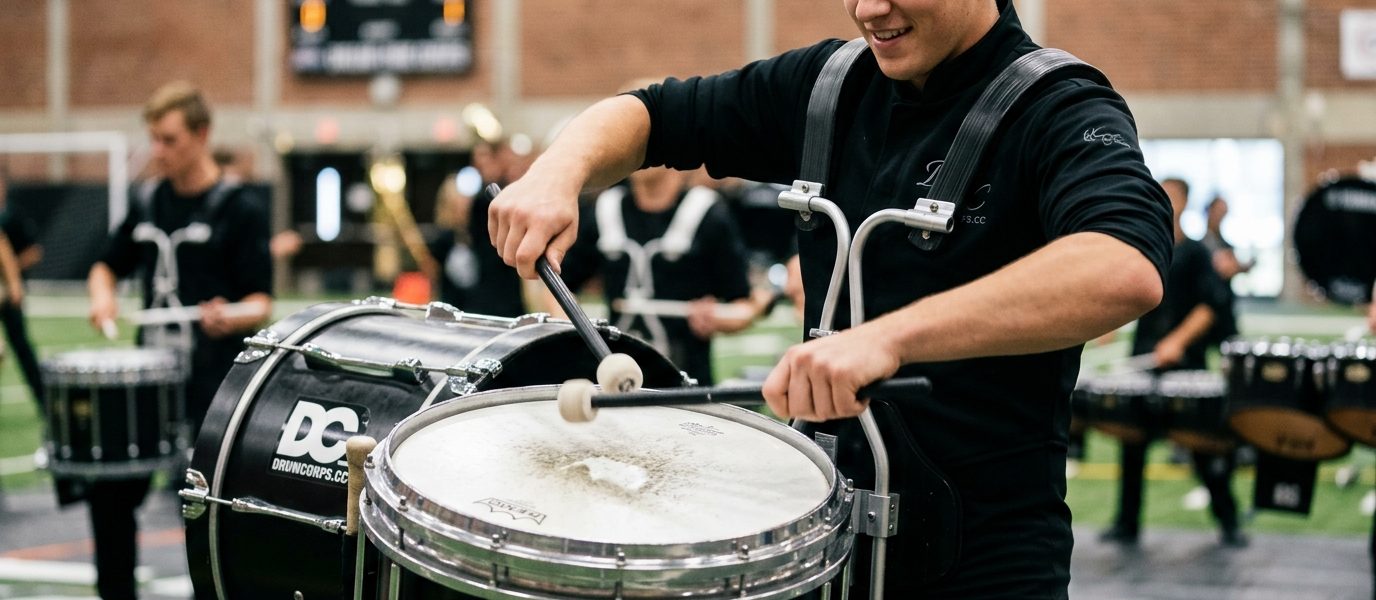
You’ve hit a wall with your bass drum speed. Your leg burns after a few measures of doubles, your ankle locks up halfway through a run, and you know you’re fighting the pedal instead of working with it. The frustration is real, especially when you watch other drummers float through passages that leave you cramping.
Building bass drum speed isn’t about muscling through the pain or grinding out endless repetitions with poor form. It’s about rewiring your approach to foot technique, understanding how tension sabotages velocity, and training your muscles to fire efficiently under pressure.
Bass drum speed develops through relaxed motion, not force. Focus on ankle isolation, gradual tempo increases, and endurance-building exercises that prioritize control over raw power. Tension creates fatigue and limits velocity. Proper form, consistent practice structure, and strategic rest intervals build sustainable speed that won’t collapse under performance pressure or extended playing sessions.
Understanding Why Tension Kills Your Speed
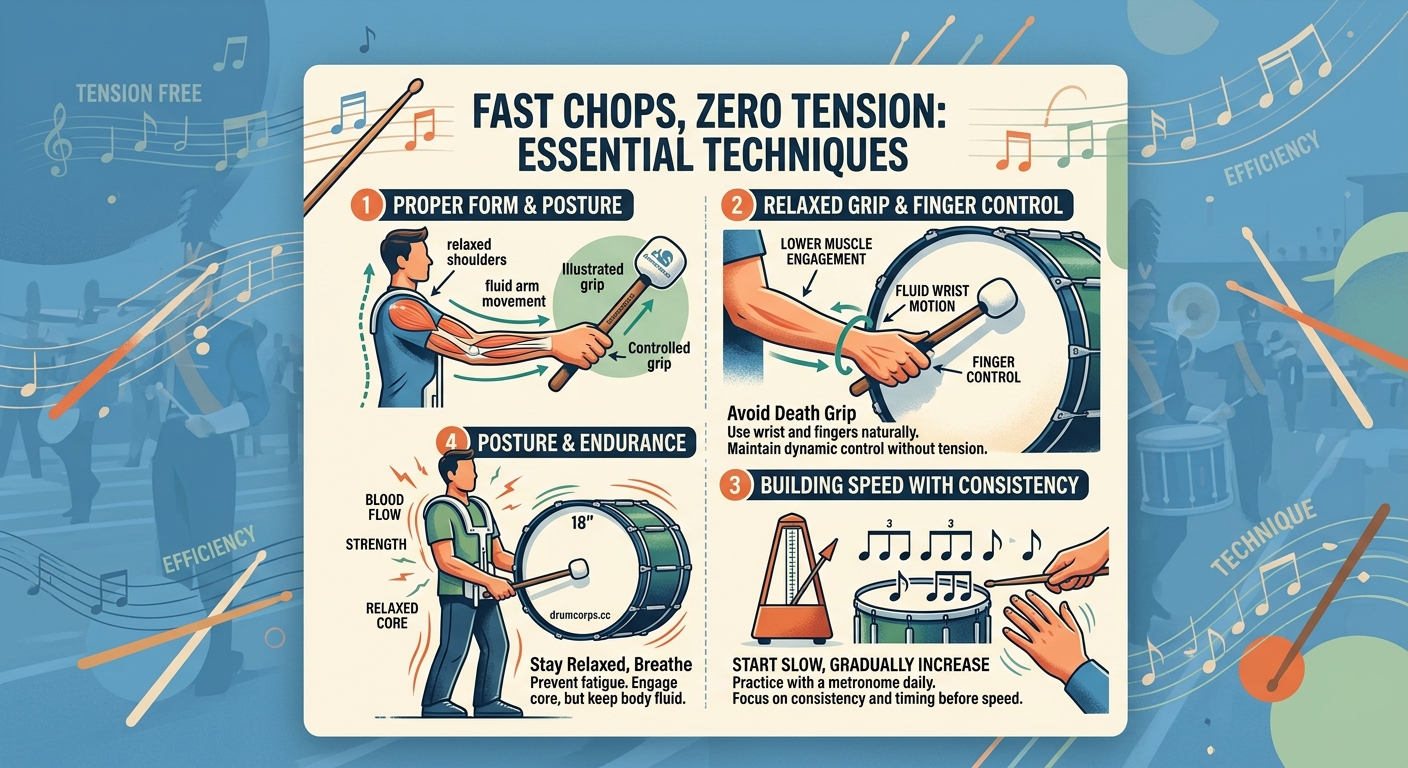
Tension is the enemy of velocity. When your muscles tighten, they slow down. Period.
Think about your leg as a system of levers and springs. When you clench your calf, quad, or hip flexor, you’re essentially jamming the gears. Your foot can’t rebound naturally off the pedal, and every stroke requires conscious effort instead of reflexive motion.
Most drummers trying to play faster press harder. They think more force equals more speed. It doesn’t. It creates a feedback loop where tension breeds more tension, fatigue sets in faster, and your top speed actually decreases over time.
The goal is to find the minimum amount of muscle engagement needed to produce a clean stroke. That’s it. Anything beyond that is wasted energy that will burn you out before the end of your practice session, let alone a full show.
Isolating the Ankle for Maximum Efficiency
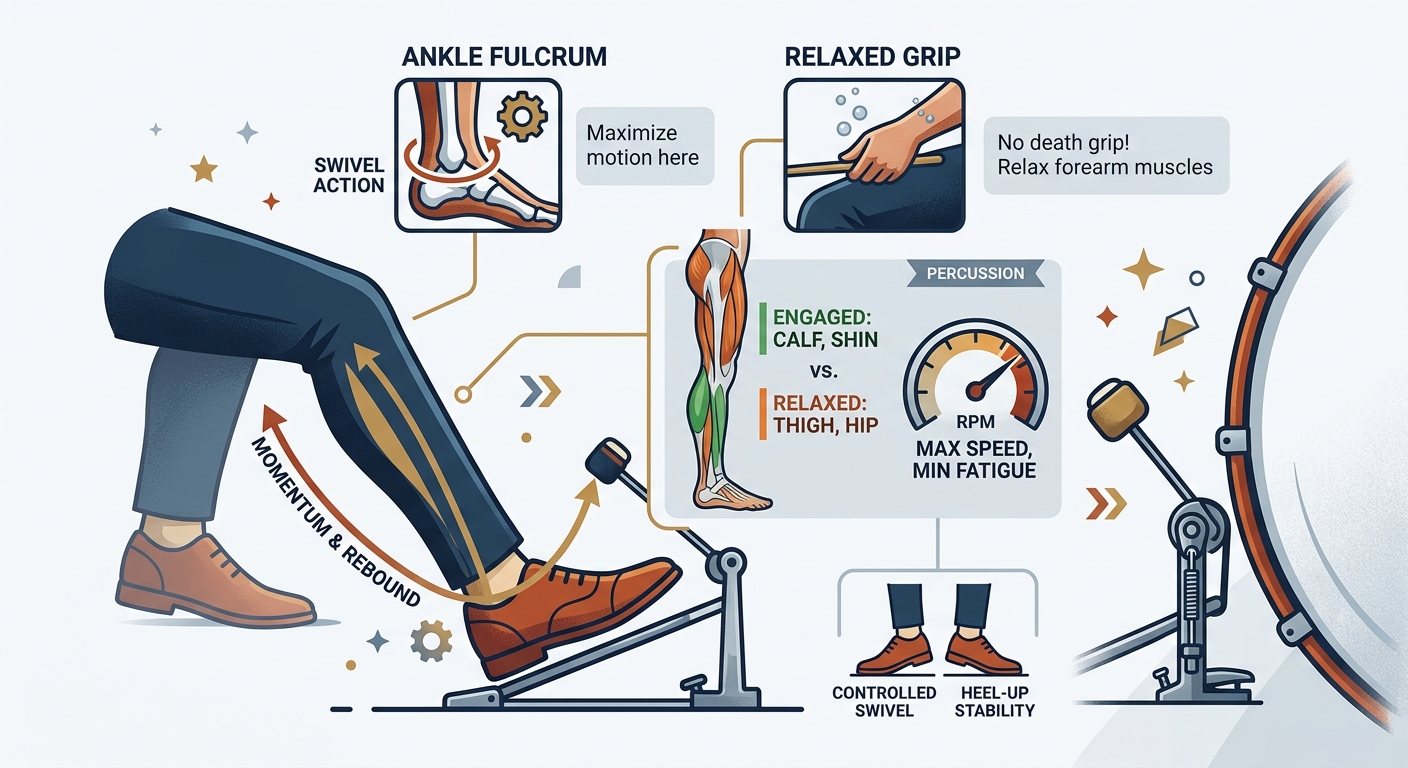
Your ankle does most of the work in fast bass drum playing. Not your whole leg.
Many drummers make the mistake of using their entire leg to drive the pedal, lifting from the hip or knee. That works fine for slow, powerful strokes, but it’s a disaster for speed. The larger muscle groups can’t fire rapidly enough, and the range of motion is too big to control at high tempos.
Ankle motion is smaller, faster, and more precise. You want your heel anchored (or floating, depending on your technique preference) while your ankle joint handles the up and down motion. Your knee and hip stay relatively stable.
Here’s a simple test. Sit at your kit and play sixteenth notes at 60 BPM using only your ankle. No leg movement. Just the hinge at your ankle joint. If you feel your quad or hip flexor engaging heavily, you’re compensating with larger muscles because your ankle isn’t strong enough yet.
That’s fine. It means you’ve identified the weakness. Now you can address it.
The Three-Phase Practice Method for Building Speed
Building bass drum speed requires structure. Random practice won’t cut it. You need a system that progressively challenges your technique without inducing bad habits or injury.
Phase One: Establish Clean Strokes at Low Tempos
Start at a tempo where you can play perfectly relaxed singles for five minutes straight. For most people, that’s somewhere between 60 and 80 BPM for sixteenth notes.
Play with a metronome. No exceptions. Your internal clock isn’t reliable enough yet.
Focus on these elements during every stroke:
- Consistent stroke height (the beater should travel the same distance each time)
- Immediate rebound off the head (don’t let the beater rest against the drum)
- Zero tension in your calf between strokes
- Breathing normally (if you’re holding your breath, you’re too tense)
Spend at least two weeks here. Maybe three. It feels slow, but you’re building the foundation that makes everything else possible. Rushing this phase guarantees you’ll develop compensatory habits that will limit your top speed later.
Phase Two: Gradual Tempo Increases with Frequent Breaks
Once you can play relaxed singles at your starting tempo for ten minutes without fatigue, bump the metronome up by 2 to 4 BPM. Not 10. Not 5. Just 2 to 4.
At this new tempo, you’ll notice slight tension creeping back in. That’s normal. Your job is to identify where it appears (usually the calf or ankle) and consciously relax that area while maintaining the tempo.
Practice in intervals:
- Play for 90 seconds at the new tempo
- Rest for 30 seconds (shake out your leg, stretch your ankle)
- Repeat for 6 to 8 rounds
- Move to a different exercise or take a longer break
The rest intervals are not optional. They prevent cumulative fatigue and give your nervous system time to process the new motor pattern. Skipping rest is how you train tension into your technique permanently.
Stay at each tempo for at least three practice sessions before moving up again. If a tempo feels unstable or requires significant tension to maintain, drop back down 4 BPM and spend more time there. There’s no prize for rushing.
Phase Three: Endurance Building at Target Tempos
Once you reach a tempo that’s useful for your musical context (maybe 140 to 160 BPM for sixteenth notes), shift your focus from increasing speed to increasing endurance.
Can you play at that tempo for 30 seconds? Great. Now aim for 60 seconds. Then 90. Then two minutes. Then five.
Endurance at speed is where most drummers fail. They can hit the tempo for a few bars, but then their technique collapses. Building the stamina to maintain proper form through an entire chart or show requires dedicated endurance work.
Use the same interval structure as Phase Two, but instead of increasing tempo, increase the duration of each work interval while keeping the tempo constant. Add 15 to 30 seconds per week until you can sustain your target tempo for the length of your longest performance demand.
Common Mistakes That Sabotage Progress
| Mistake | Why It Hurts | Better Approach |
|---|---|---|
| Practicing only at fast tempos | Reinforces tension and sloppy technique | Spend 70% of practice time below your comfortable tempo |
| Skipping warm-up | Cold muscles fatigue faster and are more injury-prone | Always start with 5 to 10 minutes of slow, relaxed playing |
| Playing through pain | Pain is a signal of injury or severe tension, not progress | Stop immediately when pain appears, assess form, and rest |
| Ignoring the rebound | Fighting the pedal’s natural spring creates wasted effort | Let the pedal and beater do half the work for you |
| Practicing for hours without breaks | Fatigue leads to compensation patterns that become habits | Use structured intervals with mandatory rest periods |
The rebound point deserves extra attention. Your pedal and beater want to bounce back naturally. If you’re fighting that rebound or trying to control every millimeter of the stroke, you’re working against physics.
Let the beater come back on its own. Your job is just to initiate the stroke and get out of the way. This feels weird at first, especially if you’ve been playing with a death grip on the pedal. But once you learn to trust the rebound, your speed will jump significantly with less effort.
Drills That Actually Build Speed and Control
Here are specific exercises that target the mechanics of fast bass drum playing. Rotate through them during your practice sessions rather than doing all of them every day.
Single Stroke Ladder
Set your metronome to 60 BPM. Play one stroke per click for four measures. Then switch to two strokes per click (eighth notes) for four measures. Then four strokes per click (sixteenth notes) for four measures.
The tempo never changes, but the note density increases. This trains your foot to subdivide accurately while maintaining the same relaxed motion at different speeds.
Accent Tap Exercise
Play continuous sixteenth notes at a moderate tempo (100 to 120 BPM). Every fourth note is an accent (played slightly louder with a bit more ankle motion). The other three notes are taps (quieter, minimal motion).
This builds dynamic control and teaches your ankle to vary intensity without tensing up. It’s harder than it sounds.
Endurance Pyramids
Play sixteenth notes at your target tempo for 30 seconds, rest for 30 seconds. Then play for 45 seconds, rest for 30 seconds. Then 60 seconds with a 30 second rest. Then 75 seconds. Peak at 90 to 120 seconds, then work back down the pyramid.
Track your form throughout. If your technique breaks down at a certain duration, that’s your current endurance ceiling. Work just below that ceiling until it expands.
Double Stroke Rolls
If you’re working on double bass or heel-toe technique, practice slow double strokes with exaggerated clarity. Each pair of notes should sound identical in volume and spacing.
Start at 60 BPM (doubles on each click). When you can play perfect doubles for five minutes straight, increase by 2 BPM. This is a long-term project. Don’t rush it.
“The drummers who develop the most reliable speed aren’t the ones who practice the fastest. They’re the ones who practice the slowest with the most attention to detail. Speed is a byproduct of perfect form repeated thousands of times.”
Addressing Double Bass vs. Single Pedal Technique
The principles for building speed are identical whether you’re playing double bass or single pedal. Relaxation, ankle isolation, gradual progression, and endurance work apply to both.
The main difference is coordination. With double bass, you’re training two limbs to operate independently but synchronously. That adds a layer of complexity, but it doesn’t change the fundamental approach.
For double bass specifically, practice each foot individually first. Get your right foot (or left, if you’re left-footed) to your target speed and endurance level before adding the second foot. Then practice the left foot in isolation to the same standard.
Only after both feet can perform independently should you combine them. Start with simple alternating patterns (RLRL) at slow tempos and build up using the same three-phase method described earlier.
Many drummers try to learn double bass by playing both feet together from day one. That’s like trying to learn two languages simultaneously. It’s possible, but it’s inefficient and leads to imbalances where one foot compensates for the other’s weaknesses.
How to Structure Your Weekly Practice Schedule
Consistency beats intensity. Four 30-minute sessions per week will build more speed than one three-hour marathon session.
Here’s a sample weekly structure that balances technique work, speed building, and endurance:
Monday: Foundation Day
- 10 minutes of slow singles (60 to 80 BPM)
- 10 minutes of accent tap exercises
- 10 minutes of single stroke ladder
Wednesday: Speed Push Day
- 5-minute warm-up at comfortable tempo
- 15 minutes of tempo progression work (using Phase Two method)
- 10 minutes of doubles practice (if applicable)
Friday: Endurance Day
- 5-minute warm-up
- 20 minutes of endurance pyramids at target tempo
- 5-minute cool-down at slow tempo
Sunday: Application Day
- 10 minutes of warm-up
- 20 minutes playing actual music or show material, focusing on maintaining form
Adjust the duration based on your schedule, but keep the ratio of slow work to fast work at about 60/40. Most of your practice time should be spent below your maximum comfortable tempo, refining technique and building endurance.
The application day is crucial. It’s where you test whether your isolated practice translates to real-world performance. If your form falls apart when you’re reading music or playing with a group, you need more time in Phases One and Two before pushing into Phase Three.
Much like how to build a perfect 30-minute individual practice routine emphasizes structured repetition, your bass drum work needs the same disciplined approach to see real results.
Physical Conditioning Beyond the Drum Set
Your bass drum technique doesn’t exist in a vacuum. Your overall physical condition affects your playing.
Ankle strength and flexibility matter. If your ankle joint is stiff or weak, it can’t move efficiently at high speeds. Simple exercises help:
- Calf raises (3 sets of 15, slow and controlled)
- Ankle circles (20 in each direction, daily)
- Toe taps while sitting (practice the motion without the pedal)
Hip flexor flexibility also plays a role, especially if you use a lot of leg motion in your technique. Tight hip flexors create compensation patterns that show up as tension in your playing.
Stretch your hip flexors, quads, and calves for 5 to 10 minutes after every practice session. Not before. Stretching cold muscles doesn’t help and can cause injury. But post-practice stretching improves recovery and maintains the range of motion you need for efficient technique.
General cardiovascular fitness helps too. If you’re winded from walking up stairs, your leg muscles won’t have the endurance for a full show. You don’t need to become a marathon runner, but basic conditioning makes everything easier.
Recognizing and Breaking Through Plateaus
You’ll hit plateaus. Everyone does. You’ll reach a tempo where progress stalls for weeks, and it feels like you’ll never get faster.
First, check your form. Record yourself playing. Watch for tension, inconsistent stroke heights, or compensation patterns. Often, a plateau means you’ve maxed out what your current technique can deliver, and you need to refine something fundamental before you can progress.
Second, consider whether you’re actually stuck or just impatient. If you’ve only been at a tempo for a week, that’s not a plateau. That’s normal adaptation time. Give your nervous system at least three weeks at a new tempo before deciding you’re stuck.
Third, try a different approach. If you’ve been doing only singles, add doubles. If you’ve been playing with your heel down, experiment with heel up. Sometimes a technical variation unlocks progress in your primary technique.
Finally, take a break. Not from drumming entirely, but from speed work specifically. Spend two weeks doing only slow, relaxed playing. Work on dynamics, articulation, or musical phrasing. When you come back to speed work, you’ll often find you’ve broken through the plateau without even trying.
Your brain processes motor learning during rest, not during practice. Sometimes the best thing you can do for your speed is to stop trying to improve it for a while.
Applying These Principles to Performance Situations
Practice technique is one thing. Performance technique is another. The pressure of a show, competition, or recording session changes everything.
Adrenaline makes you tense up. The excitement of performance triggers your sympathetic nervous system, which tightens muscles and speeds up your heart rate. That’s great for running from predators, but terrible for maintaining relaxed bass drum technique.
The solution is to practice performing. Run through your show material or setlist at performance intensity regularly. Invite friends to watch. Record yourself. Create artificial pressure so your body learns to maintain form under stress.
Also, develop a pre-performance routine that includes physical relaxation. Shake out your legs. Do a few ankle circles. Take deep breaths. Remind yourself that tension kills speed, and consciously relax your playing muscles before you start.
During the performance itself, check in with your body every few phrases. Are you tensing up? Consciously relax. Are you holding your breath? Start breathing normally again. These micro-adjustments keep your technique from degrading over the course of a long performance.
The best performers aren’t the ones who never tense up. They’re the ones who notice tension immediately and release it before it becomes a problem.
Your Speed Is Already There
Building bass drum speed isn’t about forcing your body to do something unnatural. The speed you want is already within your neuromuscular system. You just need to remove the obstacles that are blocking it.
Those obstacles are tension, poor form, impatience, and inconsistent practice. Address those systematically, and your speed will emerge naturally over time.
Start slow. Stay relaxed. Progress gradually. Rest frequently. The drummers who follow this approach don’t just get faster. They build speed that lasts, technique that holds up under pressure, and endurance that carries them through entire performances without fatigue or pain.
Your bass drum chops are waiting. Go build them the right way.