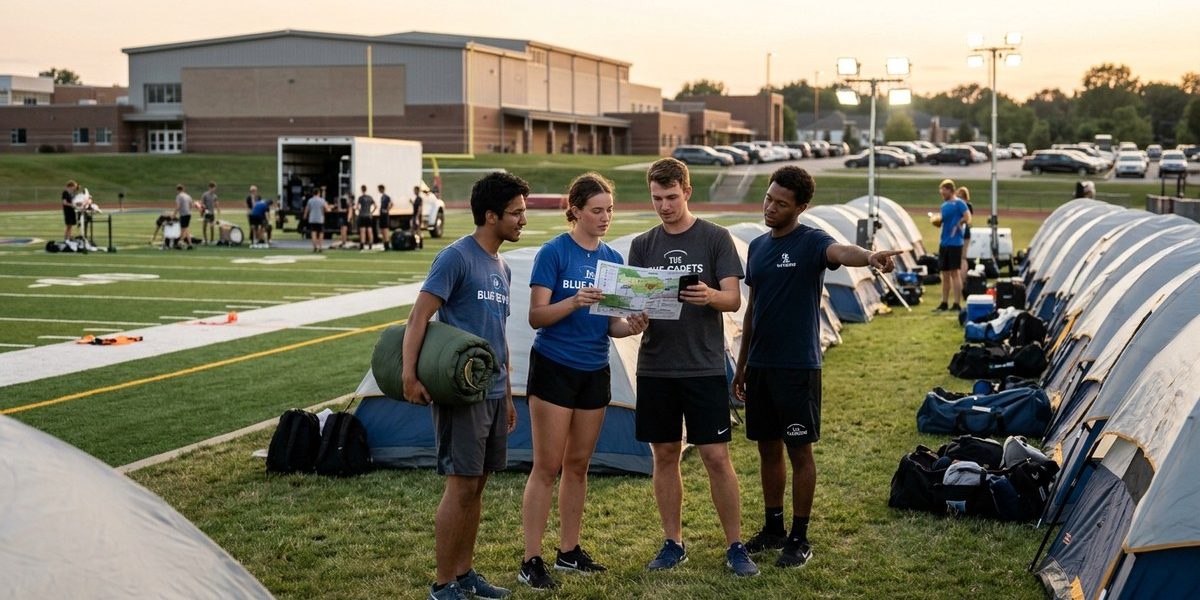
The first time you pull into a housing site at 2 AM on a tour bus, you learn something about the corps you just joined. The gym floor feels different. The air smells like floor wax and old field tape. You find your spot, unroll your sleeping bag, and realize that this school, this town, this specific building, is your home for the next few days. But housing sites are not random. They are chosen with care. And for fans, historians, and prospective members, the 2026 DCI housing sites tell a story about who each corps really is.
The 2026 DCI housing sites act as a cultural fingerprint for each corps. From the Blue Devils returning to California high schools with top-tier athletic facilities to the Cadets leaning into northeastern college campuses, where a corps sleeps and rehearses reveals its priorities around member experience, tradition, budget, and operational philosophy. Understanding these choices helps fans and prospective members see beyond the show.
Housing Sites as a Mirror for Corps Values
Every spring, drum corps fans wait for the housing site lists to drop. It is not just about knowing where to send a care package or where to catch a parking lot rehearsal. The list tells you what a corps values.
Think about it. A corps that books a university with a dedicated performing arts center is sending a different message than one that relies on a rural high school with a cracked parking lot. The choice reflects budget, yes. But it also reflects philosophy. Does the organization prioritize comfort and amenities? Does it value consistency by returning to the same school for a decade? Or does it chase the cheapest option to save money for show design?
In 2026, several patterns have emerged that reveal deeper cultural shifts.
The Shift Toward College Campuses
One of the biggest changes in the 2026 housing landscape is the move toward college and university campuses. This is not entirely new. Corps like the Cavaliers have long used college facilities during spring training. But the trend is accelerating.
Why does this matter for culture? College campuses offer better infrastructure. Dorms with actual beds. Dining halls that can feed 150 hungry performers. Air conditioned rehearsal spaces. For a generation of members who grew up with comfort, these amenities matter. Corps that can afford them are signaling that member wellness is a priority.
But there is a tradeoff. College campuses are expensive. They require more planning and stricter adherence to schedules. A corps that chooses a university is often one with strong administrative support and a healthy budget. That tells you something about the organization’s stability.
On the other hand, some legacy corps still prefer the traditional high school gym. There is a certain grit to sleeping on a wrestling mat. It builds character. Or so the argument goes. The choice between a college dorm and a high school gym floor is a philosophical one. It says a lot about how a corps views the member experience.
What the Top 12 Housing Choices Reveal
Let us look at some notable examples from the 2026 season. Remember, these are based on confirmed and reported sites as of early spring.
For the Blue Devils, consistency is king. They have returned to the same California high school district for spring training that they have used for years. The facilities are excellent. The relationship with the school district is strong. This tells you that the Blue Devils value stability and operational predictability. They know what works, and they stick with it.
The Bluecoats have taken a different approach. In 2026, they are splitting their spring training between a university in Ohio and a second site further south. This split approach allows them to recruit from a wider geographic area and gives members a change of scenery during a long training period. It also suggests a flexible, modern management style.
Carolina Crown continues to use their traditional home base in South Carolina. But they have added a satellite housing site in Texas for a regional tour stop. This is a logistical move that speaks to their growing national fan base. They are meeting the members where they are.
The Cadets are leaning hard into the college campus model. Their 2026 housing sites include multiple university locations along the East Coast. This aligns with their recent emphasis on professionalism and member resources. It is a clear signal that they want to attract top talent who expect a certain standard of living on tour.
Boston Crusaders have made an interesting choice. They are using a combination of a New England college and a high school in the Midwest. This hybrid approach balances cost with comfort. It also reflects their dual identity as a corps with deep roots in Boston but a national touring presence.
How to Read a Housing Site List Like a Pro
If you are a prospective member or a parent, you can learn a lot from the housing list before you even attend a camp. Here is a practical process to follow.
-
Look at the spring training site first. This is where the corps spends the most time. Is it a college or a high school? Is it in a rural area or near a city? A rural high school might mean more focused rehearsal time but fewer amenities. A college campus suggests a higher budget and a focus on member comfort.
-
Check the tour stop housing. Are they using the same schools year after year? Long term relationships with schools indicate stability. Jumping between new sites every season can signal budget instability or strained relationships with hosts.
-
Pay attention to geographic diversity. A corps that houses in multiple states during tour is trying to minimize bus travel. That is smart logistics. But a corps that stays in one region might be building deeper community ties there.
-
Look for gaps in the schedule. If a corps has a three day gap between housing assignments, where do they go? Some corps rely on church parking lots or rest stops. Others book additional school sites. The gaps tell you about the corps’s planning depth.
-
Ask about amenities. Does the school have showers that work? Is there a cafeteria? Is the gym air conditioned? These details matter for quality of life on tour. A corps that prioritizes these things is one that values its members.
Common Misconceptions About Housing Sites
There are a few myths that float around the drum corps community about housing. Let us clear them up.
| Myth | Reality |
|---|---|
| A fancy housing site means the corps is elite. | Not always. Some corps with modest budgets secure great sites through long term relationships. Others spend money on housing and cut corners elsewhere. |
| High schools are always worse than colleges. | Some high schools have excellent facilities. A brand new high school gym can be better than an old college dorm. It depends on the specific site. |
| Housing site choices are random. | They are the result of months of planning, contracts, and relationship building. Nothing is random. |
| If a corps changes sites often, something is wrong. | Sometimes a school becomes unavailable due to construction or scheduling conflicts. Change is not always a red flag. |
What a Veteran Tour Manager Says
“People do not realize how much work goes into housing. I start booking sites in October for the next summer. I call principals, negotiate fees, check insurance requirements. The site I choose affects everything from rehearsal quality to member morale. If I pick a school with a bad floor, the drumline struggles. If the showers are cold, the brass players are grumpy. Every choice matters.”
A tour manager with over 15 years of experience in World Class corps
This quote captures the reality. Housing sites are not an afterthought. They are a core part of the operational puzzle.
What 2026 Housing Sites Tell Us About the Future
The 2026 housing data points to a few larger trends in drum corps culture.
First, member wellness is becoming a higher priority. More corps are choosing sites with reliable air conditioning, proper shower facilities, and actual beds. This is a shift from the “suffer and build character” mentality of previous decades. It reflects a broader cultural change in the activity toward supporting mental and physical health.
Second, geographic expansion is real. Corps are booking sites further from their home bases to reduce tour travel times and to tap into new recruitment markets. This is especially true for groups like the Mandarins and Pacific Crest, who are using California sites strategically to build their presence.
Third, the gap between the top tier and the rest is visible in housing. The Blue Devils, Bluecoats, and Crown can afford premium sites. Smaller World Class and Open Class corps often make do with older schools or shared facilities. That disparity is a reflection of the broader financial challenges in the activity.
For a deeper look at how corps are adapting to modern challenges, check out what the 2026 DCI tour schedule reveals about the future of drum corps.
What to Watch For in Future Seasons
If you want to track corps culture through housing, here are a few things to keep an eye on in the coming years.
- More college partnerships. As high schools become harder to book due to liability concerns, expect more corps to turn to universities. This will change the feel of spring training.
- Shared housing sites. Some corps are already sharing facilities to cut costs. This could become more common, especially for Open Class groups.
- Climate considerations. With hotter summers, air conditioning is becoming a non-negotiable for many members. Corps that cannot offer it may struggle to recruit.
- Technology upgrades. A few corps are experimenting with sites that have strong WiFi for streaming rehearsals and connecting with fans. This could become a selling point.
The Hidden Story in Every Parking Lot
Next time you see a housing list for your favorite corps, look closer. The school name is not just an address. It is a statement. It tells you whether the corps invests in member experience, whether they value tradition over convenience, and whether they are planning for the long term.
For parents considering whether to let their child march, the housing site is a useful clue. For fans, it is a way to understand the organization beyond the 12 minute show. And for the members themselves, that gym floor becomes part of their story. They will remember the squeaky doors, the late night snack runs, and the weird graffiti in the boys bathroom. That is the culture. And it starts with where they sleep.