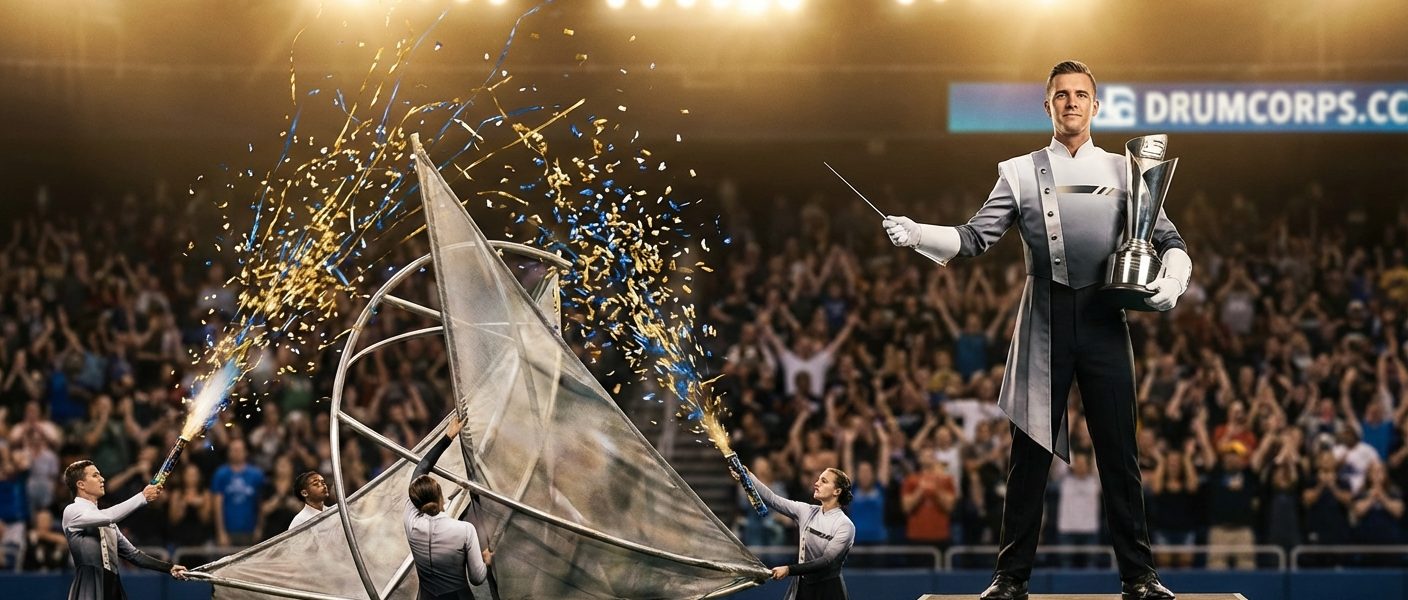
Some of the most memorable moments in drum corps history happened when a design team walked into a rehearsal camp with a show concept that made everyone nervous. These productions didn’t follow the established playbook. They challenged judges, confused audiences at first, and sometimes sent corps staff scrambling to defend their choices. Yet when executed well, these risky designs didn’t just win competitions. They changed what everyone thought was possible on a football field.
Drum corps risky show design succeeds when creative teams balance bold conceptual choices with technical precision. The most effective productions pair unconventional music, staging, or visual concepts with rigorous execution standards. Understanding what separates calculated risks from reckless gambles helps educators and designers create shows that push boundaries while maintaining competitive viability and audience connection.
What Makes a Show Design Actually Risky
A risky show isn’t just different. Plenty of corps choose unusual music or creative themes without taking genuine design risks. True risk happens when a concept challenges fundamental assumptions about what judges value or what audiences expect to see.
Musical risk often involves non-traditional repertoire. A corps might program contemporary compositions without clear melodic hooks. They might use electronic elements before the rules explicitly allowed them. Some productions abandon recognizable tunes entirely, building shows around soundscapes or experimental works that leave traditionalists uncomfortable.
Visual risk reshapes how performers use the performance space. How Bluecoats 2014 ‘Tilt’ Redefined Modern Drum Corps Design demonstrated this perfectly by literally tilting the field perspective. Other productions have eliminated traditional drill formations, scattered performers across the field in seemingly random patterns, or asked members to perform extended sections without instruments.
Thematic risk pushes conceptual boundaries. Some shows tackle heavy subject matter that feels uncomfortable for a summer entertainment activity. Others embrace absurdist concepts that don’t explain themselves clearly. A few productions intentionally leave narrative threads unresolved, forcing audiences to sit with ambiguity rather than receiving a tidy conclusion.
The biggest risk often involves pacing and structure. Traditional shows build intensity steadily, save the biggest moments for the final push, and end with an unmistakable climax. Risky designs might peak early, include extended quiet sections, or end with something subtle rather than explosive.
How Design Teams Evaluate Risk Before Committing
Smart design teams don’t just throw caution aside and hope for the best. They run their concepts through rigorous evaluation processes before asking 150 members to spend their summer executing a vision.
The Three-Question Framework
Every risky concept should answer these questions clearly:
-
Does this concept have enough depth to sustain an 11-minute show? Bold ideas that work for three minutes often collapse under the weight of a full production. Design teams need to map out how their concept develops, where it builds tension, and how it maintains interest across multiple movements.
-
Can we execute this at championship level while managing the risk? A concept might be brilliant but require technical skills beyond what the corps can realistically achieve in three months. The risk needs to be in the concept, not in hoping performers can suddenly master techniques they’ve never demonstrated before.
-
Will judges understand what we’re trying to accomplish? This doesn’t mean playing it safe. It means ensuring the design communicates its intentions clearly enough that judges can evaluate execution rather than spending the entire show confused about what they’re supposed to be watching.
Testing Concepts With Smaller Audiences
Many successful risky shows went through preview processes before full commitment. Design teams showed concept videos to trusted colleagues. They workshopped musical selections with brass staff. They tested visual concepts during spring training weekends.
These preview sessions aren’t about getting permission or seeking validation. They’re about identifying blind spots. A concept that seems revolutionary to the design team might actually be confusing because it relies on assumptions audiences don’t share. Testing reveals these gaps early.
“The best risky shows feel inevitable once you’ve seen them. But getting to that point requires brutal honesty during the design phase. You need people who will tell you when your bold concept is actually just unclear.”
Building Shows That Balance Innovation and Execution
The execution phase determines whether a risky concept becomes legendary or just becomes a cautionary tale. Design teams need strategies that support bold ideas without sacrificing the technical excellence judges demand.
Anchoring Innovation With Familiar Excellence
Most successful risky shows don’t take risks everywhere simultaneously. They anchor their bold choices with elements that demonstrate traditional excellence. A show with experimental music might feature pristine brass technique throughout. A production with unconventional visual concepts might include moments of perfect unison drill that prove the corps can execute traditional demands when they choose to.
This approach gives judges and audiences something to hold onto. They can appreciate the familiar elements while processing the unfamiliar ones. It also builds credibility. When a corps demonstrates mastery of traditional skills, their departures from tradition read as intentional choices rather than limitations.
Layering Risk Gradually Throughout the Season
Corps rarely premiere their full risky concept on opening night. They introduce elements progressively, allowing performers to build confidence and giving audiences time to adjust their expectations.
Early season shows might present the concept’s framework without all its most challenging elements. Mid-season versions add complexity as performers gain comfort with the unusual demands. Championship week brings the full vision, but by then everyone involved understands what they’re working toward.
This gradual approach also allows design teams to adjust based on feedback. If a particular element consistently confuses audiences or judges, they can clarify it without abandoning the core concept. If something lands more powerfully than expected, they can emphasize it further.
Creating Clear Performer Buy-In
Members need to believe in risky concepts for them to work. A performer who doesn’t understand why they’re playing experimental music or executing unusual drill will execute those elements mechanically rather than with conviction.
Design teams that succeed with risky shows invest heavily in education during rehearsal camps. They explain the conceptual framework. They share the artistic influences that shaped the design. They help members understand how their individual roles contribute to the larger vision.
This educational component often includes showing members examples of similar risks in other art forms. A corps performing a show about fractured narratives might watch films that use non-linear storytelling. A production built around minimalist music might study visual art that uses similar principles.
When performers understand the “why” behind unusual demands, they become advocates for the concept rather than just executors of instructions. That advocacy shows in performance quality and helps audiences connect with challenging material.
Common Mistakes That Turn Calculated Risks Into Disasters
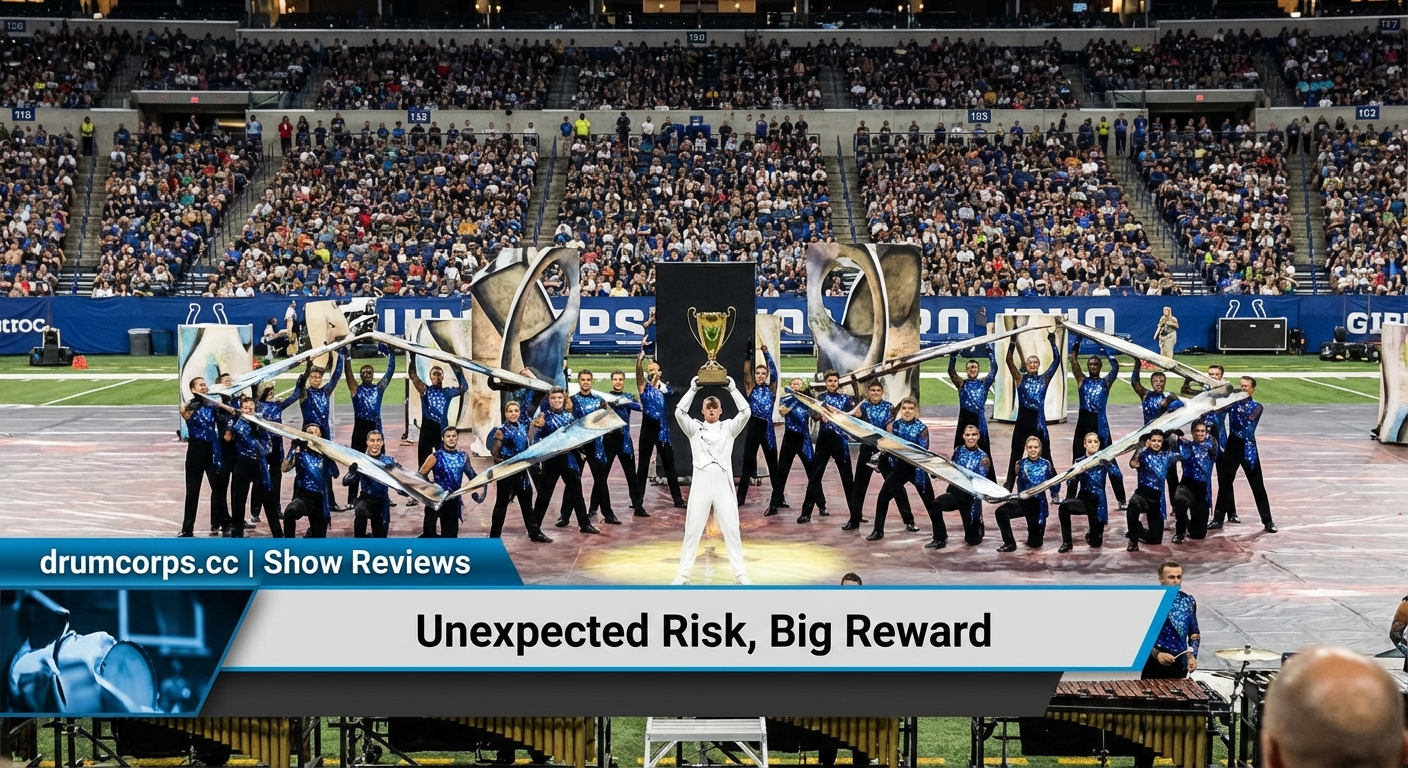
Not every risky show succeeds. Understanding common failure patterns helps design teams avoid predictable pitfalls.
| Mistake | Why It Fails | How to Avoid It |
|---|---|---|
| Confusing obscurity with depth | Audiences can’t engage with concepts they can’t perceive at all | Test whether non-experts can identify your core concept after one viewing |
| Sacrificing technique for concept | Judges still evaluate execution quality regardless of innovation | Ensure risky elements don’t require performers to abandon fundamental skills |
| Ignoring pacing fundamentals | Even experimental shows need energy management across 11 minutes | Map your show’s intensity curve and verify it maintains engagement |
| Failing to commit fully | Half-executed risky concepts look like mistakes rather than choices | Once you choose a bold direction, execute it with complete conviction |
| Designing for other designers | Shows that only impress design professionals alienate broader audiences | Include elements that connect emotionally even if viewers don’t understand every artistic choice |
The “Too Clever” Trap
Some risky shows fail because they prioritize intellectual complexity over emotional connection. The design team creates elaborate conceptual frameworks with multiple layers of meaning, but audiences leave feeling impressed rather than moved.
The most successful risky shows work on multiple levels. They reward deep analysis for those who want it, but they also deliver immediate emotional impact for casual viewers. A show about fractured identity should feel emotionally resonant even if someone misses all the symbolic references.
The Execution Gap
A concept might be brilliant, but if the corps can’t execute it cleanly, judges will penalize the performance regardless of the innovative ideas behind it. This gap between vision and capability has derailed many ambitious productions.
Design teams need honest assessments of their corps’ abilities. A group that struggles with basic marching technique shouldn’t attempt a show that requires complex body movement in addition to playing and marching. A brass line that hasn’t mastered intonation fundamentals shouldn’t program music that exposes tuning problems.
The most successful risky shows play to their corps’ strengths while pushing boundaries in areas where the group already demonstrates competence. A corps with exceptional guard work might take visual risks that feature the guard prominently. A group known for brass excellence might program challenging contemporary music that showcases those skills.
Learning From Shows That Got It Right
Several productions stand as case studies in successful risk-taking. They share common characteristics that helped them succeed despite breaking established patterns.
They Communicated Intent Clearly
Successful risky shows make their core concept visible within the first two minutes. Audiences might not understand every detail, but they grasp the fundamental idea quickly. This clarity allows the rest of the show to develop that concept rather than spending precious time explaining what’s happening.
Clear communication doesn’t mean dumbing down ideas. It means using visual and musical language effectively to convey concepts without verbal explanation. A show about chaos doesn’t need a narrator explaining the theme if the music, drill, and staging all reinforce that idea immediately.
They Maintained Technical Standards
Every successful risky show in recent decades has featured excellent fundamental execution. The brass plays in tune. The battery maintains clean technique. The drill executes precisely even when it looks unconventional. This technical foundation gives judges confidence that the unusual elements represent intentional choices rather than covering for limitations.
Performers who master fundamentals can execute risky concepts more effectively because they’re not fighting basic technique while learning unusual material. This is why how to build a perfect 30-minute individual practice routine matters even in the most experimental productions.
They Built Emotional Arcs
Risky shows that succeed still take audiences on emotional journeys. They might structure those journeys unconventionally, but they create moments of tension, release, intimacy, and power. Audiences leave feeling something, not just thinking about what they saw.
Emotional connection often comes through performer commitment as much as design choices. When members believe in their show and perform with conviction, that authenticity communicates even when the concept challenges conventions.
Preparing Your Corps for Risky Design Choices
If you’re considering a bold concept for your program, preparation determines whether the risk pays off. These steps help set up success.
-
Build technical foundations during the off-season. Risky shows demand solid fundamentals. Invest in skill development before introducing challenging concepts. Work on breathing exercises every brass player should master and fundamental marching technique so performers aren’t learning basics and experimental concepts simultaneously.
-
Create detailed concept documents for your staff. Everyone teaching the show needs to understand the design intent. Write comprehensive explanations of your conceptual framework, artistic influences, and how specific moments support the larger vision. Staff members who understand the “why” can teach more effectively.
-
Schedule extra rehearsal time for conceptually challenging sections. Unusual material takes longer to clean than traditional drill and music. Build your rehearsal schedule with buffer time for sections that require performers to think differently about their roles.
-
Develop clear assessment criteria that account for your concept. How will you evaluate whether performers are executing your vision successfully? Create rubrics that help staff identify when unusual elements are working and when they need adjustment.
-
Plan your communication strategy for judges and audiences. Consider how you’ll help people understand what they’re watching. This might include program notes, pre-show announcements, or strategic use of visual elements that clarify your concept without explaining it verbally.
-
Identify your non-negotiable elements versus flexible components. Know which aspects of your concept are essential and which can adapt based on feedback or execution challenges. This clarity helps you make adjustments without losing your core vision.
What Judges Actually Evaluate in Unconventional Shows
Understanding judging criteria helps design teams take smart risks rather than reckless ones. Judges evaluate execution quality regardless of how conventional or experimental a show’s concept might be.
Achievement Versus Difficulty
Judges assess what a corps attempts and how well they achieve it. A risky show with lower technical demands won’t score as high as a traditional show with championship-level difficulty, even if the risky concept is more creative. Design teams need to ensure their bold choices don’t reduce overall demand levels.
The most competitive risky shows maintain high demand in most caption areas while taking calculated risks in specific aspects. A show might program experimental music but still require advanced brass technique to execute it well. A production might use unconventional drill but still demand precise execution and complex body movement.
Clarity of Communication
General Effect judges evaluate how effectively a show communicates its intent and creates emotional impact. Risky concepts need to work harder at clarity because they can’t rely on familiar patterns to guide audience understanding.
This doesn’t mean explaining everything explicitly. It means using design elements that reinforce your concept consistently. If your show explores fragmentation, every caption should reflect that theme through its specific vocabulary. Musical phrases might be interrupted. Drill formations might break apart and reform. Visual elements might use fractured imagery.
Execution Under Pressure
Championship-level execution becomes even more critical in risky shows. When you ask judges to accept unconventional choices, you need to prove your corps can execute traditional demands flawlessly. Any sloppiness in fundamentals undermines confidence in your bold concepts.
This is where preparation depth matters. Corps attempting risky shows need rehearsal processes that build muscle memory so deeply that performers can execute challenging material consistently even under finals pressure. Work on fundamentals like how to fix your backward marching before your next competition pays dividends when you’re asking performers to execute unusual concepts while maintaining basic technique.
Adapting When Your Risk Isn’t Landing
Sometimes a risky concept doesn’t connect with audiences or judges as hoped. Smart design teams recognize this early and adapt without abandoning their core vision.
Reading Feedback Accurately
Early season scores and comments provide valuable information. If multiple judges mention confusion about specific moments, those sections need clarification. If audiences consistently disengage during particular sequences, those moments aren’t working regardless of their conceptual brilliance.
The key is distinguishing between feedback that identifies genuine problems versus reactions to unfamiliarity. A concept might confuse audiences initially but click once they’ve seen it twice. Other concepts remain confusing no matter how many times people watch them. Design teams need honest advisors who can identify the difference.
Making Strategic Adjustments
Mid-season adjustments to risky shows require surgical precision. You can’t abandon your concept entirely without confusing performers and wasting months of rehearsal. But you can clarify unclear moments, strengthen weak sections, and emphasize elements that are landing well.
Common adjustments include adding visual reinforcement to abstract concepts, restructuring pacing in sections that drag, and clarifying transitions between contrasting moments. These changes refine the concept rather than replacing it.
Knowing When to Hold Steady
Sometimes the right move is committing more fully to your risky concept rather than pulling back. If judges and audiences seem uncertain rather than actively negative, the show might just need more confident execution. Performers who sense staff uncertainty often pull back their commitment, creating a feedback loop that undermines the production.
Design teams need conviction to execute risky shows successfully. That doesn’t mean ignoring feedback or refusing to adapt. It means trusting your vision enough to give it a fair chance to succeed.
Why Some Risks Become New Standards
The most successful risky shows don’t just win their seasons. They change what comes after. How the Blue Devils revolutionized modern drum corps in the 1970s demonstrates how bold choices can reshape entire activity standards.
Transformative shows succeed because they solve problems other designers didn’t realize existed. They demonstrate new possibilities that suddenly seem obvious once someone has proven they work. Within a few years, elements that seemed risky become standard practice.
This evolution happens when risky concepts align with broader trends in the activity. A show that introduces electronic elements succeeds partly because technology is advancing and rules are adapting. A production that emphasizes theatrical storytelling connects with audiences increasingly accustomed to narrative complexity in other media.
Design teams creating truly risky shows often don’t realize they’re establishing new standards. They’re solving specific challenges for their corps or exploring concepts that interest them personally. The broader impact becomes clear only in retrospect.
When Bold Concepts Meet Championship Moments
The ultimate test of risky show design happens under finals lights. All the preparation, adjustment, and commitment culminates in a single performance where everything either clicks or falls apart.
Championship-level risky shows share a quality that’s hard to define but unmistakable when you see it. The performers believe completely in what they’re doing. The design communicates clearly despite its unconventional elements. The execution demonstrates that the corps can handle traditional demands while pushing boundaries.
These shows often feel inevitable in retrospect. Once you’ve seen them succeed, you can’t imagine the activity without them. But in the moment, they represent genuine gambles by design teams willing to trust their vision.
That willingness to commit to bold concepts, support them with rigorous preparation, and execute them with championship-level precision separates risky shows that change the activity from those that become cautionary tales. The difference isn’t luck. It’s the discipline to balance innovation with excellence, creativity with clarity, and vision with execution.
Your corps might be ready for that kind of risk. Or you might need another season building the technical foundation that makes bold concepts viable. Either way, understanding how successful risky shows work gives you a framework for making smart choices about when to push boundaries and when to strengthen fundamentals first.