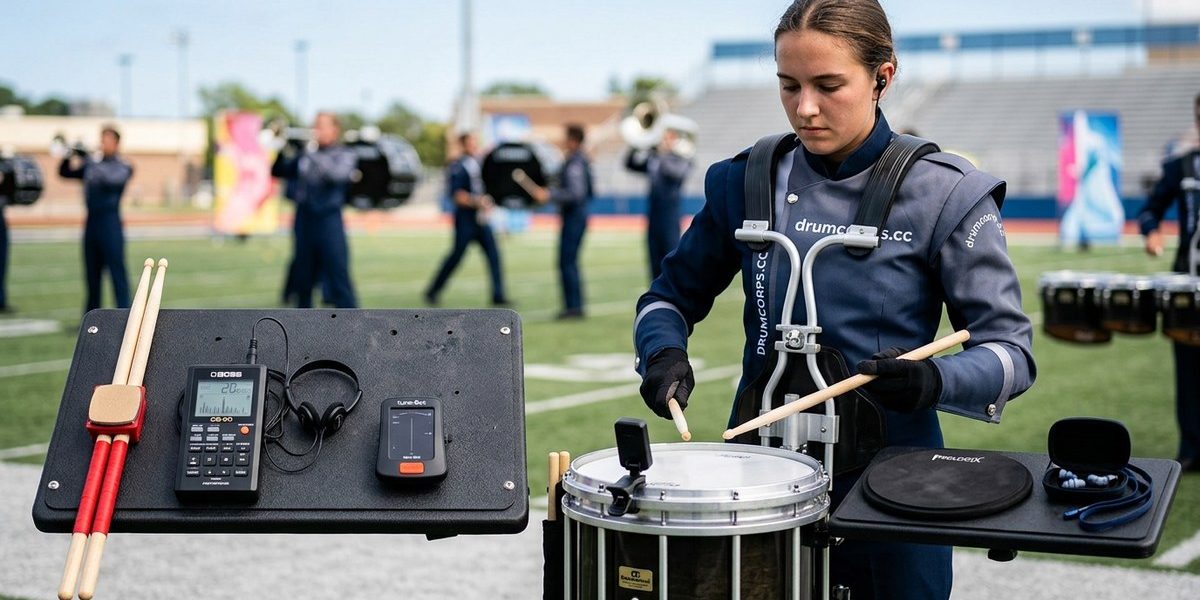
Drum rehearsals are the backbone of progress for amateur and intermediate percussionists. Whether you’re preparing for a school show, marching season, or just aiming to improve your skills, having the right accessories can make a big difference. They help you stay consistent, correct mistakes, and build confidence. Just like a good pair of shoes or a quality metronome, these tools are small investments that pay off in big ways. Let’s look at five percussion accessories to improve rehearsal quality and how they can transform your practice sessions.
Using the right percussion accessories during rehearsal helps develop better timing, technique, and consistency. Practical tools like practice pads, metronomes, and tuning aids make practice sessions more effective and enjoyable, leading to faster progress and more confident performances.
Choosing the right practice tools for your needs
The first step in upgrading your rehearsal experience is selecting accessories that suit your instrument, goals, and environment. For example, if you often practice on the go or in small spaces, portable options like snare pads or tuning devices will serve you well. If your focus is on improving timing, a reliable metronome or click track becomes essential. By integrating these accessories into your routine, you make each session more productive and less frustrating.
Top percussion accessories to enhance rehearsal
Here are five of the most practical percussion accessories to improve rehearsal quality. Each one addresses common challenges faced by drummers and percussionists, helping you practice smarter and more efficiently.
1. Practice pads for consistent technique practice
A high-quality practice pad is a must-have for any percussionist. It allows you to work on stick control, articulation, and rudiments without disturbing others. Because it’s portable, you can take it anywhere. When used regularly, it helps build muscle memory and precision. To maximize its benefits, try incorporating rudiments and sticking exercises from adapting them for your practice pad.
2. Metronomes and click tracks for perfect timing
Timing is everything in percussion. A reliable metronome helps you develop a steady sense of rhythm and stay in sync during rehearsals. Modern metronomes often come with visual cues, like flashing lights, which are great for visual learners. For marching percussion, a click track synchronized with your ensemble can be invaluable. This keeps everyone aligned, especially during complex passages or tempo changes. To get the most out of it, check out https://drumcorps.cc/should-you-practice-with-a-metronome-every-day/ for tips on integrating timing tools into your daily routine.
3. Tuning aids for consistent sound quality
Tuning your drums correctly impacts both your sound and your confidence. Small tuning devices and tension gauges help you achieve precise pitch. When practicing, use tuning aids to maintain consistent sound quality, especially during long rehearsal sessions. Proper tuning reduces the need for re-tuning before performances. For beginners, understanding common tuning mistakes can be simplified by referencing which offers straightforward tuning techniques applicable to percussion instruments.
4. Drumstick and mallet grips for control and endurance
Proper grip is crucial for control, speed, and avoiding fatigue. Using ergonomic grips or grip training tools can help you develop better technique and prevent injuries. During rehearsals, focus on maintaining relaxed grips to improve endurance. Over time, this results in cleaner articulation and less muscle strain. For insight into grip techniques, consult which highlights common errors and fixes.
5. Tuner and sound shaping accessories
Besides tuning, accessories like dampening pads and mufflers help shape your instrument’s sound during practice. They’re especially useful in noisy environments or when you want a more controlled sound. Using these can help you focus on precision without external distractions. For example, damping your snare head can improve articulation clarity, which is vital during rehearsal. A helpful resource for sound shaping techniques is offering tips on controlling resonance and attack.
Techniques and pitfalls in using percussion accessories
While accessories are powerful tools, they require proper use to be effective. For example, tuning aids should be used as guides, not crutches. Over-reliance can lead to poor tuning habits. Similarly, practice pads should complement actual drum practice, not replace it entirely.
Here’s a quick comparison table highlighting common techniques and mistakes:
| Technique | Mistake |
|---|---|
| Regularly tuning drums using a tuner | Relying solely on visual tuning without listening |
| Using a metronome for all practice sessions | Practicing without developing internal timing |
| Incorporating grip drills into warmups | Clenching sticks or mallets, leading to fatigue |
| Dampening drums for control | Using excessive muffling that dulls tone |
| Practicing rudiments on a pad | Ignoring dynamics and accents during practice |
Expert Tip: “Integrate accessories into your routine gradually. Focus on mastering one tool at a time to avoid overwhelm and ensure you develop good habits.” This advice from a seasoned percussion educator underscores the importance of deliberate practice.
Making accessories work for your rehearsal goals
The key to maximizing the benefits of percussion accessories is consistency and intentional use. Start by identifying your weak spots—perhaps timing, sound quality, or technique. Then choose the accessories that directly address those areas. Regularly evaluate your progress and adjust your tools as needed.
For example, if you notice your timing slipping during long rehearsals, a metronome can be your best ally. If your sound is inconsistent, focus on tuning and damping aids. Remember, accessories are not a substitute for effort but powerful supplements that can accelerate your growth.
Final notes on practicing smarter
Adding the right percussion accessories to your rehearsal toolbox transforms how you approach practice. Small, practical tools can help you develop better habits, improve sound, and build confidence. Incorporate these accessories into your daily routine and watch your progress accelerate. Remember, consistency beats intensity. Use these tools regularly, and your skills will become more polished and reliable.
Keep practicing with purpose
Every percussionist has room to grow. With the right accessories, you can make each rehearsal count. Choose tools that fit your needs and practice deliberately. Over time, these small adjustments will lead to big improvements. Stick with it, stay motivated, and enjoy the journey of becoming a more confident and precise percussionist. Your next performance will thank you for it.