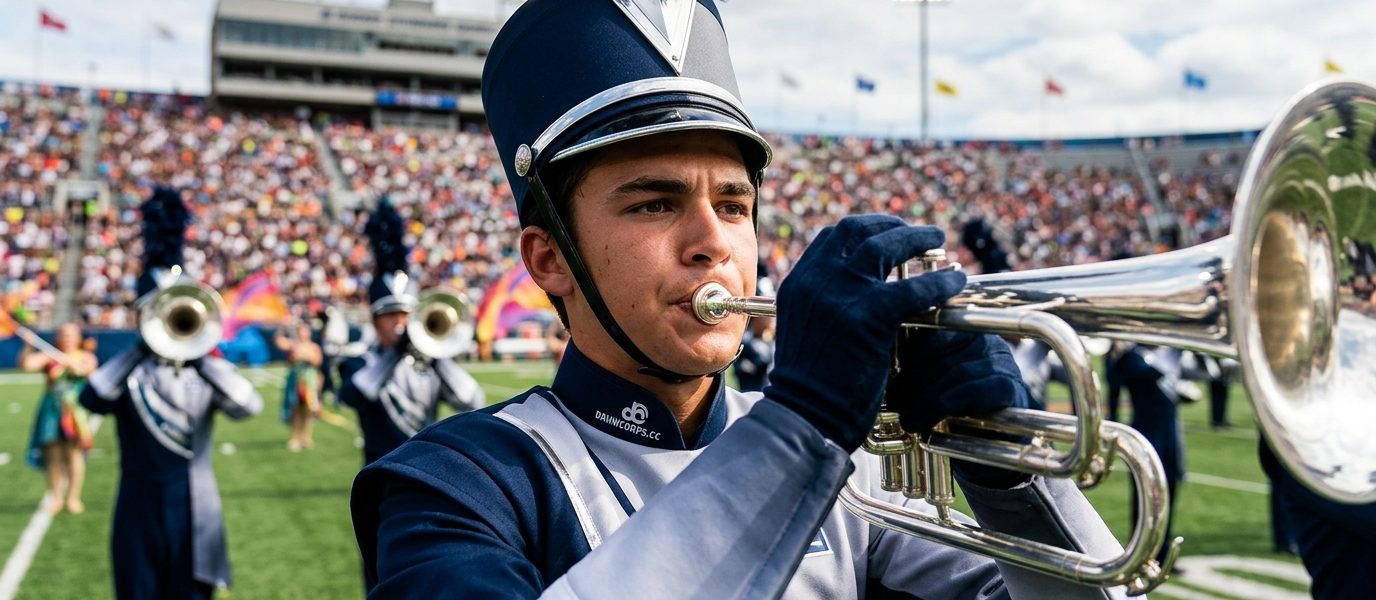
Your lips are burning. Your face feels numb. You’re only halfway through the third movement, and you’re already struggling to hit notes that felt easy during warm-ups. If this sounds familiar, you’re probably using too much mouthpiece pressure. Understanding how much force to apply between your mouthpiece and your face is one of the most misunderstood aspects of brass playing, yet it directly affects your tone quality, range, and stamina during those marathon rehearsal blocks.
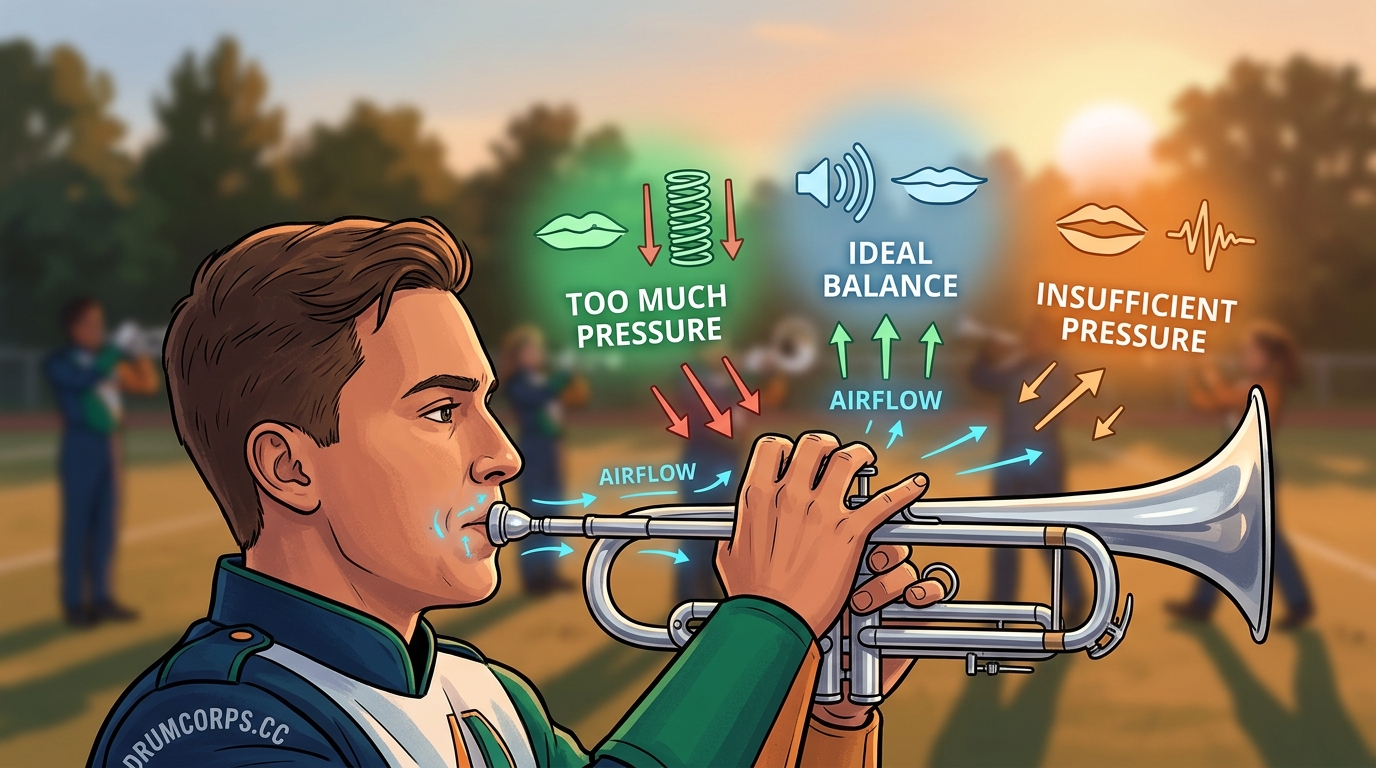
Mouthpiece pressure brass players should use the minimum force needed to create a seal and support their embouchure. Excessive pressure restricts blood flow, limits flexibility, and causes fatigue. The right balance comes from strong breath support, proper posture, and efficient embouchure formation. Most players use far more pressure than necessary, especially in the upper register and during physically demanding marching performances.
Why mouthpiece pressure matters for marching musicians
The physical demands of marching band create unique challenges for brass players. You’re holding your instrument at unusual angles while moving across the field. Your core is engaged for marching technique, which can make it harder to maintain proper breathing mechanics. The temptation to compensate with extra mouthpiece pressure becomes almost irresistible.
But here’s the problem. Too much pressure cuts off blood circulation to your lips. The tissue needs oxygen to function properly. When you press too hard, you’re essentially choking off the very muscles you need to play.
Your embouchure is a delicate system. The lip tissue vibrates to create sound. When you compress it too much against your teeth, you reduce its ability to vibrate freely. This means a thinner tone, less flexibility, and a much shorter window before fatigue sets in.
Many players mistakenly believe that more pressure equals more control, especially in the high register. The opposite is true. Excessive force actually makes it harder to play high notes cleanly because you’re fighting against your own physiology.
The role of breath support in reducing pressure
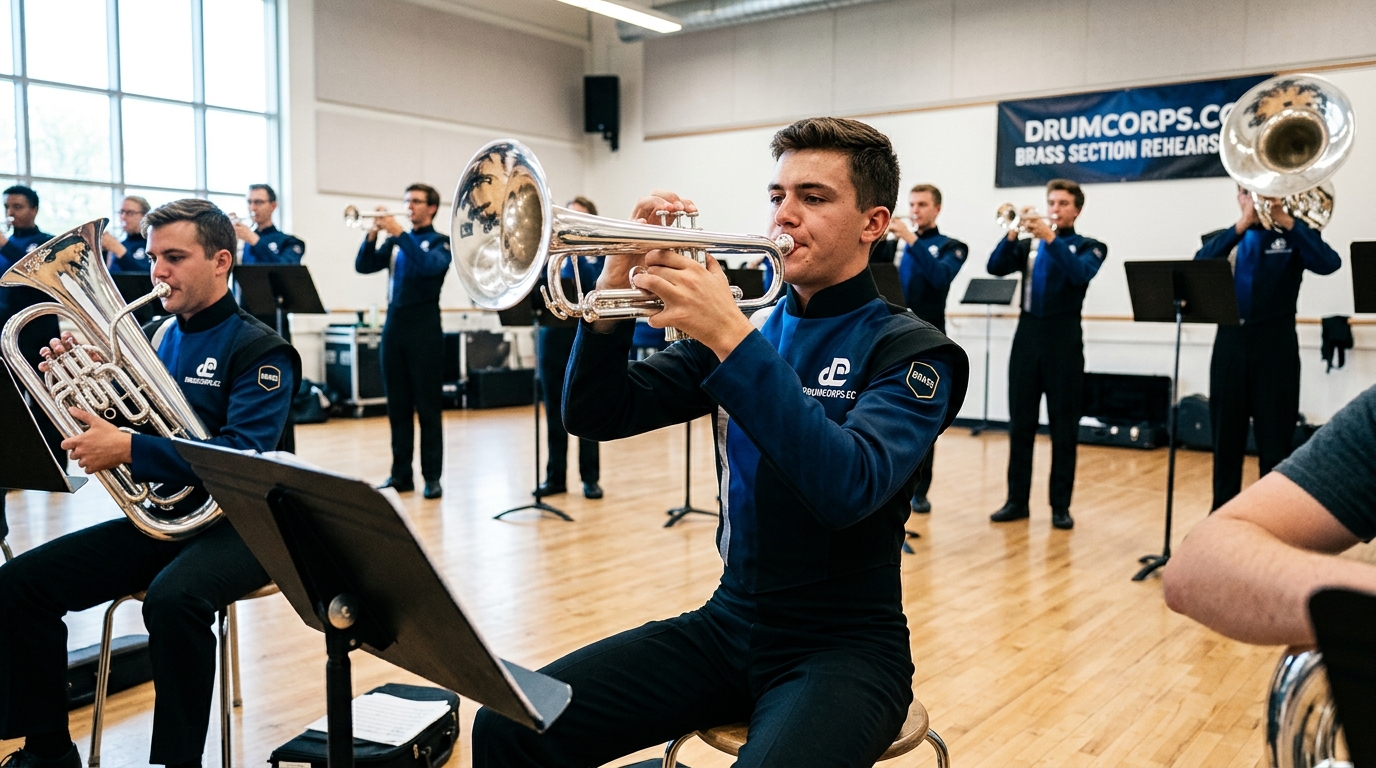
Strong air support is your best defense against excessive mouthpiece pressure. When you have solid breath control, your air stream does most of the work of supporting your sound. Your embouchure simply directs and shapes that air.
Think of it this way. Your breath is the engine. Your embouchure is the steering wheel. If your engine is weak, you’ll try to compensate by gripping the steering wheel harder. But that doesn’t make the car go faster.
Players who struggle with breath support for high brass endurance often develop a habit of pressing harder to compensate for weak air. This creates a vicious cycle. The pressure reduces your stamina, which makes you feel like you need even more pressure to get through the phrase.
Building better breathing habits takes time, but the payoff is enormous. When you can rely on your air to carry the sound, your face can relax. Your tone opens up. Your range expands without extra effort.
How to find your optimal pressure level
Finding the right amount of mouthpiece pressure isn’t about achieving zero pressure. That’s physically impossible and not even desirable. You need enough contact to create a seal and provide a stable platform for your embouchure to work against.
The goal is minimum effective pressure. Here’s how to find it.
The pencil test
Hold a pencil between your mouthpiece and your face while you play. If you can play normally, you’re using a reasonable amount of pressure. If the pencil falls out immediately, you might actually be using too little pressure (rare, but it happens). If you can’t play at all with the pencil there, you’re definitely pressing too hard.
The red ring indicator
After playing, look at your face in a mirror. A faint ring where the mouthpiece sat is normal. A deep red or white ring that lasts more than a few minutes indicates excessive pressure. If you see indentations or your lips look compressed, you need to back off.
The fatigue timeline
Track how long you can play before fatigue sets in. If you’re struggling after 15 minutes of moderate playing, pressure is likely a factor. Most players with good technique can play for 45 minutes to an hour before needing a substantial break.
Common pressure mistakes and how to fix them
Let’s look at the most frequent errors and their solutions in a clear format.
| Mistake | Why it happens | How to fix it |
|---|---|---|
| Pressing harder in the upper register | Trying to force high notes instead of using faster air | Focus on air speed and embouchure corners, not pressure |
| Pushing the instrument into your face while marching | Poor instrument carriage or weak core engagement | Strengthen your hold position and engage your core properly |
| Adding pressure when tired | Compensating for weak embouchure muscles | Take breaks earlier and build endurance gradually |
| Using excessive pressure on loud passages | Confusing volume with force | Volume comes from air quantity, not mouthpiece pressure |
| Pressing harder during long tones | Trying to maintain pitch through pressure | Use consistent air support and embouchure formation |
The upper register issue deserves special attention. Many trumpet and mellophone players develop a habit of jamming the mouthpiece into their face when reaching for high notes. This actually makes those notes harder to hit and less stable.
High notes require faster air and firmer embouchure corners, not more pressure. The mouthpiece pressure should stay relatively constant across your range. What changes is your air speed and the tension in your embouchure muscles.
Building better habits during rehearsal
Changing your mouthpiece pressure habits requires consistent attention during practice and rehearsal. You can’t fix it by thinking about it once a week. Here’s a systematic approach.
-
Start every practice session with long tones at a comfortable dynamic, focusing specifically on using minimal pressure. Set a timer for five minutes and don’t move on until you’ve established good habits.
-
Add a pressure check to your 30-minute individual practice routine by pausing every ten minutes to assess the red ring on your face and adjust accordingly.
-
During full ensemble rehearsals, use your peripheral awareness to monitor tension in your face and jaw. If you notice tightness building, back off the pressure slightly even if it means playing softer for a moment.
-
Film yourself during rehearsal from the side angle. Watch how your instrument position changes when you’re tired versus fresh. This visual feedback is incredibly valuable.
-
Work with a practice partner who can give you real-time feedback about your instrument angle and visible tension in your face and neck.
-
End each rehearsal with gentle face massage and rest. Don’t practice through significant pain or numbness. These are signs of tissue damage, not badges of honor.
The marching environment adds complexity. Your instrument angle changes constantly. You’re breathing hard from physical exertion. The heat can affect your stamina. All of these factors make it easier to slip into bad pressure habits without noticing.
“The best brass players in the world use remarkably little mouthpiece pressure. They’ve learned that efficiency beats force every single time. Your goal should be to play as freely as possible while maintaining a good seal and stable sound.”
Physical conditioning for better pressure management
Your ability to use appropriate mouthpiece pressure depends partly on the strength and endurance of your embouchure muscles. But it also depends on your overall physical condition.
Weak neck and shoulder muscles make it harder to hold your instrument in the correct position. When your arms get tired, you start using your face to support the weight of the instrument. This is especially true for baritone and trombone players who deal with heavier instruments.
Consider these conditioning strategies:
-
Hold your instrument in playing position for one minute without playing, focusing on arm and shoulder engagement rather than facial pressure. Rest for 30 seconds. Repeat five times.
-
Practice playing while standing on one foot to improve your core stability and balance. This carries over to your marching stability.
-
Do face buzzing exercises without the mouthpiece to build embouchure strength independent of pressure habits.
-
Strengthen your neck and shoulders with basic resistance exercises. Stronger supporting muscles mean less reliance on facial pressure.
-
Work on your marching posture separately from your playing. Good marching technique supports good playing technique.
The connection between marching technique and brass playing is real. If you’re fighting your backward march or struggling with your posture, that tension will affect your playing. Taking time to fix your backward marching can actually improve your brass technique.
Adapting pressure for different registers and dynamics
Your mouthpiece pressure shouldn’t change dramatically across registers, but there are subtle adjustments that happen naturally. Understanding these helps you avoid overcorrecting.
In the low register, many players unconsciously reduce pressure slightly. The embouchure is more relaxed, and the air moves more slowly. This is fine as long as you maintain a good seal.
In the middle register, you’ll find your baseline pressure. This is where most players are most efficient. Use this register as your reference point.
In the high register, there’s often a slight increase in pressure, but it should be minimal. If you’re adding significant pressure to hit high notes, you’re compensating for weak air support or inefficient embouchure formation.
For soft dynamics, you might find you need slightly less pressure because you’re using less air. For loud dynamics, the pressure should stay relatively constant even though you’re using much more air. The increased air volume should create the louder sound, not increased pressure.
Recovery strategies when you’ve overdone it
Sometimes you’ll push too hard. Maybe it’s the week before championships. Maybe you had a six-hour rehearsal day. Your face is trashed, and you have another rehearsal tomorrow.
Here’s how to recover:
- Ice your face for 10 minutes after severe sessions to reduce inflammation
- Avoid playing for at least a few hours, preferably overnight
- When you return to playing, start with mouthpiece buzzing and very gentle long tones
- Cut your practice time in half until the soreness resolves
- Focus on breathing exercises that don’t require the instrument
- Consider using a slightly larger mouthpiece rim temporarily to distribute pressure over a larger area
If you’re experiencing persistent numbness, visible bruising, or pain that doesn’t resolve with rest, see a doctor. Nerve damage is rare but possible with extreme pressure over time.
Monitoring your progress over time
Improvement in pressure management isn’t always obvious day to day. Track these indicators over weeks and months:
- How long can you play before significant fatigue?
- How severe is the red ring after playing?
- Can you play high notes more easily?
- Is your tone quality more consistent?
- Do you recover faster between rehearsal blocks?
- Can you play soft passages without the sound cutting out?
Keep a simple practice journal. Note your fatigue levels and any pressure-related issues. Patterns will emerge that help you identify specific situations where you default to excessive pressure.
Many players find that pressure management improves significantly in their second or third season of marching band. The physical demands become more familiar. Your conditioning improves. Your breathing technique matures. Give yourself time to develop these skills.
Making pressure awareness automatic
The ultimate goal is to stop thinking about mouthpiece pressure consciously. You want your body to automatically use the right amount of force without constant monitoring.
This happens through consistent practice with good habits. Every time you pick up your instrument, take a moment to establish good contact with minimal pressure. Make it part of your setup routine, like checking your posture or taking a breath.
Integrate essential breathing exercises into your warm-up routine. Strong breath support reduces the temptation to compensate with pressure.
Over time, efficient pressure becomes your default. You’ll notice when you’re pressing too hard because it will feel wrong. Your body will have learned what correct feels like.
Your face will thank you
Learning to manage mouthpiece pressure effectively is one of the best investments you can make in your brass playing. It improves your tone, extends your range, and dramatically increases your endurance. You’ll get through those long rehearsal blocks without feeling like your face is going to fall off.
Start with awareness. Pay attention to how much force you’re actually using. Then work systematically to reduce unnecessary pressure while maintaining a good seal and stable sound. Your playing will improve, and you’ll actually enjoy those three-hour rehearsals a lot more.