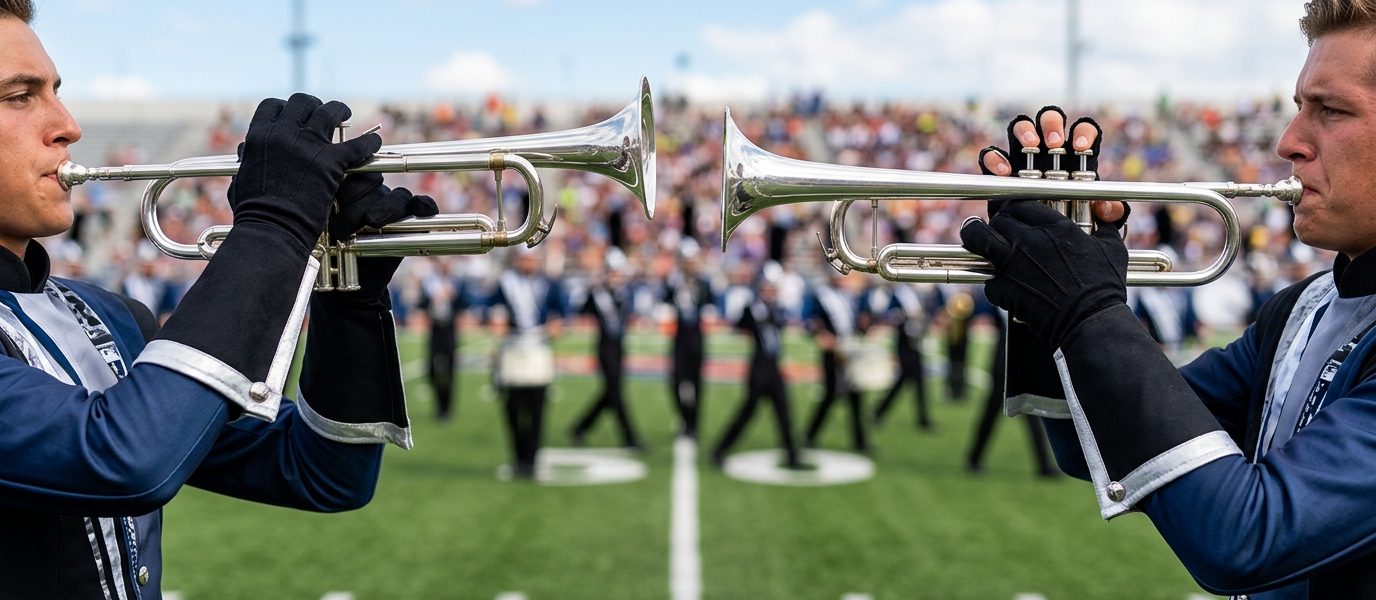
You’re standing in the parking lot before rehearsal, pulling on a pair of gloves that feel too tight around the knuckles. Your section leader swears by them, but halfway through the first rep, you can’t feel your valve caps. Meanwhile, the color guard captain is tossing a rifle in fingerless gloves that look like they’ve survived three seasons. Who’s doing it right?
The truth is that marching band gloves aren’t one size fits all. What works for a trumpet player might ruin a snare drummer’s grip. What protects a flag spinner’s hands in July might turn into a sweaty mess by September. This guide breaks down exactly when gloves help, when they hurt, and how to choose the right pair for your role, your instrument, and your climate.
Marching band gloves improve uniformity and protect hands, but the wrong material or fit can wreck your grip and dexterity. Brass players need thin, breathable fabrics. Drummers require tackiness without bulk. Color guard performers benefit from reinforced palms and moisture control. Match your glove type to your section, test for flexibility before buying in bulk, and replace them when seams fray or grip fades.
Why bands use gloves in the first place
Gloves create visual unity. When every member wears the same color and style, hands disappear into the uniform instead of drawing the eye. Judges notice clean lines, and gloves help deliver that polished look from the press box to the fifty yard line.
They also protect hands during long rehearsals. Brass players avoid valve burns on hot metal. Percussionists reduce blisters from stick friction. Color guard members shield their palms from rifle tape and flag poles. In cold weather, gloves keep fingers warm enough to stay nimble through evening performances.
But protection and aesthetics come with trade offs. The wrong gloves can muffle tactile feedback, trap sweat, or restrict finger movement. That’s why understanding material, fit, and section specific needs matters more than picking the cheapest option online.
Different sections need different gloves
Brass players
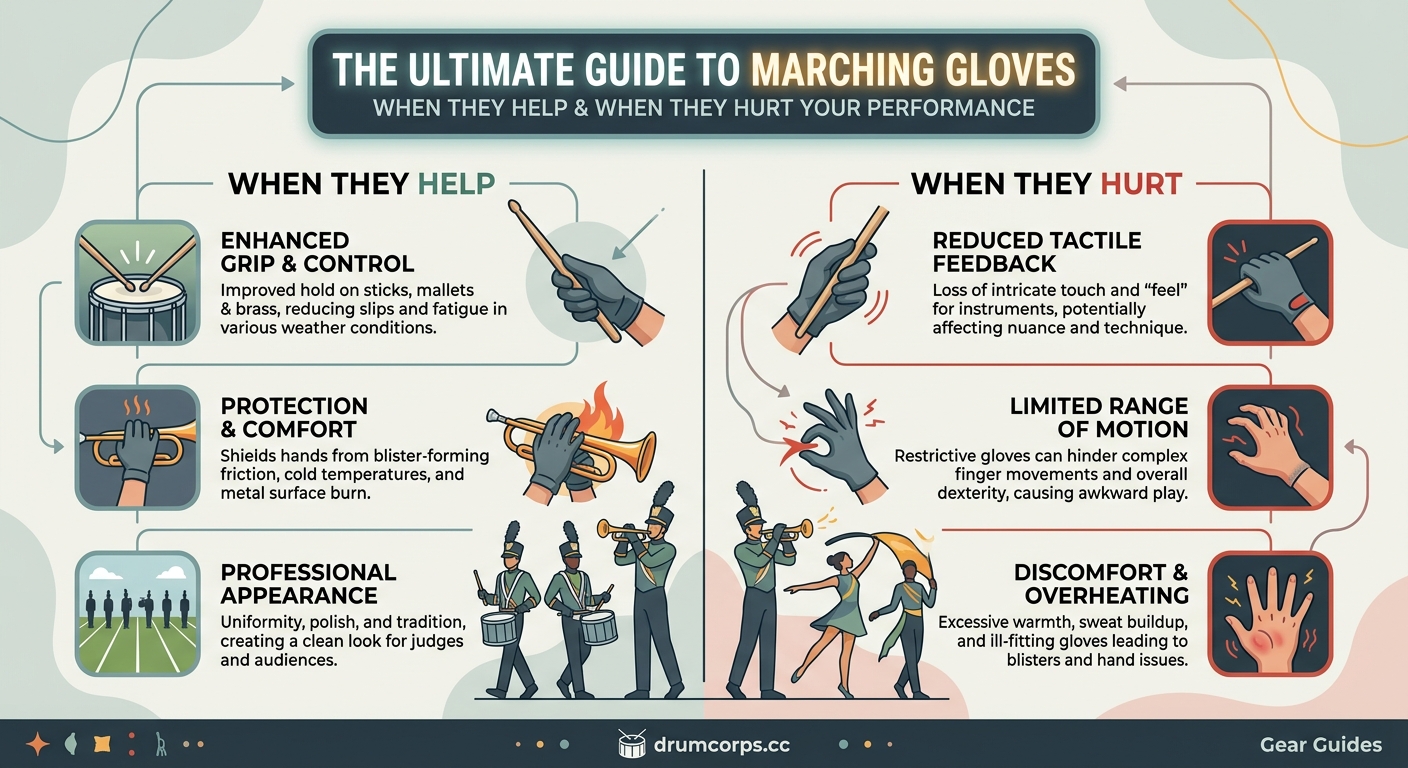
Brass musicians rely on fingertip sensitivity to hit valve combinations and slide positions accurately. Thick gloves turn a clean triple tongue passage into a muddy mess. Look for lightweight cotton blends or nylon spandex mixes that hug the hand without adding bulk.
Full finger coverage is standard for uniformity, but some programs allow fingerless styles during early season rehearsals when heat is brutal. If your director requires full fingers, choose gloves with reinforced fingertips that won’t wear through after a week of valve work.
Avoid gloves with textured palms. Brass players don’t need extra grip. They need breathability and flexibility. A glove that feels like a second skin will always outperform one that bunches at the knuckles or slides around during a fast run. Building strong breath support, like the techniques in how to build rock-solid breath support for high brass endurance, matters more when your gloves aren’t fighting you.
Woodwinds
Woodwind players face the toughest glove challenge. Clarinet and saxophone keys demand precise finger placement. Flute players need to feel tone hole edges. Many woodwind sections skip gloves entirely or use ultra thin cotton that barely registers on the hand.
If your program mandates gloves, test them with your instrument before committing to a full section order. Can you feel the difference between the A and G sharp keys? Does your pinky reach the low D without stretching? If the answer is no, size down or request an exemption.
Some directors allow woodwinds to cut the fingertips off their gloves for better control. This keeps the visual uniform while preserving dexterity. Just make sure everyone in the section does it the same way so hands still look consistent from the stands.
Battery percussion
Drummers need grip without sacrificing stick rebound. Cotton gloves absorb sweat but offer no tackiness. Sure grip gloves with rubberized palms provide traction but can feel stiff during fast rolls. The best middle ground is a nylon spandex blend with silicone dots on the palm and fingers.
Snare drummers should prioritize wrist support. Gloves with elastic cuffs or hook and loop closures stay put during rimshots and crossovers. Loose gloves shift mid rep, throwing off your fulcrum and creating rim clicks that ruin clean articulation.
Tenor and bass drummers benefit from padded palms. Mallets hit harder than sticks, and the extra cushioning reduces hand fatigue during long rehearsals. Just make sure the padding doesn’t add so much bulk that you lose finger independence.
Front ensemble
Pit percussionists often skip gloves unless the uniform requires them. Marimba and vibraphone demand fingertip sensitivity that most gloves destroy. If your director insists, use the thinnest cotton possible and size down for a snug fit.
Some front ensemble members wear fingerless gloves for visual consistency without sacrificing mallet control. This works well for programs that want uniformity but understand the tactile demands of keyboard percussion.
Color guard
Color guard gloves take the most abuse. Rifle tosses, saber spins, and flag work all generate friction and impact. Look for gloves with reinforced palms, moisture wicking fabric, and adjustable wrist closures.
Full finger gloves protect against blisters and tape burns, but fingerless styles offer better airflow during summer rehearsals. Many guards start the season fingerless and switch to full coverage for competitions when visual uniformity matters most.
Grip is critical. Gloves with rubberized or synthetic leather palms prevent equipment from slipping during tosses. Test them with your actual rifle or saber before buying in bulk. A glove that feels great on your hand might turn slippery the moment you add flag silk or rifle tape to the equation.
Materials that make or break performance
| Material | Pros | Cons | Best For |
|---|---|---|---|
| Cotton | Breathable, affordable, machine washable | Minimal grip, wears out fast | Brass, woodwinds, general marching |
| Nylon spandex | Stretchy, form fitting, dries fast | Can feel too thin for impact work | Brass, battery percussion |
| Sure grip (rubberized palm) | Excellent traction, durable | Stiff, traps heat, expensive | Color guard, battery percussion |
| Leather | Long lasting, professional look | Heavy, not breathable, hard to clean | Drum majors, formal performances |
| Synthetic blends | Balanced grip and flexibility | Quality varies widely by brand | All sections with careful selection |
Cotton remains the most common choice for high school bands. It’s cheap, easy to replace, and works well enough for most brass and woodwind players. But cotton soaks up sweat and loses shape after a few washes. If your season runs from July through November, plan to replace cotton gloves at least once.
Nylon spandex blends offer better durability and moisture control. They stretch to fit different hand sizes, which simplifies bulk orders. The downside is that cheaper versions pill and snag on equipment. Stick with brands that reinforce high wear areas like the palm and fingertips.
Sure grip gloves with rubberized palms dominate color guard and drumline sections. The tackiness prevents drops and improves control during fast passages. However, they trap heat and can feel sticky in humid weather. Some performers apply baby powder inside the gloves to reduce moisture buildup.
Leather gloves look sharp but rarely make sense for marching band. They’re too stiff for valve work, too hot for summer rehearsals, and too expensive to replace when someone loses a pair. Save leather for drum majors or honor guard members who need a formal appearance without worrying about dexterity.
How to choose the right fit
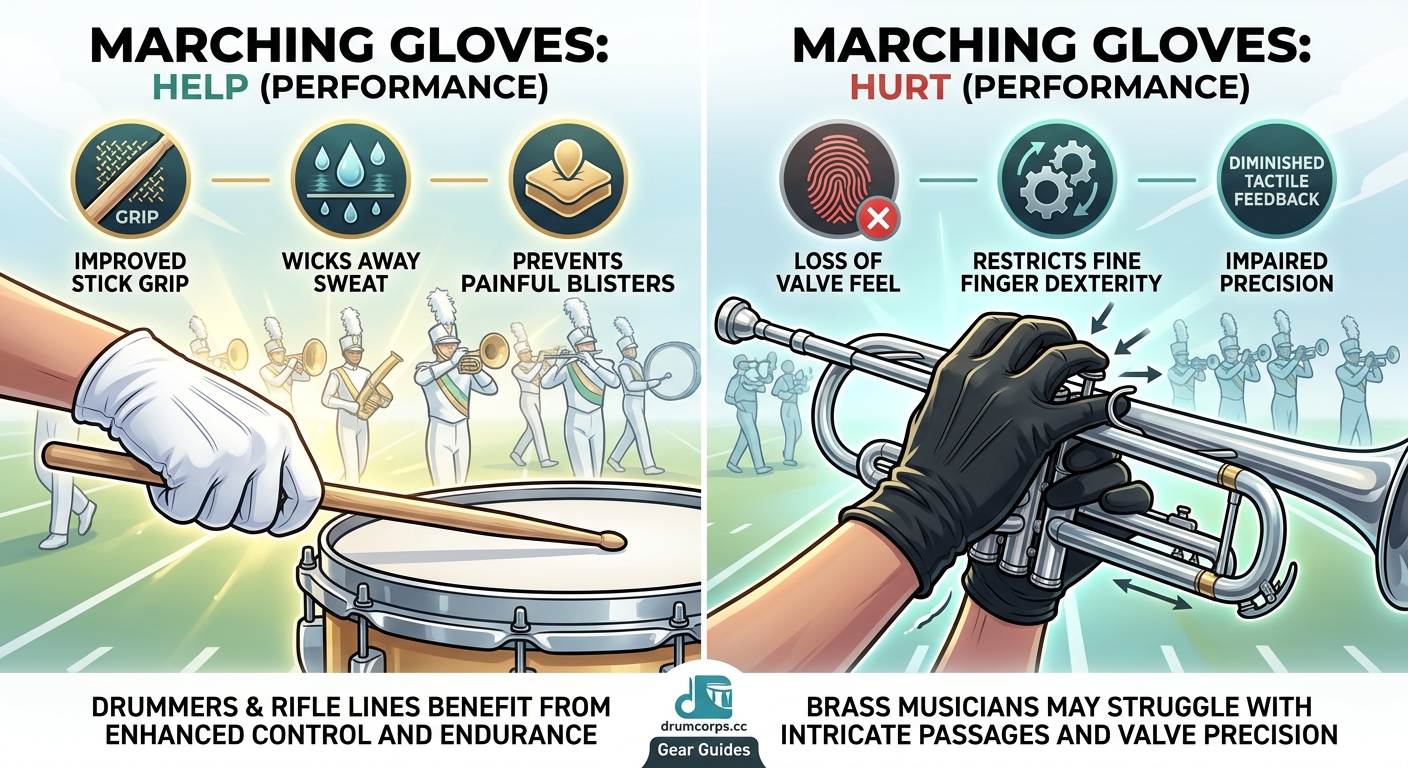
Gloves should feel snug without cutting off circulation. Pinch the fabric at your knuckles. If you can grab more than a quarter inch of excess material, size down. Loose gloves bunch during movement and throw off your hand position.
Check the fingertips. They should reach the end of the glove without stretching. If your fingertips stop short, the gloves are too big. If fabric extends past your fingers, they’re too long. Either scenario ruins your ability to feel your instrument or equipment.
Test wrist closures before you buy. Elastic bands work for most players, but hook and loop straps offer better adjustability. If your gloves slide down during backward marching or fast drill moves, tighten the closure or switch to a style with better wrist support. Speaking of backward marching, poor glove fit can distract you from the footwork fixes covered in how to fix your backward marching before your next competition.
When gloves hurt more than they help
Some situations call for ditching gloves entirely. If you’re a flute player and your director won’t budge on the glove rule, document how they affect your tone and intonation. Bring recordings or video evidence. Most reasonable directors will grant exemptions when performance suffers.
Drummers with hyperhidrosis (excessive sweating) often struggle with gloves. The moisture buildup destroys grip and causes sticks to slip. In these cases, fingerless gloves or frequent glove changes during rehearsal work better than fighting through a soggy pair.
Cold weather creates its own problems. Thick winter gloves keep hands warm but make valve work impossible. Thin marching gloves don’t provide enough insulation. Some brass players wear fingerless gloves under their uniform gloves during outdoor performances, removing the outer layer right before stepping onto the field.
Caring for gloves so they last
- Wash gloves after every rehearsal if possible, or at least twice a week during heavy use.
- Turn them inside out before washing to protect the outer fabric and any grip surfaces.
- Use cold water and mild detergent. Hot water breaks down elastic and shrinks cotton blends.
- Air dry gloves flat or hang them by the wrist. Never use a dryer. Heat destroys grip coatings and causes fabric to pill.
- Store gloves in a breathable bag, not a sealed plastic container. Trapped moisture breeds bacteria and causes odor.
“We lost half our color guard gloves by mid season because members stuffed them wet into their gear bags. By the time they pulled them out for the next rehearsal, the smell was unbearable and the grip was shot. Now we require everyone to clip their gloves to the outside of their bags to air out. Problem solved.” — High school band director, Texas
Replace gloves when seams start to fray, grip surfaces lose tackiness, or fabric develops holes. Trying to stretch a worn out pair through finals week usually backfires during the performance that matters most.
Common mistakes that wreck your glove investment
- Ordering gloves without testing them first. Always get samples in multiple sizes before placing a bulk order.
- Ignoring the difference between men’s and women’s sizing. Hand proportions vary, and unisex gloves don’t fit everyone well.
- Choosing style over function. Black gloves with silver trim might match your uniform, but if they don’t fit your section’s needs, they’ll sit in a box unused.
- Skipping the care instructions. Tossing sure grip gloves in a hot dryer turns them into stiff, useless mittens.
- Waiting until the week before your first competition to order gloves. Supply chain delays happen. Order early and plan for replacements.
Budget options that don’t sacrifice quality
You don’t need to spend twenty dollars per pair to get decent gloves. Many school music suppliers offer bulk discounts that drop the per pair price below five dollars. Cotton gloves in this range work fine for brass and woodwind sections that prioritize uniformity over specialized grip.
For color guard and percussion, invest a bit more. A twelve dollar pair of sure grip gloves that lasts all season beats buying three cheap pairs that fall apart by October. Calculate cost per rehearsal, not just upfront price.
Some programs ask members to purchase their own gloves and reimburse them at the end of the season if they return them in good condition. This incentivizes care and reduces the program’s upfront costs. Just make sure everyone orders from the same supplier to maintain visual consistency.
Testing gloves before you commit
Bring your instrument or equipment when you try on gloves. Play a scale. Toss your rifle. March backward for thirty seconds. If anything feels off, don’t buy them.
Check for these specific issues:
- Can you feel the difference between your first and third valve without looking?
- Do your sticks rebound normally, or does the grip material dampen the bounce?
- Can you execute a full toss and catch without the glove shifting on your hand?
- Does sweat soak through the fabric within five minutes, or does the material wick it away?
If you’re ordering online, buy two sizes and return the one that doesn’t fit. Most suppliers allow returns on unopened packages, so order extras for your section and send back what you don’t need.
When to upgrade mid season
Sometimes the gloves you started with don’t match the demands of your show. Maybe your drill includes more backward marching than expected, and your current gloves slip during fast transitions. Or your color guard added a saber feature that’s shredding through the palm reinforcement.
Mid season upgrades make sense when the performance gain outweighs the cost. If your battery section is struggling with grip during fast passages, switching to better gloves can solve the problem faster than drilling the same exercise for another week. Consistent individual practice routines matter, but the right gear helps you execute what you’ve practiced.
Don’t upgrade just because another band has fancier gloves. Upgrade when your current pair actively limits your performance or falls apart before the season ends.
Making gloves work in extreme weather
Hot weather turns gloves into sweat sponges. Bring a backup pair to rehearsal and swap them out at the break. Some bands keep a cooler with ice packs and extra gloves so members can rotate through dry pairs during long outdoor blocks.
Cold weather requires layering strategies. Wear thin liner gloves under your marching gloves during warmup, then remove them before stepping onto the field. Keep hand warmers in your jacket pockets between runs so you can restore finger flexibility fast.
Rain creates its own challenges. Cotton gloves turn into soggy messes that destroy grip. Sure grip gloves with synthetic materials handle moisture better, but they still get slippery when soaked. Some color guards switch to fingerless gloves during rainy rehearsals to maintain control even when hands get wet.
Why some programs skip gloves entirely
Not every band uses gloves. Some directors prioritize dexterity and comfort over visual uniformity. Others find that the cost and maintenance hassle outweigh the aesthetic benefit.
Programs that perform mostly indoors or in warm climates sometimes skip gloves because the visual impact matters less than technical precision. If your show features intricate woodwind runs or complex battery passages, going gloveless might be the right call.
However, most competitive programs stick with gloves because judges expect them. The visual cleanliness they provide contributes to overall effect scores. Even if gloves create minor performance challenges, the uniform look usually wins out at the championship level. This attention to detail mirrors the precision expected in modern drum corps, where every element contributes to the overall design.
Getting your whole section on the same page
Glove policies work best when everyone understands the reasoning. If your director requires gloves, explain why to your section. If certain members need exemptions, communicate that clearly so nobody feels like rules apply unevenly.
Create a section specific care routine. Assign someone to collect gloves after rehearsal, wash them, and return them before the next practice. This works especially well for younger programs where members might not have reliable access to laundry facilities at home.
Set expectations for replacement. If someone loses their gloves, do they pay for a new pair, or does the program cover it? Clear policies prevent confusion and resentment later in the season.
Your hands, your performance, your choice
Marching band gloves should enhance your performance, not fight against it. The right pair disappears on your hands, letting you focus on the drill, the music, and the moment. The wrong pair reminds you of its presence with every rep.
Take the time to test materials, compare fits, and match glove type to your section’s specific needs. Don’t assume that what worked for last year’s squad will work for yours. Bodies change, shows change, and weather changes. Your gloves should adapt too.
Start with the basics: breathability for brass, grip for color guard, flexibility for everyone. Build from there based on your program’s budget, climate, and performance priorities. And remember that even the best gloves need care, replacement, and occasional mid season adjustments. Treat them like the performance tool they are, and they’ll help you look sharp and play clean from band camp through finals.