
Teaching a smooth drum roll feels like trying to explain balance to someone learning to ride a bike. You can describe it all day, but until the student feels it in their hands and body, the concept stays frustratingly abstract. The good news? There’s a systematic approach that works across skill levels, from high school drumlines to world-class corps.
Teaching smooth drum roll technique requires breaking the skill into isolated components: wrist motion, finger control, and rebound management. Start with slow, controlled exercises on a practice pad before adding speed. Address tension immediately, use visual and verbal cues consistently, and build muscle memory through repetition. Most improvement happens when students understand why their hands should move a certain way, not just how.
Start With the Foundation Before Adding Speed
Too many instructors jump straight to tempo without establishing proper mechanics. This creates students who can play fast but messy rolls, and breaking bad habits later takes twice as long as building good ones from the start.
Begin every teaching session with grip assessment. Check that the fulcrum sits between the thumb and first finger, creating a balanced pivot point. The stick should move freely when you tap the butt end. If it doesn’t, the grip is too tight.
Next, isolate the wrist motion. Have students play single strokes at 60 bpm with exaggerated wrist movement and minimal finger involvement. The motion should originate from the wrist joint, not the elbow or shoulder. Watch for tension creeping into the forearms. If you see white knuckles or rigid fingers, stop and reset.
Only after students demonstrate consistent wrist motion should you introduce finger technique. The fingers act as a secondary engine, adding speed and control that the wrist alone can’t provide. Think of it like shifting gears in a car. The wrist gets you moving, the fingers let you accelerate smoothly.
Build Speed Through Structured Progression
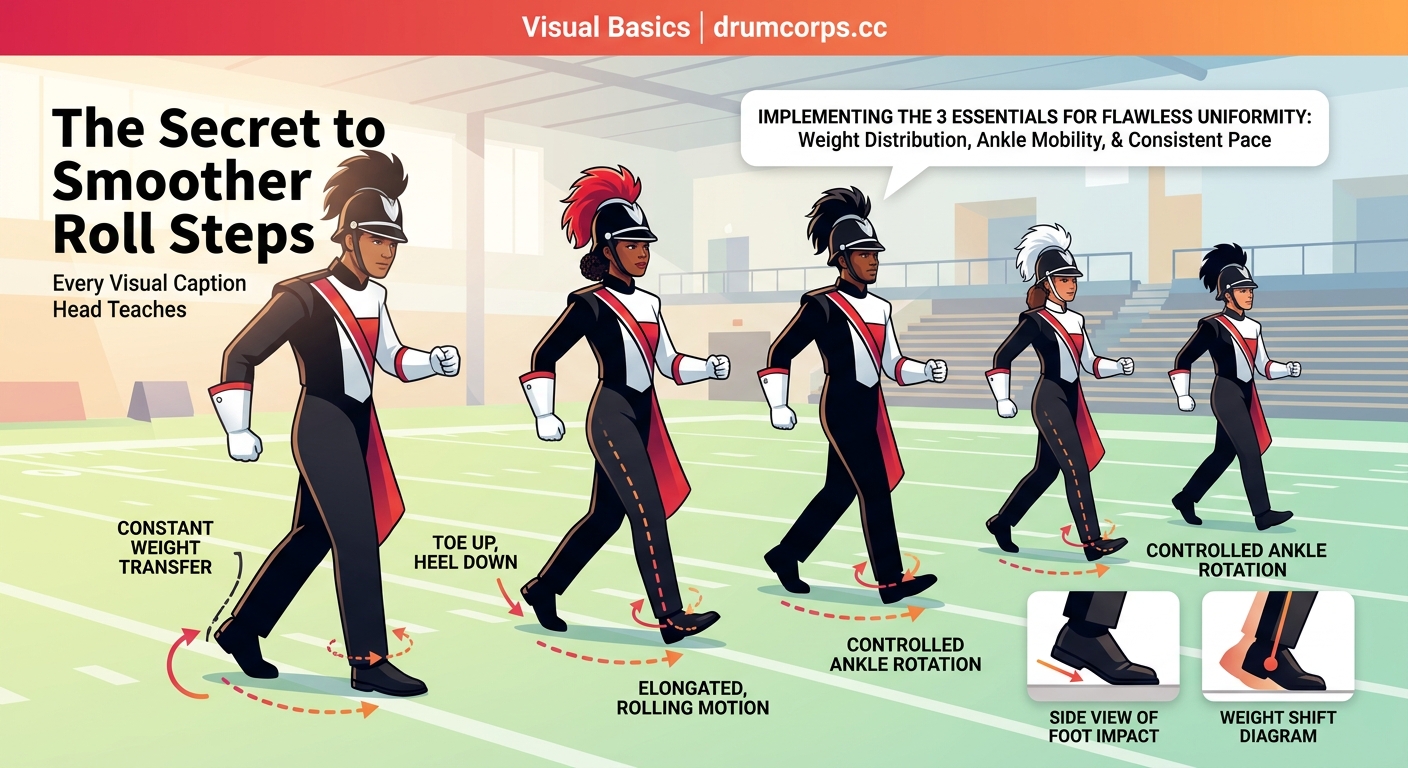
Rushing the tempo is the most common teaching mistake. Students need time to internalize each speed increment before moving faster. Here’s a proven progression that works:
- Start at 60 bpm playing single strokes with full wrist motion
- Increase to 80 bpm, maintaining the same motion quality
- At 100 bpm, introduce finger involvement to supplement wrist motion
- Move to 120 bpm, balancing wrist and finger contributions equally
- At 140 bpm and above, fingers do most of the work while wrists provide stability
Each tempo should feel comfortable before advancing. Comfortable means the student can play for 30 seconds without tension, maintain consistent stick heights, and produce even sound quality across both hands.
Use a metronome religiously. No exceptions. Students who practice without one develop inconsistent internal timing that shows up immediately in ensemble settings. The click track isn’t optional, it’s the foundation of everything else.
Between tempo jumps, check for these warning signs:
- Stick heights becoming uneven
- Sound quality deteriorating
- Visible tension in hands, wrists, or forearms
- Breathing patterns becoming irregular
- Facial expressions showing strain
Any of these signals means you’ve moved too fast. Drop back to the previous tempo and spend more time there.
Address Common Mistakes Before They Become Habits
Every student makes predictable errors when learning rolls. Catching these early saves countless hours of remedial work later. Here’s what to watch for and how to fix it:
| Mistake | What It Looks Like | How to Fix It |
|---|---|---|
| Death grip | White knuckles, stick doesn’t rebound freely | Have student hold stick with only thumb and first finger, add other fingers gradually |
| Wrist locking | Motion comes from elbow or shoulder | Place hand on student’s forearm, have them move only the wrist joint |
| Uneven doubles | One hand plays louder or faster than the other | Isolate weak hand, practice it alone until it matches strong hand |
| Finger slapping | Loud, uncontrolled finger motion | Slow tempo to 60 bpm, focus on controlled finger pressure |
| Stick height inconsistency | Sticks bouncing at different heights | Mark target height with tape, give visual reference point |
The death grip deserves special attention because it causes more problems than any other issue. Students grip too hard because they lack confidence in their control. Build that confidence through slow, deliberate practice where they prove to themselves the stick won’t fly away with a relaxed grip.
“The moment you feel yourself working hard to play a roll, you’re doing it wrong. Smooth rolls come from letting the stick do the work, not forcing it.” This advice from a veteran caption head captures the essential mindset shift students need to make.
Use Isolation Exercises That Target Specific Skills
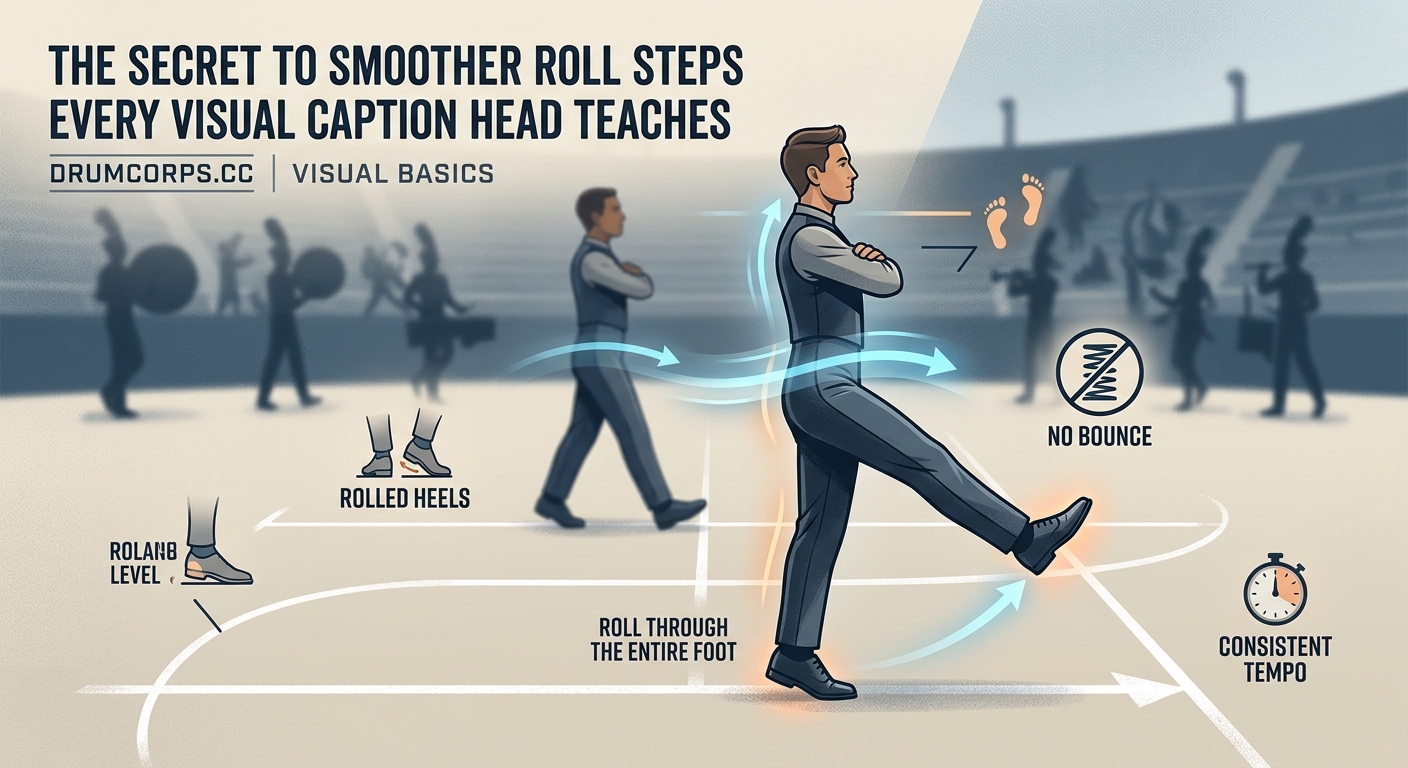
Breaking the roll into component parts lets students master each element before combining them. These exercises work for beginners and advanced players alike, just adjust the tempo and duration.
Wrist-only singles: Play single strokes using only wrist motion at 60-80 bpm. No finger involvement allowed. This builds the foundational motion that supports everything else. Practice for three minutes per hand, then two minutes alternating.
Finger-only taps: Rest the wrist on a pillow or foam pad so it can’t move. Play soft taps using only finger pressure. Start incredibly slow, maybe 40 bpm. The goal is control, not speed. This develops the fine motor skills needed for fast rolls.
Height matching drill: Play doubles at 80 bpm, focusing entirely on making both sticks reach exactly the same height. Ignore everything else. Have students watch their sticks in a mirror or record video. Visual feedback accelerates improvement dramatically.
Pressure variation exercise: Play a long roll at moderate tempo, gradually increasing volume from pianissimo to fortissimo and back down. This teaches dynamic control while maintaining smooth execution. Most students can play rolls at one volume but fall apart when asked to change.
Endurance builder: Set a timer for two minutes. Play a continuous roll at comfortable tempo without stopping. When fatigue sets in, students reveal their true technique. Tension appears, form breaks down, and you see exactly what needs work. This mirrors the physical demands of actual performance better than short bursts.
Incorporate these exercises into every rehearsal, even with advanced groups. Just like how to build a perfect 30-minute individual practice routine emphasizes consistent fundamentals, roll technique needs regular maintenance regardless of skill level.
Connect Rolls to Musical Context
Students who only practice rolls in isolation struggle to apply them musically. They can execute the technique on a pad but freeze when the same roll appears in actual music. Bridge this gap intentionally.
Start by having students play simple scales or familiar melodies, inserting a four-beat roll on every downbeat. This creates a low-pressure environment where they apply the technique in a musical setting without the complexity of reading new music.
Next, pull short excerpts from your current repertoire that feature rolls. Work these passages at half tempo, focusing on smooth execution rather than correct tempo. Gradually increase speed as the rolls improve. This approach ties technical work directly to performance goals.
Pay attention to the transition points where students move from regular notes into rolls and back out. These moments expose technique flaws that steady-state rolling hides. The entry should be seamless, with no accent or hesitation. The exit should land precisely on time with no dragging or rushing.
Create musical scenarios that require dynamic variation. Real music rarely calls for rolls at a single, unchanging volume. Students need practice crescendoing through a roll, decrescendoing, or executing sudden dynamic shifts mid-roll. These skills separate adequate technique from performance-ready execution.
Diagnose Problems Through Careful Listening
Your ears are the most important teaching tool you have. Developing the ability to hear specific technique issues lets you give targeted feedback instead of vague instructions.
A smooth roll sounds like a sustained tone with no individual strokes audible. If you hear distinct bounces, the student is playing too slowly for their current stick height or applying uneven pressure. The fix is either increasing tempo slightly or reducing stick height to match the current speed.
Buzzing or rattling indicates the fingers are too active relative to the wrist motion. The stick is bouncing too many times per stroke, creating an uncontrolled sound. Slow the tempo and reduce finger pressure until the buzz disappears.
A pulsing or throbbing quality means one hand is louder than the other, creating an unintentional accent pattern. Isolate the louder hand and have the student practice playing softer while maintaining the same speed. Then bring both hands back together, focusing on volume matching.
Scraping or scratching sounds come from the stick dragging across the head instead of bouncing cleanly. This usually indicates incorrect stick angle or too much downward pressure. Check that the stick approaches the head at approximately 45 degrees and rebounds freely.
Listen for consistency over time. Can the student maintain quality for five seconds? Fifteen? Thirty? Fatigue reveals technique weaknesses. If the sound degrades after a few seconds, there’s too much tension somewhere in the chain.
Apply These Teaching Strategies in Real Rehearsals
Theory only matters if you can implement it with a full section in limited rehearsal time. Here’s how to make it work:
Use sectionals strategically: Don’t try to fix individual technique issues in full ensemble. Pull the battery for focused work where you can hear and see each player clearly. Twenty minutes of targeted sectional work accomplishes more than an hour of vague full-ensemble corrections.
Implement the buddy system: Pair stronger players with those who need more help. Give specific observation tasks. “Watch Sarah’s stick heights and tell her when they become uneven.” This builds the stronger player’s analytical skills while giving the struggling student immediate feedback.
Record everything: Set up a phone or camera and record exercises. Students often can’t feel their mistakes but can see them clearly on video. Watching themselves reveals issues faster than any amount of verbal instruction. Plus, recording progress over weeks provides motivating evidence of improvement.
Build in regular assessment: Every two weeks, do individual check-ins. Sixty seconds per player. Have them demonstrate their roll at three different tempos. This accountability keeps everyone progressing and lets you catch problems before they become ingrained.
Connect to the visual program: Rolls don’t exist in isolation during performance. Students execute them while marching, often at challenging drill moments. Work with your visual staff to identify spots where the drill makes clean playing difficult. Practice those specific combinations of movement and playing until they become automatic. Similar to how to fix your backward marching before your next competition, integrating technical work with visual demands creates more complete performers.
Adapt Your Approach for Different Learning Styles
Not everyone processes instruction the same way. Effective teaching means having multiple methods to explain the same concept.
Visual learners: Use video examples, mirrors, and demonstrations. Show them what correct technique looks like from multiple angles. Draw diagrams of stick paths and hand positions. Let them watch high-quality corps performances and identify the technical elements you’ve been teaching.
Auditory learners: Use verbal cues and sound-based feedback. Describe the target sound in detail. “Your roll should sound like tearing silk, not popping bubble wrap.” Play recordings of excellent rolls and have them identify the qualities that make them work.
Kinesthetic learners: These students need to feel the difference. Guide their hands through correct motions. Have them practice with their eyes closed to focus on physical sensation. Use resistance exercises where they push against your hand to understand proper muscle engagement.
Most students benefit from all three approaches, but they’ll have a preference. Pay attention to which explanations click for each individual and adapt accordingly.
Troubleshoot When Progress Stalls
Every student hits plateaus where improvement seems to stop. This is normal, not a sign of failure. Here’s how to break through:
Change the practice environment. If someone has been working on a hard rubber pad, switch to a softer surface or an actual drum. The different rebound characteristics force the hands to adapt, often revealing and fixing subtle technique issues.
Reduce complexity temporarily. Strip away everything except the most basic element causing problems. If rolls are messy at 140 bpm, drop to 100 bpm and work there until it’s perfect. Sometimes you need to take two steps back to move three steps forward.
Introduce a completely different exercise. Working on the same drill repeatedly can create mental blocks. Shift to a related but different skill. Practice buzz rolls, or work on accent patterns, or focus on dynamic control. When you return to the original problem, fresh perspective often brings breakthrough.
Check for physical issues. Tension, fatigue, or even equipment problems can stall progress. Make sure sticks are in good condition, heads aren’t dead, and the student isn’t fighting physical discomfort. Simple fixes sometimes solve frustrating problems.
Why Consistent Fundamentals Beat Flashy Shortcuts
Building truly smooth roll technique takes time. There’s no hack that bypasses the work. Students who try to rush the process end up with inconsistent results that crumble under performance pressure.
The systematic approach outlined here works because it builds genuine skill, not just surface-level ability. When students understand why each element matters and how the pieces fit together, they develop adaptable technique that serves them in any musical situation.
Start with grip and wrist motion. Add speed gradually. Fix mistakes immediately. Practice with intention. Connect technique to music. These principles apply whether you’re teaching middle schoolers or refining world-class performers. The fundamentals never stop mattering, just like how to eliminate rim clicks and achieve clean snare articulation remains relevant at every skill level.
Your role as an instructor is creating the conditions where improvement becomes inevitable. Clear explanations, structured practice, consistent feedback, and patient repetition. Do this well and your students will develop rolls that sound effortless because the technique supporting them is solid.