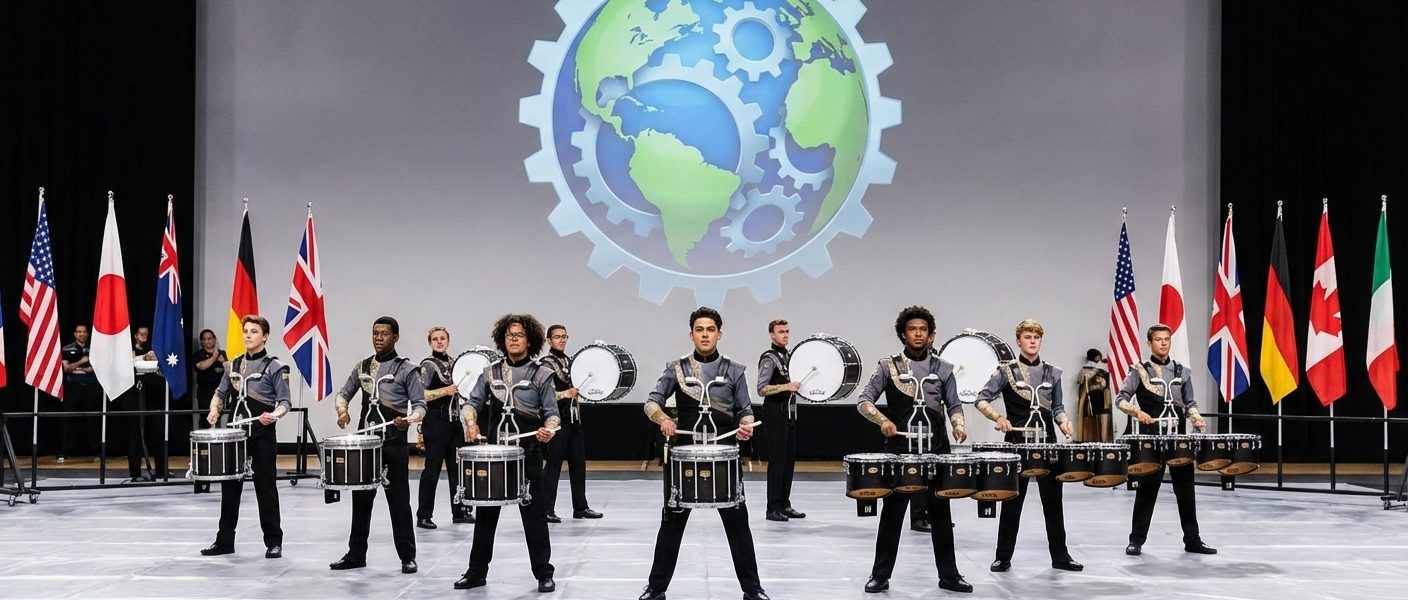
Winter Guard International has grown far beyond its American roots. Groups from Japan, Canada, Mexico, and Europe now compete alongside U.S. ensembles at regional events and World Championships. The organization’s international structure has evolved to welcome performers from every corner of the globe, creating new opportunities and challenges for directors planning their competitive seasons.
WGI international competition divisions allow ensembles from any country to compete in color guard, percussion, and winds categories. Groups register through standard procedures, compete at regional events or directly at World Championships, and follow the same classification system as U.S. groups. International participation has grown significantly, with ensembles from Asia, Europe, and North America competing annually in Dayton, Ohio.
Understanding WGI’s Global Competitive Structure
WGI operates three main performance divisions: color guard, percussion, and winds. Each division welcomes international participants without separate classification systems.
International groups compete in the same classes as American ensembles. A Scholastic A group from Tokyo faces the same judging criteria as a Scholastic A group from Texas. The classification depends on skill level and experience, not geography.
Most international ensembles start in regional competitions if they’re located near event sites. Canadian groups frequently attend events in border states. Mexican ensembles often compete in California, Arizona, or Texas regionals.
Groups from Asia and Europe typically skip regionals and compete only at World Championships. The travel costs make multiple trips impractical. These ensembles arrive in Dayton for finals week, bringing fresh perspectives shaped by different training traditions.
How International Groups Register and Qualify
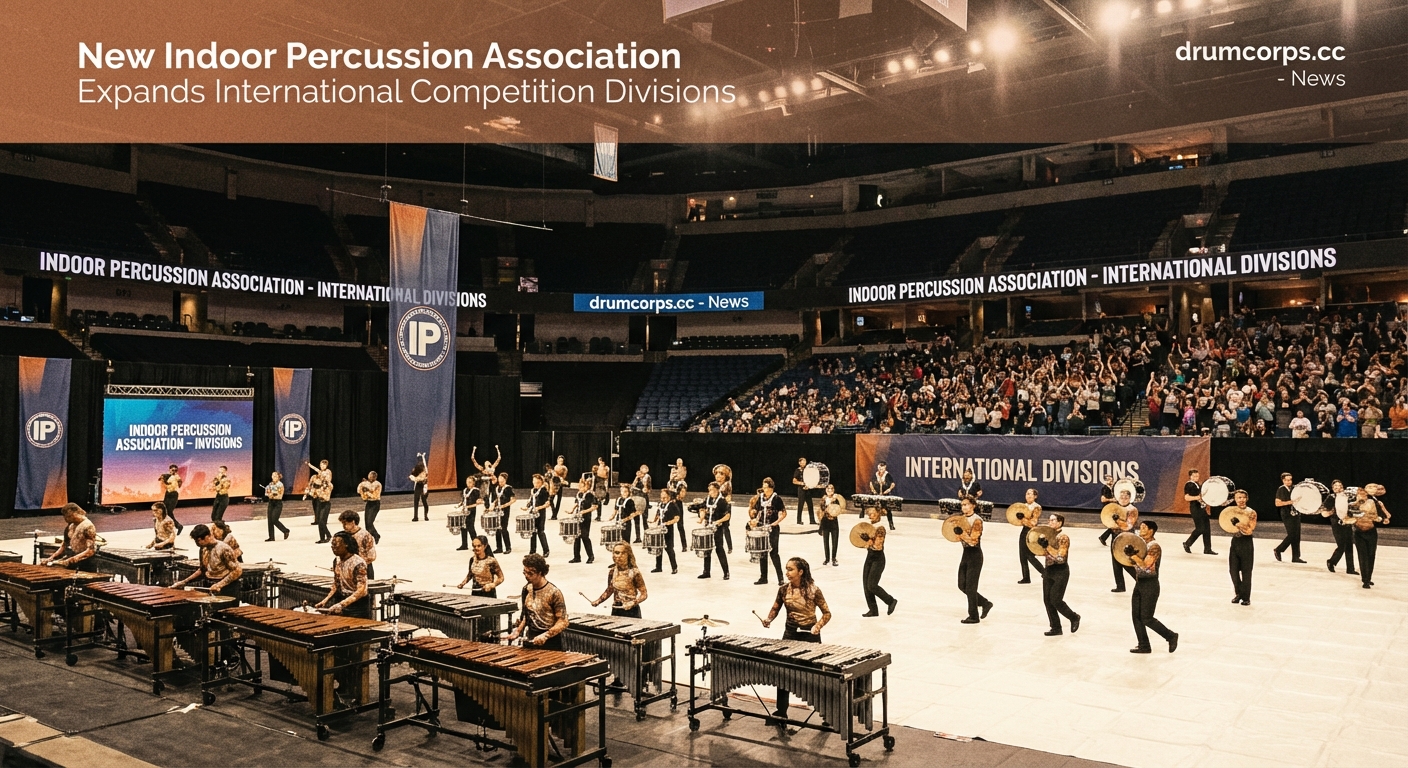
The registration process for international ensembles mirrors the domestic procedure. Directors create accounts on the WGI website, submit rosters, and pay entry fees in U.S. dollars.
Here’s the step-by-step process for international registration:
- Create an organizational account at least six months before your target competition date
- Submit proof of insurance coverage that meets WGI minimum requirements
- Upload roster information including performer names, birthdates, and emergency contacts
- Select your classification based on group experience and skill level
- Pay registration fees and choose which events you’ll attend
- Submit music licensing documentation for all recorded and live music elements
- Confirm travel arrangements and coordinate with event hosts for load-in times
Classification decisions matter tremendously. A group that places itself too high risks poor scores and discouragement. Placing too low violates competitive integrity and wastes everyone’s time.
WGI staff review international applications carefully. They may request video documentation of recent performances to verify appropriate classification. This protects both the international group and domestic competitors in the same class.
Competition Classes Available to International Ensembles
Every WGI class welcomes international participation. The structure includes multiple tiers designed to match skill levels appropriately.
| Class Level | Typical Experience | Performance Length | Judging Focus |
|---|---|---|---|
| A Class | Beginning to intermediate | 4-6 minutes | Fundamentals and clarity |
| Open Class | Intermediate to advanced | 6-8 minutes | Design complexity and execution |
| World Class | Elite level | 8-10 minutes | Innovation and mastery |
| Independent | Non-school affiliated | Varies by tier | Same as corresponding school class |
International groups most commonly enter Open or World Class. These ensembles often train year-round and arrive with sophisticated programs.
Japanese percussion groups have particularly strong representation in World Class. Their training systems emphasize precision and ensemble unity. Groups like Senzoku Gakuen have earned medals competing against America’s top independent lines.
Canadian color guards appear across all classification levels. Geographic proximity makes regular competition feasible. Some Canadian scholastic programs attend four or five regional events before Championships.
“International groups bring different aesthetic priorities that push everyone to reconsider what’s possible. A Japanese ensemble might approach musicality differently than an American group, and that contrast makes the activity richer.” — Former WGI judge and clinician
Regional Events and International Access
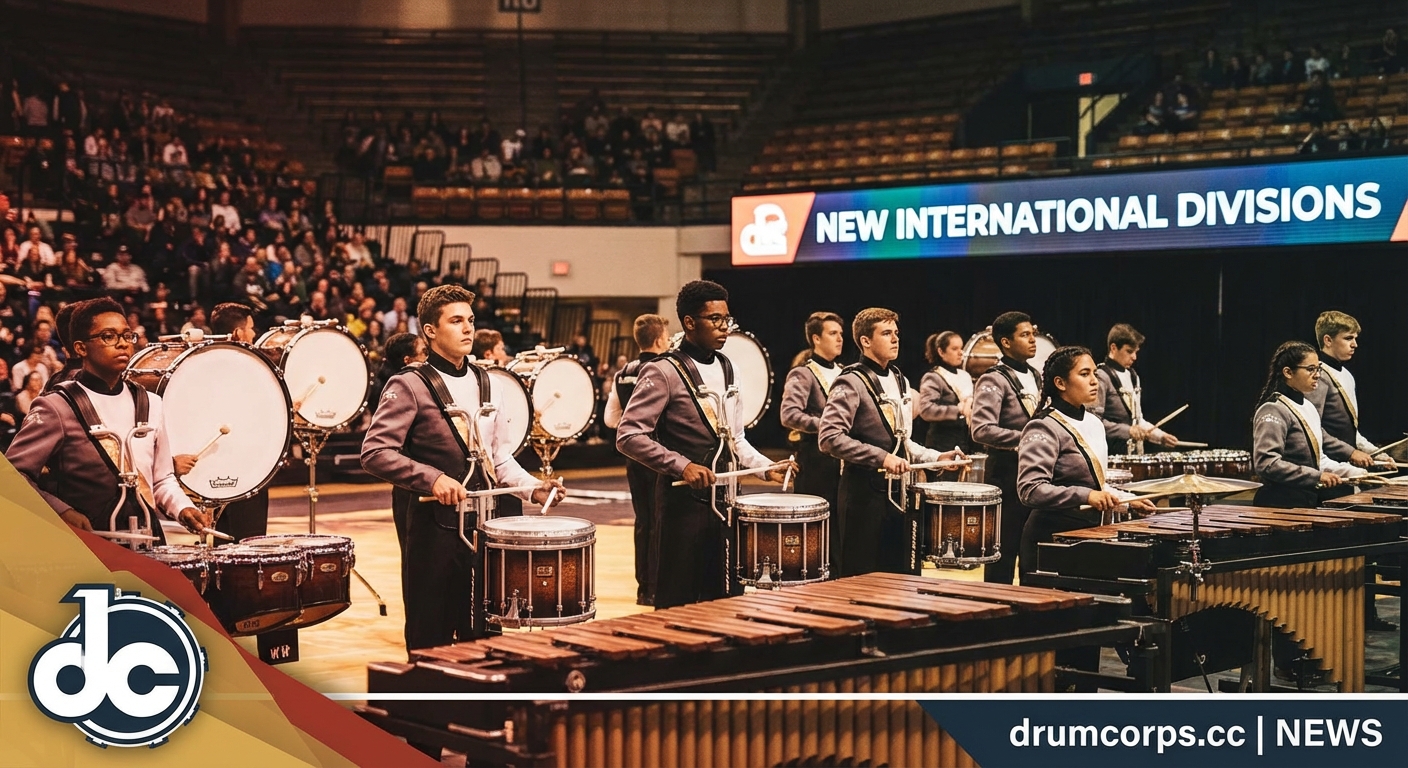
WGI sanctions more than 70 regional events each season across the United States. International groups can attend any event that fits their travel schedule.
Border state regionals see the most international participation:
- Seattle and Portland events attract British Columbia groups
- Detroit and Buffalo competitions draw Ontario ensembles
- San Diego and Phoenix regionals host Mexican participants
- California events welcome groups from across the Pacific
Regional attendance offers crucial benefits. Groups receive score sheets and judge commentary that inform final preparations. Performers experience the competition environment without Championship pressure. Directors can test design choices and make adjustments.
Some international programs skip regionals entirely. The cost of multiple U.S. trips exceeds their budgets. These groups rely on local competitions and video review to prepare for World Championships.
World Championships as the International Showcase
The WGI World Championships in Dayton, Ohio represents the activity’s true international gathering. Groups from a dozen countries converge for finals week each April.
Championship week runs Thursday through Sunday. Preliminary rounds happen Thursday and Friday. Semifinals occur Saturday. Finals take place Sunday afternoon and evening.
International groups follow the same schedule as domestic competitors. A World Class percussion ensemble from Singapore competes in Thursday prelims alongside groups from California and Connecticut. Scores determine who advances to semifinals and finals.
The event draws thousands of international spectators. Families travel from Japan, Canada, and Mexico to watch their students perform. The Dayton convention center becomes a temporary global village where different marching traditions intersect.
Housing presents unique challenges for international groups. Most stay in designated competition hotels, though some arrange homestays with local marching arts families. These cultural exchanges often continue for years after the initial competition.
Training Differences and Competitive Advantages
International ensembles bring distinct training philosophies shaped by their home countries. These differences create fascinating competitive dynamics.
Japanese groups emphasize collective precision. Individual expression matters less than perfect unison. Rehearsal methods focus on repetition until movements become reflexive. The aesthetic prioritizes clean lines and synchronized timing.
Canadian programs blend American and European influences. Many directors trained in U.S. drum corps but incorporate contemporary dance vocabulary from Canadian theater traditions. The result feels familiar yet distinct.
Mexican color guards often feature vibrant visual design and passionate performance energy. Cultural dance traditions influence body movement and equipment work. These groups excel at connecting emotionally with audiences.
European ensembles remain rare but memorable. When they compete, they often bring experimental design concepts. Smaller marching arts communities mean less standardization and more willingness to take creative risks.
Practical Considerations for International Competitors
Competing internationally requires extensive logistical planning. Directors must address dozens of details months in advance.
Key planning elements include:
- Visa requirements for performers traveling to the United States
- Equipment shipping logistics and customs documentation
- Currency exchange and budget management in U.S. dollars
- Insurance coverage that meets WGI standards and U.S. legal requirements
- Communication plans for families back home during competition week
- Meal planning that accommodates dietary restrictions and preferences
- Emergency medical protocols in a foreign healthcare system
- Transportation between airports, hotels, and competition venues
Equipment transport creates particular headaches. Percussion ensembles ship marimbas, xylophones, and drum sets weeks before competition. Instruments must clear customs and arrive undamaged. One missing marimba bar can derail months of preparation.
Color guards face different challenges. Airlines restrict flag poles and rifles as oversized items. Some groups purchase equipment in the U.S. and sell it after competition rather than shipping internationally twice.
Many international programs connect with domestic groups for support. An established relationship with an American ensemble can provide practice space, equipment storage, and local knowledge. These partnerships strengthen the global marching arts community, much like how rule changes in other marching activities often emerge from cross-organizational collaboration.
Judging Standards and International Fairness
WGI uses the same judging panels and criteria for all competitors regardless of nationality. International groups receive no special consideration or handicapping.
Judges evaluate seven caption areas in most divisions:
- Equipment analysis and vocabulary
- Movement analysis and body technique
- Design analysis and program construction
- General effect for music
- General effect for visual impact
- Ensemble execution and timing
- Individual performer quality
Caption judges train extensively to recognize excellence across different aesthetic approaches. A Japanese ensemble’s precise unison deserves the same credit as an American group’s dynamic range. Judges must set aside stylistic preferences and evaluate execution quality objectively.
Commentary sheets provide detailed feedback. International groups value these documents tremendously. Written judge comments help directors understand American judging priorities and adjust future programs accordingly.
Some international directors report initial confusion about WGI judging philosophy. The system differs from judging structures in other countries. After a season or two, most groups adapt successfully. The learning curve represents part of the international competition experience.
Growth Trends in International Participation
International involvement in WGI has expanded steadily for two decades. Asian participation has grown most dramatically.
Japanese ensembles now compete regularly across all three divisions. South Korean groups have begun attending in recent years. Interest from China continues developing, though logistical barriers remain significant.
Canadian participation has stabilized at high levels. Dozens of Canadian groups attend regionals and Championships annually. The activity has become standard in many Canadian high school and independent programs.
Mexican representation fluctuates based on economic conditions and currency exchange rates. When the peso strengthens against the dollar, more Mexican groups can afford to compete. Weaker exchange rates reduce participation.
European groups remain occasional participants. Distance and cost make regular competition impractical. When European ensembles do compete, they generate significant attention and often perform memorably.
WGI has discussed creating satellite championship events in other countries. Such expansion would reduce travel costs for international groups and grow the activity globally. No concrete plans have been announced, but conversations continue.
Financial Realities of International Competition
Competing internationally costs significantly more than domestic competition. International directors must fundraise extensively and plan budgets carefully.
Typical cost categories for an international group attending World Championships:
- Registration fees: $500 to $1,200 depending on division and class
- International airfare: $800 to $2,000 per person
- Hotel accommodations: $150 to $250 per night for 4-6 nights
- Ground transportation: $500 to $1,500 for buses or vans
- Meals and incidentals: $50 to $75 per person per day
- Equipment shipping: $2,000 to $8,000 depending on size and distance
- Insurance and medical coverage: $1,000 to $3,000 for the group
- Uniform and costume expenses: $200 to $400 per performer
A 30-member color guard from Japan might spend $75,000 to $100,000 for a single World Championships appearance. Percussion ensembles with larger equipment needs often exceed $125,000.
These costs explain why international groups compete less frequently than domestic programs. Many international ensembles target Championships every two or three years rather than annually.
Fundraising becomes a year-round activity. Groups sell merchandise, hold concerts, seek corporate sponsorships, and apply for arts grants. Some performers work part-time jobs specifically to fund their competition trip.
The financial investment reflects the value international groups place on WGI competition. Performing at World Championships represents a pinnacle achievement. The experience justifies the enormous effort required to get there.
Cultural Exchange Beyond Competition
International participation enriches WGI beyond competitive outcomes. The gathering creates cultural exchange opportunities that benefit everyone involved.
Performers from different countries often connect on social media after competing. Friendships develop across continents. Some groups arrange reciprocal visits, performing in each other’s home countries during off-seasons.
Design ideas cross borders through these connections. An American director might incorporate a staging concept observed in a Japanese show. A Canadian choreographer might adapt movement vocabulary from a Mexican performance.
The international presence challenges American groups to reconsider assumptions. Domestic competitors realize their approach represents one possibility among many. This awareness can spark creativity and innovation, similar to how groundbreaking design approaches have historically pushed the entire activity forward.
Spectators benefit from the variety. A parent watching their child compete also experiences performances from cultures they might never encounter otherwise. The educational value extends beyond the competitive arena.
Common Mistakes International Groups Make
First-time international competitors often stumble over preventable problems. Learning from others’ mistakes saves time and frustration.
| Mistake | Why It Happens | How to Avoid It |
|---|---|---|
| Underestimating prep time | Different time zones and travel fatigue | Arrive two days early minimum |
| Inadequate insurance | Home country coverage doesn’t apply in U.S. | Purchase U.S.-specific event insurance |
| Equipment damage in shipping | Poor packing or carrier mishandling | Use professional equipment shipping services |
| Missing documentation | Unfamiliarity with U.S. customs requirements | Work with experienced shipping broker |
| Wrong classification | Misjudging skill level against U.S. competition | Submit video for WGI staff review |
| Budget shortfalls | Underestimating incidental costs | Add 20% contingency to all estimates |
Communication gaps cause frequent problems. International directors should establish clear contact with WGI staff months before competition. Email works better than phone for non-native English speakers. Written communication creates documentation that prevents misunderstandings.
Time zone differences complicate coordination. A director in Tokyo lives 14 hours ahead of WGI offices in Ohio. Simple questions can take days to resolve if both parties don’t plan for the time gap.
Resources and Support for International Participants
WGI provides specific resources to help international groups navigate the competition process. The organization recognizes that international participants face unique challenges.
The WGI website includes an international competitor section with detailed information about registration, shipping, travel, and competition procedures. Staff members respond to international inquiries, often connecting new groups with experienced international directors who can offer advice.
Several online communities support international WGI participants. Facebook groups connect directors from different countries. These informal networks share practical information about shipping companies, hotels, equipment sources, and travel logistics.
Some U.S.-based instructors specialize in working with international groups. These clinicians travel abroad to teach or provide remote instruction via video conferencing. Their expertise helps international ensembles understand American judging priorities and design preferences.
The international marching arts community has grown increasingly connected. A director in Singapore can now video chat with a choreographer in Ohio while watching performance footage from a Canadian ensemble. Technology has made international collaboration routine rather than exceptional, much like how performers can now access resources such as breathing techniques or practice strategies regardless of location.
Looking Ahead at International Growth
WGI international competition divisions will likely continue expanding. Several factors support continued growth.
Global interest in American marching arts remains strong. Young performers worldwide watch WGI videos online and aspire to compete. Social media has made the activity visible in countries with no domestic marching arts tradition.
Economic development in Asia creates larger middle classes with disposable income for extracurricular activities. More families can afford the costs associated with international competition.
Improved technology reduces barriers. Remote instruction and video feedback allow international groups to receive expert coaching without expensive travel. Better practice tools mean groups can prepare more effectively before arriving at competition.
WGI leadership has expressed commitment to international growth. The organization views global participation as central to its mission. Future initiatives may include regional championship events in other countries, though such plans require careful development.
The next decade will likely see first-time competitors from countries not yet represented. Groups from Southeast Asia, South America, and Africa may join the international WGI community. Each new participant enriches the activity and expands its cultural reach.
Making Your International Competition Dream Real
International WGI competition represents a significant commitment. The financial costs, logistical complexity, and time investment exceed what most groups experience in domestic competition.
Yet thousands of performers and directors believe the experience justifies every challenge. Competing at World Championships creates memories that last lifetimes. Performers gain confidence, cultural awareness, and artistic growth that extends far beyond marching arts.
Start planning at least 18 months before your target competition date. Build your budget conservatively. Connect with experienced international groups who can share hard-won knowledge. Work closely with WGI staff to ensure you understand all requirements.
Your ensemble will represent your country on an international stage. That responsibility matters. Prepare thoroughly, compete with integrity, and embrace the cultural exchange opportunity. The international WGI community welcomes you and looks forward to seeing what your unique perspective brings to the floor.