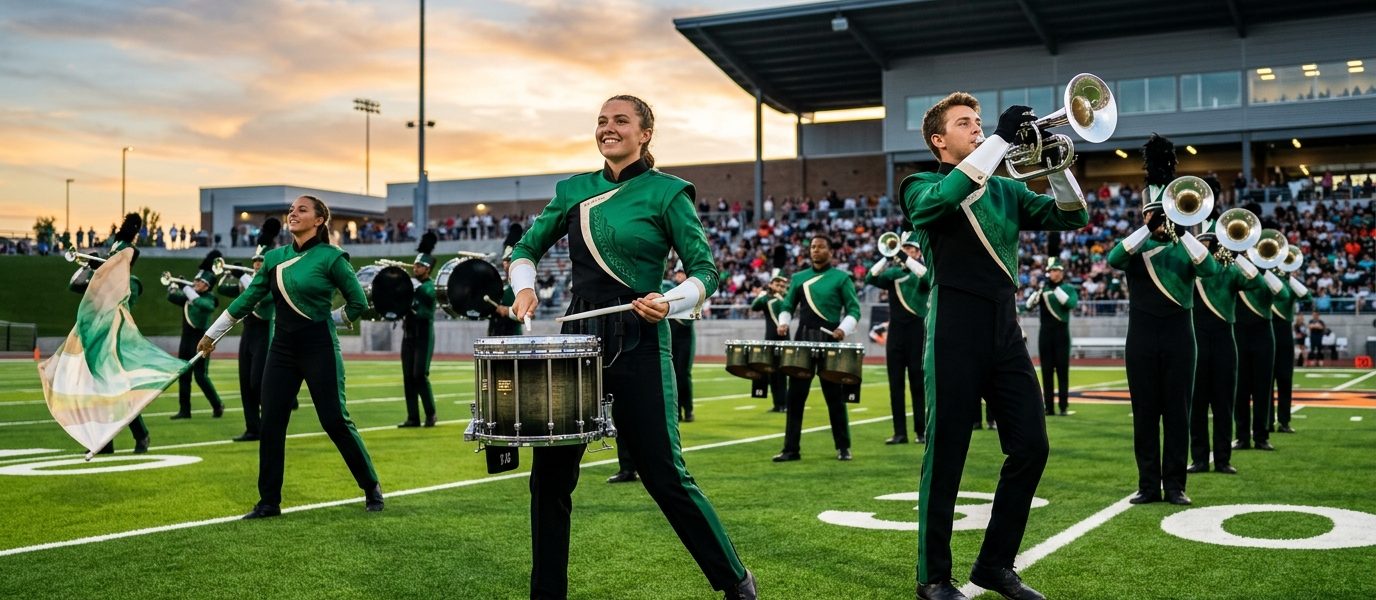
Your band program needs new uniforms, and you’re tired of ordering the same synthetic fabrics that wear out in three seasons. The good news? Sustainable options have arrived, and they’re built for the field, not just the catalog.
Eco-friendly marching band uniforms now combine recycled polyester, organic cotton blends, and water-based dyes to reduce environmental impact without sacrificing durability or performance. These uniforms cost slightly more upfront but last longer, require less frequent replacement, and align with school sustainability goals. Band directors can choose from multiple manufacturers offering customizable designs, extended sizing, and repair programs that keep uniforms in rotation for years.
What makes a marching band uniform eco-friendly
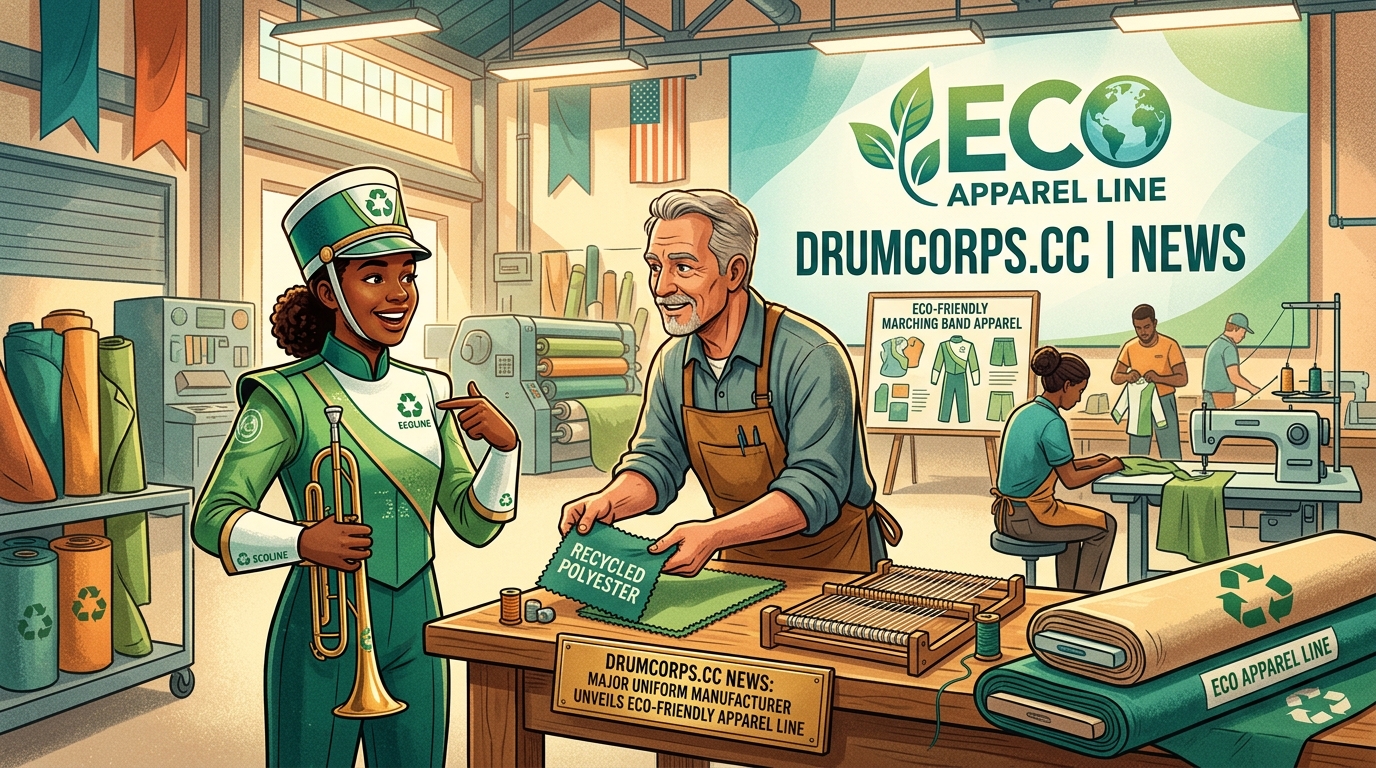
Sustainable uniforms start with materials. Recycled polyester, made from post-consumer plastic bottles, forms the base of most eco-friendly designs. Manufacturers collect bottles, clean them, shred them into chips, then spin those chips into fibers. The result feels identical to virgin polyester but uses 59% less energy to produce.
Organic cotton blends add breathability. These blends typically combine 30% organic cotton with 70% recycled polyester, creating a fabric that wicks moisture while maintaining structure. The cotton comes from farms that avoid synthetic pesticides and use crop rotation to maintain soil health.
Water-based dyes replace traditional chemical dyes. Conventional dyeing processes dump heavy metals and toxic chemicals into water systems. Water-based alternatives use plant-derived pigments and biodegradable binders. Colors stay vibrant through dozens of washes, and the dye process uses 90% less water.
Non-toxic finishes complete the package. Stain-resistant coatings, UV protection, and wrinkle resistance all come from plant-based treatments instead of perfluorinated compounds. Your students won’t notice the difference, but local watersheds will.
How sustainable uniforms perform on the field

Durability matters more than marketing claims. Eco-friendly uniforms must survive summer heat, rain delays, bus rides, and weekly cleanings. The best sustainable fabrics actually outlast conventional options because recycled polyester fibers are slightly thicker and more resilient than virgin alternatives.
Temperature regulation improves with natural fiber blends. Organic cotton wicks sweat away from skin, while recycled polyester dries fast. Students stay cooler during August rehearsals and warmer during October competitions. The fabric breathes better than 100% synthetic options, reducing heat exhaustion risk during long performances.
Color retention stays strong across seasons. Water-based dyes bond differently to fibers than chemical dyes. Instead of sitting on the surface, plant-based pigments penetrate deeper. Your school colors won’t fade to pastels after one marching season. Most manufacturers guarantee color fastness for at least five years of regular use.
Movement flexibility matches or exceeds traditional uniforms. Sustainable fabrics have four-way stretch built in. Brass players can lift instruments overhead without restriction. Drummers rotate freely at the waist. Color guard members execute tosses and catches without fabric pulling or binding.
Comparing costs between conventional and sustainable options
Budget planning requires honest numbers. Here’s how eco-friendly uniforms stack up against traditional polyester options over a typical program lifecycle.
| Factor | Conventional Uniforms | Eco-Friendly Uniforms |
|---|---|---|
| Initial cost per uniform | $225-$275 | $275-$350 |
| Expected lifespan | 3-4 seasons | 5-7 seasons |
| Replacement frequency | Every 4 years | Every 6-8 years |
| Repair availability | Limited | Full repair programs |
| Resale value | Minimal | Moderate to high |
| Total 10-year cost (80-member band) | $450,000-$550,000 | $440,000-$560,000 |
The upfront difference feels significant. An 80-member band pays $4,000 to $6,000 more initially for sustainable uniforms. But extended lifespan and better resale options balance that investment. Programs that budget carefully often save money over time.
Grant funding helps close the gap. Many environmental foundations and corporate sustainability programs offer grants specifically for eco-friendly school purchases. Your district’s grant writer can target these opportunities. Some manufacturers also offer payment plans that spread costs across multiple budget years.
Selecting the right manufacturer for your program

Research starts with fabric certifications. Look for Global Recycled Standard (GRS) certification, which verifies recycled content and tracks materials through the supply chain. OEKO-TEX Standard 100 certification confirms fabrics are free from harmful chemicals. These aren’t marketing buzzwords. They’re third-party verified standards.
Customization options should match your design vision. Sustainable manufacturers now offer the same embroidery, appliqué, and trim options as conventional suppliers. You won’t sacrifice your school’s visual identity. Digital printing technology allows complex designs without extra environmental impact.
Sizing inclusivity matters for every member. The best manufacturers provide extended sizing in all styles, not just basic jackets. Gender-neutral cuts accommodate all body types. Custom alterations should be available without premium charges. Your entire ensemble deserves uniforms that fit properly and perform well.
Repair and replacement programs extend uniform life. Some manufacturers take back worn uniforms, repair them, and resell them to smaller programs at reduced prices. Others offer free repair kits and video tutorials. A few provide lifetime warranties on construction defects. These programs keep uniforms out of landfills and support bands with tighter budgets.
Steps to transition your program to sustainable uniforms
Planning ahead prevents budget shock. Start researching options two to three years before your next uniform purchase. This timeline gives you space to apply for grants, build community support, and involve students in the selection process.
- Form a sustainability committee that includes band directors, parent volunteers, and student representatives. Meet quarterly to review options and gather feedback.
- Request sample uniforms from three to five manufacturers. Have students wear them during rehearsals for at least two weeks. Collect honest feedback about comfort, movement, and durability.
- Calculate total cost of ownership, not just purchase price. Factor in expected lifespan, repair costs, and replacement frequency. Present these numbers to administration alongside environmental benefits.
- Apply for relevant grants and explore fundraising options. Environmental grants, arts education funding, and local business sponsorships can all support sustainable uniform purchases.
- Order a small pilot batch first. Outfit your drum majors or section leaders with the new uniforms for one season. Document their experience and use that data to support a full program transition.
“We switched to recycled polyester uniforms three years ago, and I honestly can’t tell the difference in performance. The uniforms look sharp, they’ve held up through three full seasons without fading, and our students love telling audiences about the sustainability aspect. It’s become part of our program identity.” — Director of Bands, Central High School
Common concerns about eco-friendly uniforms addressed
Cleaning requirements stay simple. Sustainable uniforms wash in standard machines using cold water and mild detergent. Skip the fabric softener, which can reduce moisture-wicking properties. Air drying extends fabric life, but low-heat tumble drying works fine when you’re pressed for time. The same cleaning routine you use now applies to eco-friendly options.
Weather resistance holds up in all conditions. Water-based finishes repel rain just as effectively as chemical treatments. Uniforms dry faster because organic cotton blends release moisture more readily than 100% synthetic fabrics. Snow, mud, and grass stains lift out with standard stain removers. Your uniform crew won’t need special training or products.
Visual appearance matches traditional uniforms. Modern sustainable fabrics hold crisp pleats, maintain structured shoulders, and drape properly. Judges can’t tell the difference between eco-friendly and conventional uniforms from the stands or the field. Your visual program won’t suffer. If anything, the improved fit and comfort help students perform better.
Availability has improved dramatically. Five years ago, only two manufacturers offered truly sustainable marching uniforms. Today, more than a dozen companies compete in this space. Lead times match conventional uniform orders, typically 16 to 20 weeks from order to delivery. Rush orders cost extra but remain possible when needed.
Design elements that work best with sustainable fabrics
Color choices affect environmental impact. Darker colors like navy, forest green, and burgundy require less dye and fewer chemical fixatives. Lighter colors need more processing to achieve even coverage. If your school colors include white or pale yellow, expect slightly higher costs and longer production times.
Trim and embellishment options have expanded. Recycled metallic threads create the same shimmer as virgin materials. Sustainable braiding uses organic cotton cores wrapped in recycled polyester. Even rhinestones and sequins now come in recycled glass versions. Your design committee won’t face creative limitations.
Layering pieces add versatility. Sustainable vests, capes, and overlays allow you to transform uniforms between performances without ordering entirely new sets. These pieces cost less than full uniforms and give your visual program flexibility. They also extend the useful life of base uniforms by reducing wear.
Performance requirements can change quickly, just like how fixing your backward marching before your next competition requires focused practice time. Sustainable uniforms adapt to these evolving needs through modular design.
Maintaining eco-friendly uniforms across seasons
Storage prevents damage between seasons. Clean all uniforms before storage, even pieces that look clean. Body oils and invisible stains attract insects and cause discoloration over time. Store uniforms in breathable garment bags, not plastic. Cedar blocks repel moths without toxic chemicals. Keep storage areas cool and dry to prevent mildew.
Spot cleaning handles most issues during the season. Keep a kit with plant-based stain remover, clean cloths, and a soft brush. Treat stains immediately after performances, before they set. Most marks lift out with gentle dabbing. Avoid rubbing, which pushes stains deeper into fibers.
Rotation extends uniform life. If your budget allows, order 10% more uniforms than you need. Rotate pieces so no single uniform gets worn every performance. This practice reduces wear on high-stress areas like underarms and knees. It also gives you backup options when alterations are needed.
Professional cleaning once per season maintains appearance. Find a cleaner experienced with performance costumes. They understand how to handle embellishments and structured pieces. Schedule cleaning during off-season, not mid-competition. Allow two weeks for the process.
Building community support for sustainable choices
Student involvement creates ownership. Let students research environmental impacts of conventional uniforms. Have them present findings to booster clubs and school boards. When students advocate for sustainable choices, communities listen. This approach also teaches valuable research and presentation skills.
Parent education addresses cost concerns. Host an information session that breaks down total cost of ownership. Show side-by-side comparisons of conventional and sustainable options. Bring sample uniforms for parents to examine. Answer questions honestly about tradeoffs and benefits.
Alumni engagement can provide funding. Many alumni want to support their former programs but don’t know how. A sustainable uniform fund gives them a concrete, meaningful way to contribute. Some alumni groups organize fundraisers specifically for eco-friendly equipment purchases.
Local media coverage amplifies your message. Regional newspapers and TV stations love positive school stories. A band program choosing sustainable uniforms demonstrates leadership and forward thinking. Media attention can attract additional donors and community support.
Future developments in sustainable uniform technology
Biodegradable fabrics are coming. Several textile companies are developing performance fabrics that break down completely at end of life. These materials perform like current options but decompose in industrial composting facilities. Expect commercial availability within three to five years.
Carbon-neutral manufacturing is becoming standard. Leading uniform manufacturers are installing solar panels, using renewable energy, and offsetting remaining emissions. Some companies now offer carbon-neutral uniforms with verified offsets included in the purchase price.
Circular economy programs are expanding. More manufacturers are creating take-back programs that refurbish old uniforms and resell them. Some companies offer credit toward new purchases when you return old uniforms. These programs keep textiles in use and reduce waste.
Digital customization reduces waste. New printing technologies allow on-demand decoration without minimum orders. You can add names, numbers, or special recognition to individual uniforms without ordering extras. This precision reduces overproduction and excess inventory.
Making the switch without disrupting your program
Timing matters for smooth transitions. Plan uniform changes during natural replacement cycles, not mid-season. If your current uniforms have two years of life left, start researching now but don’t rush the purchase. Hasty decisions lead to regrets.
Phased transitions work for tight budgets. Start with one section, like color guard or drumline. Add another section each year. This approach spreads costs across multiple budget cycles and lets you refine your choices based on real experience.
Communication prevents confusion. Tell your community why you’re making this change. Share environmental benefits, performance advantages, and long-term cost savings. Regular updates keep everyone informed and invested in the process.
Documentation helps future directors. Keep detailed records of your research, decision process, and results. Include vendor contacts, pricing information, and student feedback. Your successor will appreciate this roadmap.
Why sustainable uniforms strengthen your program
Environmental responsibility resonates with students. Today’s young musicians care about climate change and sustainability. Choosing eco-friendly uniforms shows you take their concerns seriously. This alignment builds program loyalty and pride.
Community perception improves. Schools that prioritize sustainability attract positive attention from parents, donors, and administrators. Your band program becomes a model for other departments. This reputation can lead to increased funding and support.
Educational opportunities multiply. Sustainable uniforms create teaching moments about materials science, environmental impact, and responsible consumption. These lessons extend beyond music education and prepare students for informed citizenship.
Performance quality never suffers. Modern eco-friendly uniforms match or exceed conventional options in every measurable way. Your students look professional, feel comfortable, and perform confidently. The environmental benefits come as a bonus, not a compromise.
Your band deserves uniforms that last
Sustainable uniforms represent smart investing, not idealistic spending. They last longer, perform better, and align with values your students already hold. The transition takes planning, but the results speak for themselves.
Start researching today. Request samples. Talk to other directors who’ve made the switch. Your next uniform order can support both your program and the planet. That’s a performance worth applauding.