
The 2002 Cavaliers didn’t just win a championship. They shattered the scoring ceiling with the first 99 in DCI history, built entirely on all-original music and geometric precision that redefined what modern drum corps could achieve.
The 2002 Cavaliers Frameworks production combined all-original compositions by Richard Saucedo and Jay Bocook with architectural drill design to earn the first perfect 99 score in DCI history. The show featured precision geometric forms, exposed brass moments, and a cohesive visual narrative that established new standards for competitive excellence and influenced design philosophy for decades.
What Made Frameworks Different From Every Other Show
Frameworks broke the mold by commissioning entirely original music instead of arranging existing classical pieces. Richard Saucedo and Jay Bocook created four movements that worked together as a unified architectural statement.
The show opened with “Foundations,” establishing geometric patterns that would evolve throughout the performance. Brass players formed literal framework structures on the field, creating visual representations of construction and design principles.
Unlike shows that relied on recognizable melodies to connect with audiences, Frameworks demanded listeners engage with new musical ideas. This risk paid off because the compositions were crafted specifically for competitive performance, with built-in moments for visual impact.
The drill design by George Zingali and Michael Gaines used mathematical precision to create forms that appeared both mechanical and organic. Performers moved through space like building components assembling themselves into complete structures.
The Four Movements That Built a Championship
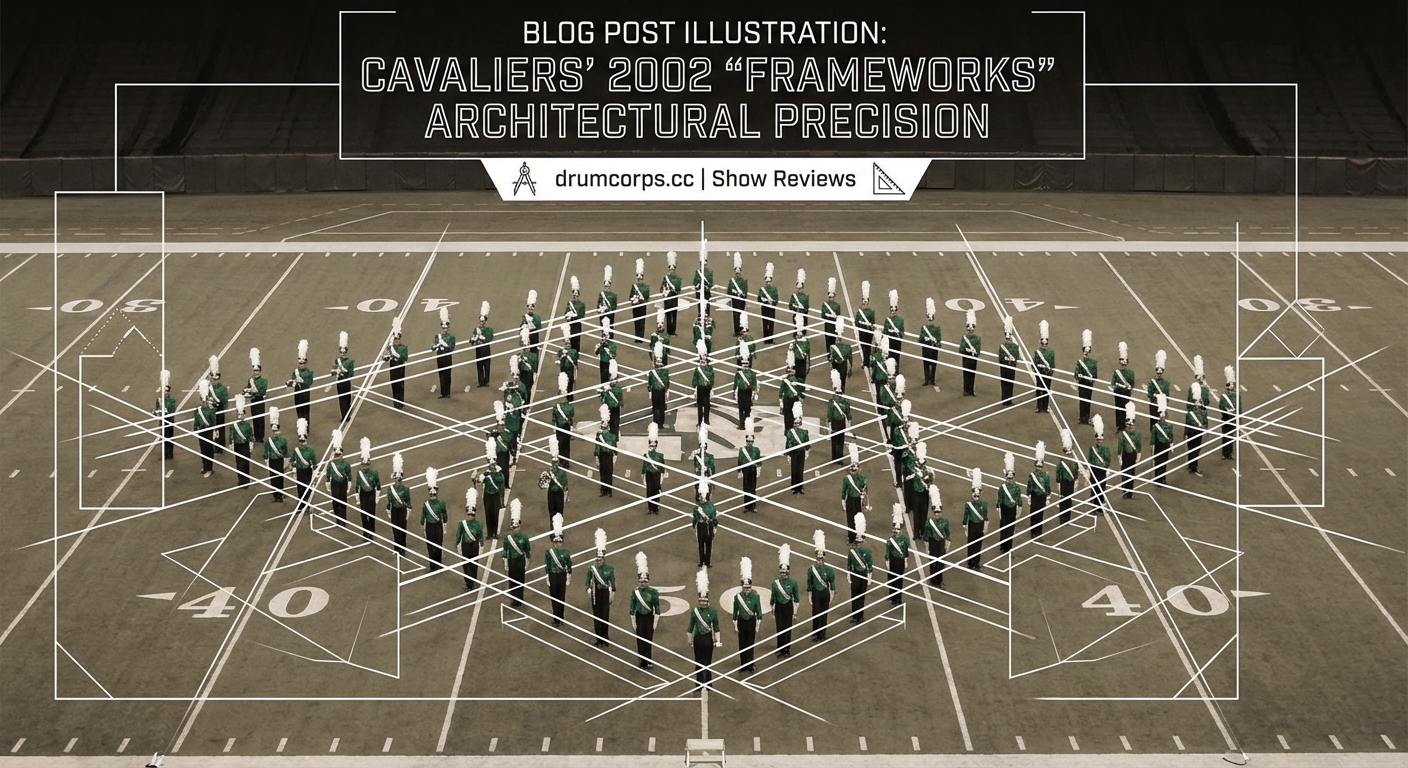
Each movement of Frameworks served a specific purpose in the overall narrative arc.
Foundations
The opener established the show’s architectural vocabulary. Brass sections formed scaffolding patterns while the battery laid down rhythmic blueprints. The color guard introduced angular props that would reappear throughout the production.
This movement prioritized clarity. Every note had space around it. Every form completed before transitioning to the next.
Structures
The second movement increased complexity without sacrificing precision. Nested geometric shapes rotated within larger formations, creating depth and dimension on the two-dimensional field.
Exposed brass moments became a signature element. Soloists stepped forward from the ensemble, their phrases echoing architectural cantilevers that extended beyond the main structure.
Designs
The ballad movement stripped away layers to reveal the emotional core. Softer dynamics and sustained tones created space for reflection. The guard work became more fluid, contrasting with the rigid geometry of earlier sections.
This is where how to build rock-solid breath support for high brass endurance became critical for performers maintaining control through extended phrases.
Frameworks
The closer brought every element together in a crescendo of visual and musical density. Forms that appeared in isolation earlier now stacked and interlocked. The final push featured the entire corps moving as a single mechanism, each section a gear in a larger machine.
How the Visual Program Matched the Music
The Cavaliers didn’t just march to the music. They made the drill an extension of the composition.
Key visual elements included:
- Perpendicular lines that created grid patterns across the field
- Rotating blocks that maintained perfect spacing during transitions
- Diagonal slashes that cut through established forms
- Compression and expansion sequences that controlled visual tension
- Prop integration that extended performer lines into the air
The color guard used angular flags and rigid body positions to mirror the architectural theme. Even tosses followed geometric trajectories rather than traditional curved paths.
Uniform design reinforced the concept. The green and black color scheme with metallic accents suggested industrial materials. The clean lines of the costume construction matched the precision of the drill.
Breaking Down the Scoring Achievement
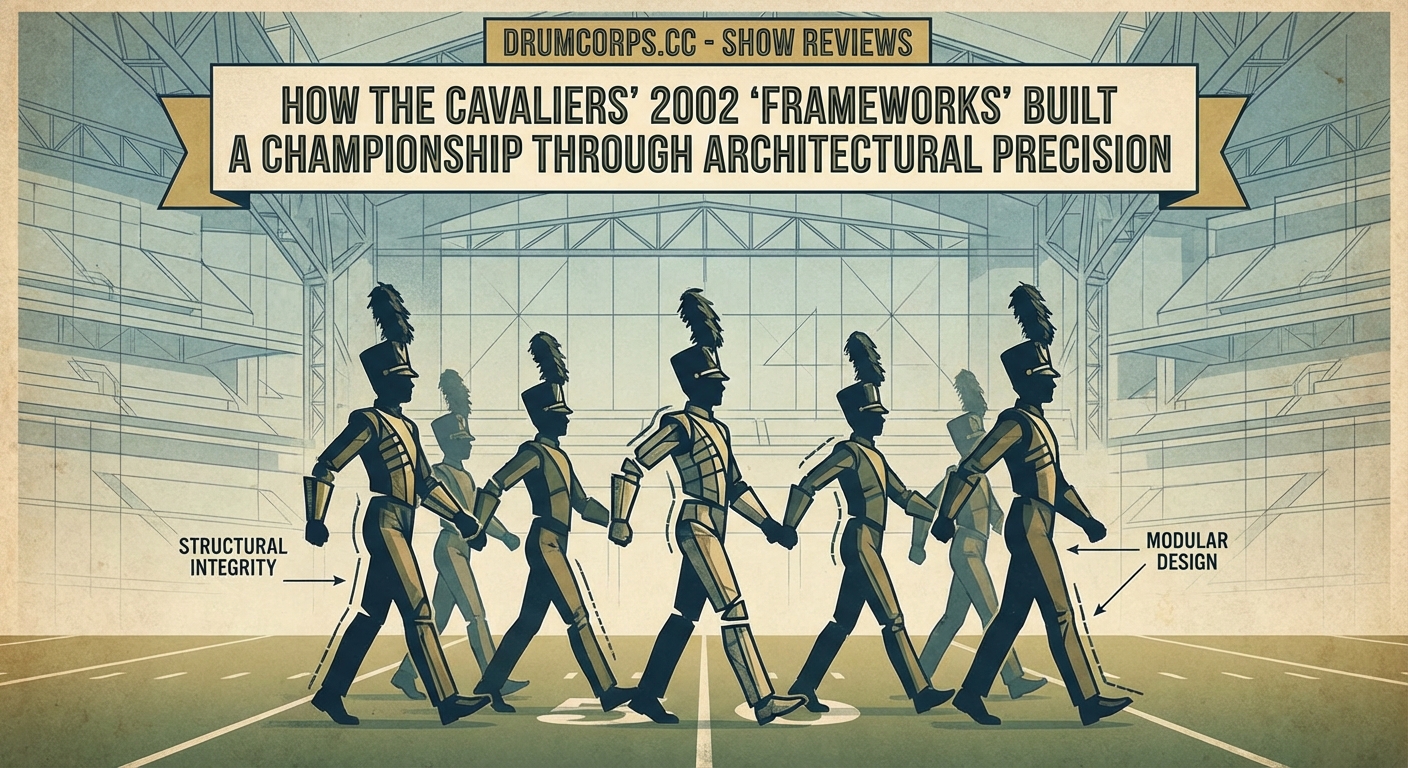
The 99.150 final score represented more than just high numbers across all captions. It showed balanced excellence that left no weak areas for competitors to exploit.
| Caption | Score | What Judges Rewarded |
|---|---|---|
| Brass | 19.9 | Clean articulation, exposed moments, dynamic control |
| Visual Performance | 19.8 | Precision in transitions, body carriage, spacing integrity |
| Visual Effect | 19.9 | Cohesive design narrative, impactful moments, originality |
| Music Effect | 19.8 | All-original compositions, emotional arc, thematic development |
| Percussion | 19.75 | Rhythmic complexity, clean execution, musical contribution |
The spread between captions was minimal. This consistency meant the show worked as a complete package rather than relying on one standout section to carry the production.
Judges noted the show’s ability to maintain intensity without sacrificing clarity. Even at maximum volume and visual density, individual elements remained distinct and purposeful.
The Design Process Behind the Show
Creating Frameworks required a different approach than traditional show development.
- Concept development started with architectural research rather than musical selection
- Composers created original works with specific visual moments in mind
- Drill writers received musical sketches early to integrate movement with composition
- Staff tested formations for both visual impact and performer feasibility
- Rehearsals focused on cleaning transitions rather than adding complexity
- Final adjustments prioritized cohesion over individual effect moments
This process inverted the typical timeline where music gets selected first and drill gets written to fit. By developing both simultaneously, the creative team ensured perfect alignment between what audiences heard and saw.
“We weren’t arranging someone else’s music to fit our visual ideas. We were building both from the ground up with the same architectural principles guiding every decision.” – 2002 Cavaliers design team
The integration of how to build a perfect 30-minute individual practice routine helped members master their individual parts before adding visual complexity.
Technical Challenges Performers Faced
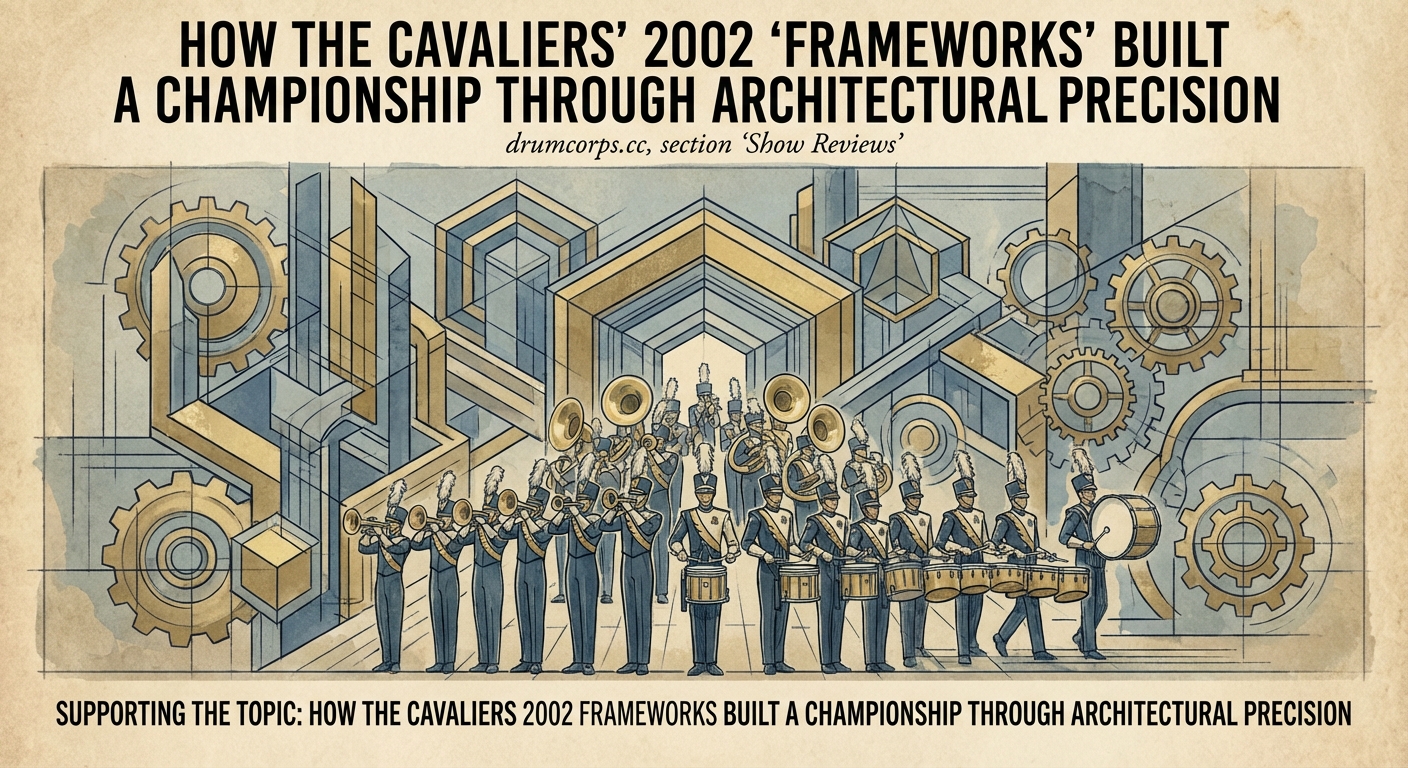
Executing Frameworks demanded skills that went beyond traditional marching fundamentals.
Brass section challenges:
- Maintaining pitch center during rapid directional changes
- Executing exposed passages without ensemble support
- Sustaining phrases while moving through complex drill
- Matching articulation across 60+ horn players
Percussion demands:
- Keeping time during asymmetrical visual forms
- Maintaining cleanliness on how to eliminate rim clicks and achieve clean snare articulation through high-speed passages
- Supporting brass phrases without overpowering
- Executing visually demanding stick features
Visual execution requirements:
- Hitting precise coordinates in geometric forms
- Maintaining posture during extended static moments
- Executing how to fix your backward marching before your next competition through diagonal pathways
- Coordinating transitions with split-second timing
The show left no room for approximation. A single person off their dot disrupted the entire geometric pattern.
How Frameworks Changed Drum Corps Design
The success of the 2002 Cavaliers Frameworks production shifted how corps approached show creation.
All-original music became more common. Corps realized they could control every aspect of the musical narrative when composers wrote specifically for their production. This trend continues today with many top corps commissioning custom works.
Geometric precision in drill design became an expectation rather than a novelty. The clean lines and mathematical accuracy of Frameworks raised the standard for what constituted acceptable form quality.
The concept of thematic integration deepened. Shows needed visual and musical elements that reinforced each other rather than simply coexisting. Frameworks proved that a unified concept could elevate both components beyond what either could achieve alone.
Similar to how Bluecoats 2014 Tilt redefined modern drum corps design, Frameworks established a new baseline for innovation and execution that influenced competitive standards for years.
Common Misconceptions About the Show
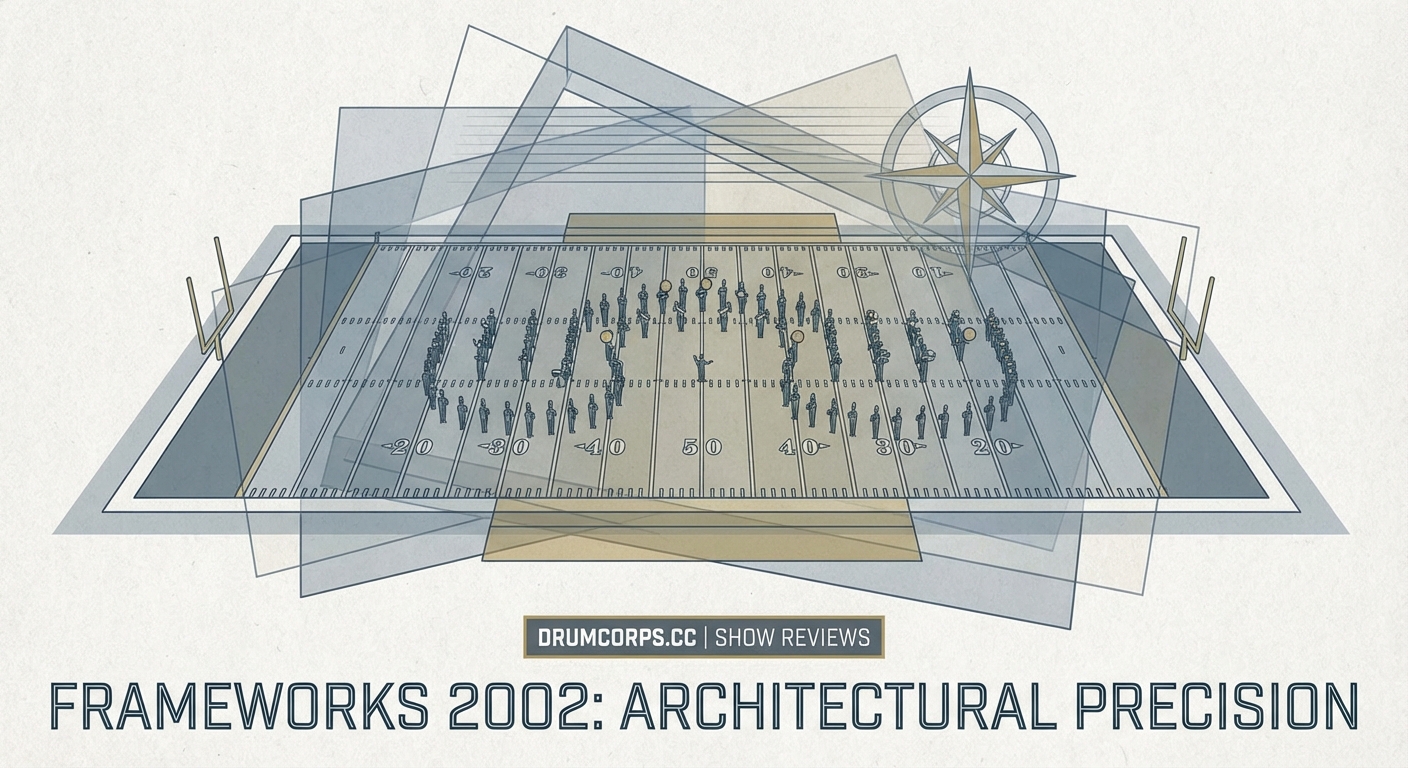
Myth: The show was cold and mechanical
Reality: The architectural theme created emotional impact through tension and release. The ballad movement demonstrated warmth within the structural framework.
Myth: The 99 score meant perfection
Reality: The score reflected excellence relative to the competitive field that season. There were still small execution errors, but the overall package exceeded what judges had previously seen.
Myth: Only the drill made the show special
Reality: The all-original music was equally important. Without compositions designed for the visual concept, the drill would have felt disconnected.
Myth: The show was too difficult to clean properly
Reality: The design team built in rehearsal efficiency. The geometric nature of the drill actually made it easier to diagnose and fix errors compared to more organic forms.
What Modern Corps Can Learn From Frameworks
The principles that made Frameworks successful still apply to competitive design today.
Commit fully to your concept. Half measures dilute impact. The Cavaliers didn’t hedge their bets with familiar music or safe drill choices. They built everything around the architectural theme.
Prioritize integration over individual moments. A cohesive show where every element supports the whole will outscore a collection of disconnected highlights.
Trust original music. Audiences and judges will connect with well-crafted compositions even without pre-existing emotional associations with the melodies.
Build precision into the design from the start. Don’t add complexity you can’t clean. The Cavaliers chose forms they could execute perfectly rather than attempting more difficult patterns they could only approximate.
Balance innovation with accessibility. Frameworks pushed boundaries while remaining comprehensible to audiences. The architectural concept was clear even to viewers unfamiliar with drum corps.
The Legacy That Continues Today
Twenty years after Frameworks, the show remains a reference point for competitive excellence. When corps aim for balanced perfection across all captions, they’re chasing the standard this production established.
The 99 barrier has been broken multiple times since 2002, but Frameworks holds the distinction of being first. That achievement changed what performers and designers believed was possible within the competitive structure.
Educational programs study the show’s construction. Drill writers analyze the geometric forms. Brass arrangers examine how Saucedo and Bocook created memorable themes without relying on existing melodies. Educators use the production to demonstrate how concept, music, and visual design can function as a unified whole.
The influence extends beyond competitive drum corps. High school programs adapted the precision-focused rehearsal techniques. College marching bands incorporated geometric drill concepts into their halftime shows.
Why Frameworks Still Matters
The 2002 Cavaliers Frameworks production proved that taking creative risks could yield championship results. The decision to commission all-original music and build geometric drill around architectural concepts could have failed spectacularly. Instead, it created a template for how modern competitive design could evolve.
For performers looking to understand what makes a championship-level production work, Frameworks offers clear lessons. Every element serves the concept. Technical execution never wavers. Musical and visual components reinforce rather than compete with each other. The result isn’t just a high score but a complete artistic statement that stands the test of time.
Whether you’re a designer planning your next show, an educator teaching performance fundamentals, or a fan appreciating the art form, Frameworks demonstrates what becomes possible when talent, preparation, and vision align perfectly on the competitive field.