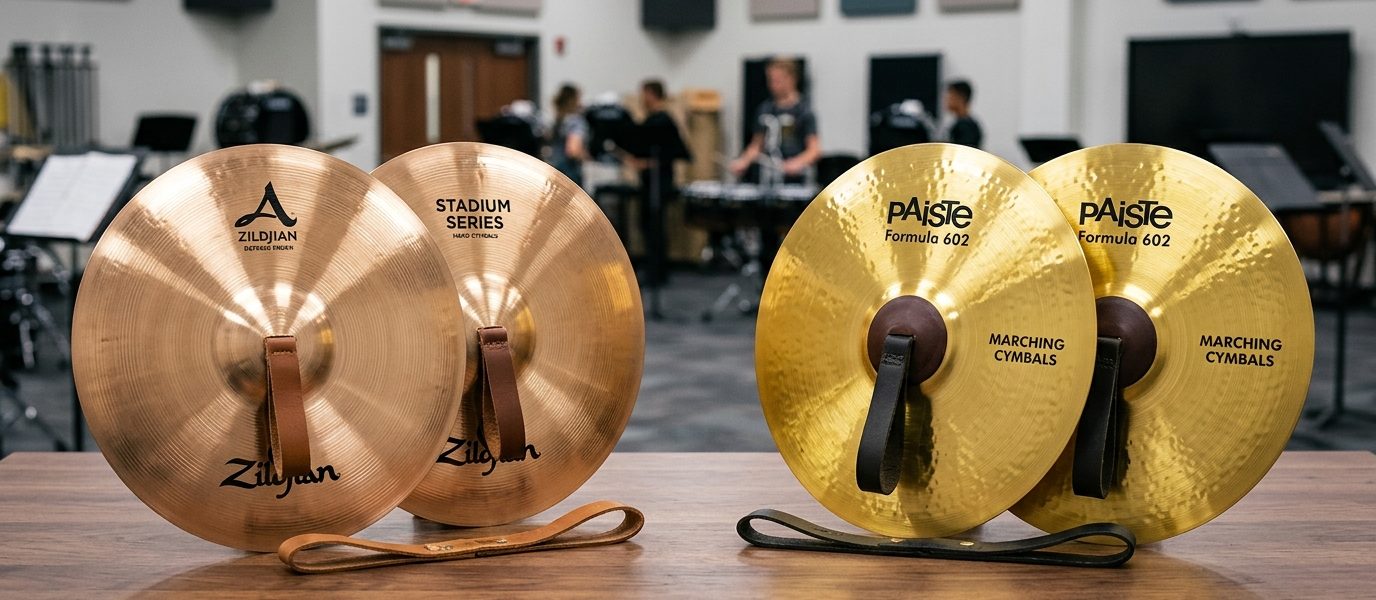
You’re standing in the music store or scrolling through online catalogs, trying to decide which marching cymbals to buy. The price tags look wildly different, and the descriptions throw around terms like “B20 bronze” and “brass alloy” without explaining what any of it means for your actual performance.
Let’s cut through the marketing speak and talk about what really matters when you’re choosing between bronze and brass cymbals for marching band.
Bronze cymbals deliver richer tone and superior projection but cost significantly more. Brass cymbals offer bright, cutting sound at budget-friendly prices, making them ideal for beginners and smaller programs. Your choice depends on performance level, budget constraints, and the specific sound quality your ensemble needs. Both materials can produce excellent results when matched properly to your program’s requirements.
Understanding cymbal materials and what they actually mean
The metal composition of your cymbals determines almost everything about how they sound and perform.
Bronze cymbals are made from copper and tin alloys. The most common professional formula is B20, which contains 80% copper and 20% tin. Some manufacturers also produce B8 bronze (92% copper, 8% tin) as a mid-tier option.
Brass cymbals use copper and zinc instead. The typical ratio is about 63% copper and 37% zinc, though this varies by manufacturer.
These aren’t just random metal combinations. The specific elements create fundamentally different acoustic properties.
Bronze produces more complex overtones. When you crash a bronze cymbal, you hear layers of frequencies that blend together into what musicians describe as a “warm” or “dark” sound. The tin content creates more vibration points across the metal surface.
Brass generates simpler, more focused frequencies. The sound cuts through immediately but doesn’t have the same depth of character. Think of it as the difference between a full orchestra and a solo trumpet.
Sound quality differences you’ll actually hear on the field
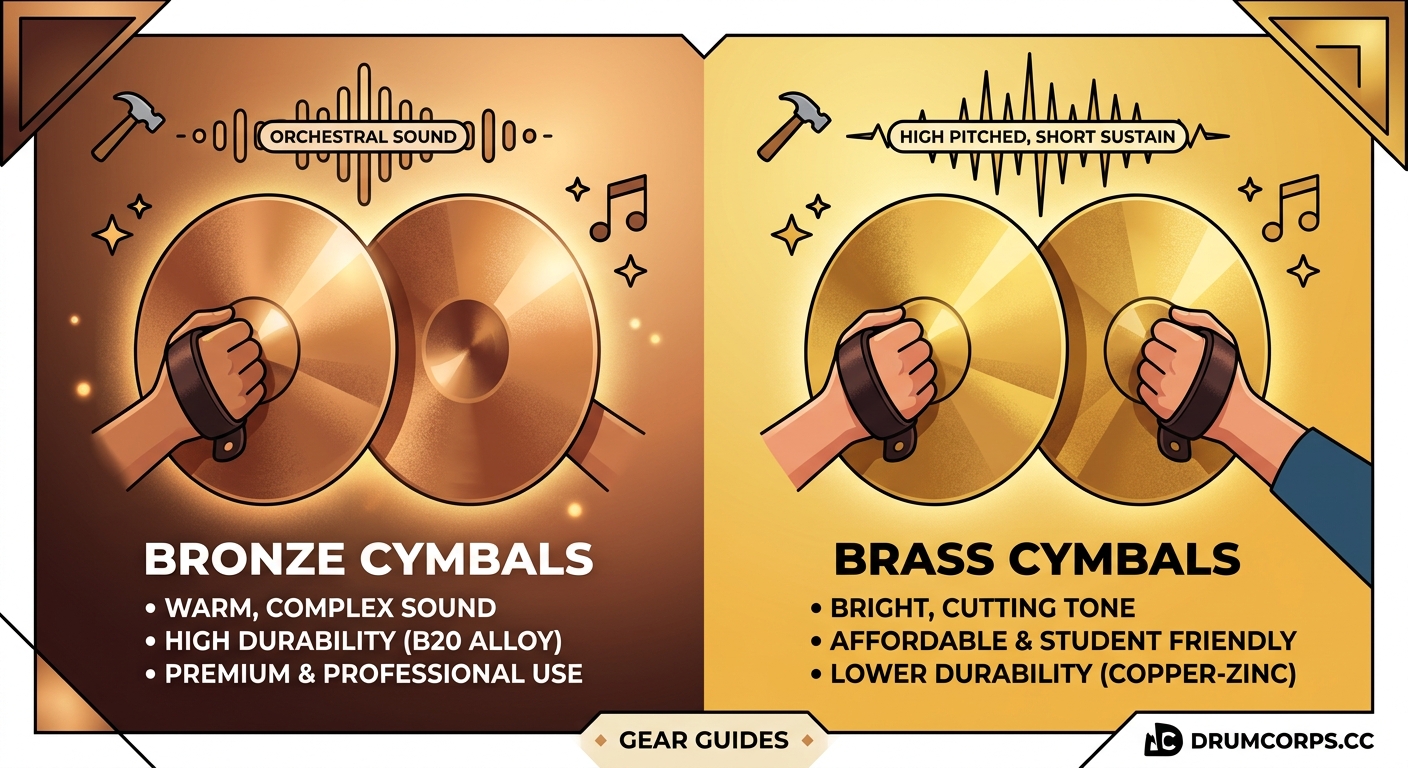
Bronze cymbals project farther across outdoor spaces. That complex overtone structure carries better through open air, which matters when you’re performing in a stadium or on a football field.
The sustain lasts longer too. A good bronze crash can ring for several seconds after impact, giving your cymbal line more control over musical phrasing.
Brass cymbals speak faster. The attack is immediate and bright, which works well for crisp, articulated passages. But the sound dies out more abruptly, limiting your options for sustained effects.
Here’s what this sounds like in practice. During a soft ballad moment, bronze cymbals can swell from pianissimo to forte with smooth, musical control. Brass cymbals tend to jump from quiet to loud without as much gradation in between.
For loud, aggressive passages, brass cymbals deliver that sharp, cutting edge that punches through the entire ensemble. Bronze cymbals provide power too, but with more color and complexity in the sound.
“The difference becomes obvious during outdoor rehearsals. Bronze projects to the press box while brass sometimes gets lost in the wind. But for indoor shows or smaller venues, brass can deliver exactly the brightness you need without breaking the budget.” (Veteran cymbal instructor)
Price differences and what you’re actually paying for
Let’s talk numbers.
Entry-level brass cymbals typically cost between $150 and $300 per pair for 18-inch marching models. Mid-range brass options run $300 to $500.
Bronze cymbals start around $400 to $600 for student models and climb to $800 to $1,200 or more for professional B20 pairs.
That’s not just markup. Bronze costs more to produce because tin is more expensive than zinc, and the manufacturing process requires more precision to get the alloy mixture right.
You’re also paying for longevity. Bronze cymbals maintain their sound characteristics longer. Brass cymbals can start to sound dull or harsh after heavy use, especially if they take hard hits regularly.
For programs on tight budgets, brass cymbals make perfect sense. You can outfit your entire cymbal line for what two pairs of professional bronze would cost.
For competitive programs aiming for superior sound quality, bronze becomes an investment in your ensemble’s overall musical impact.
Durability and maintenance realities for marching use
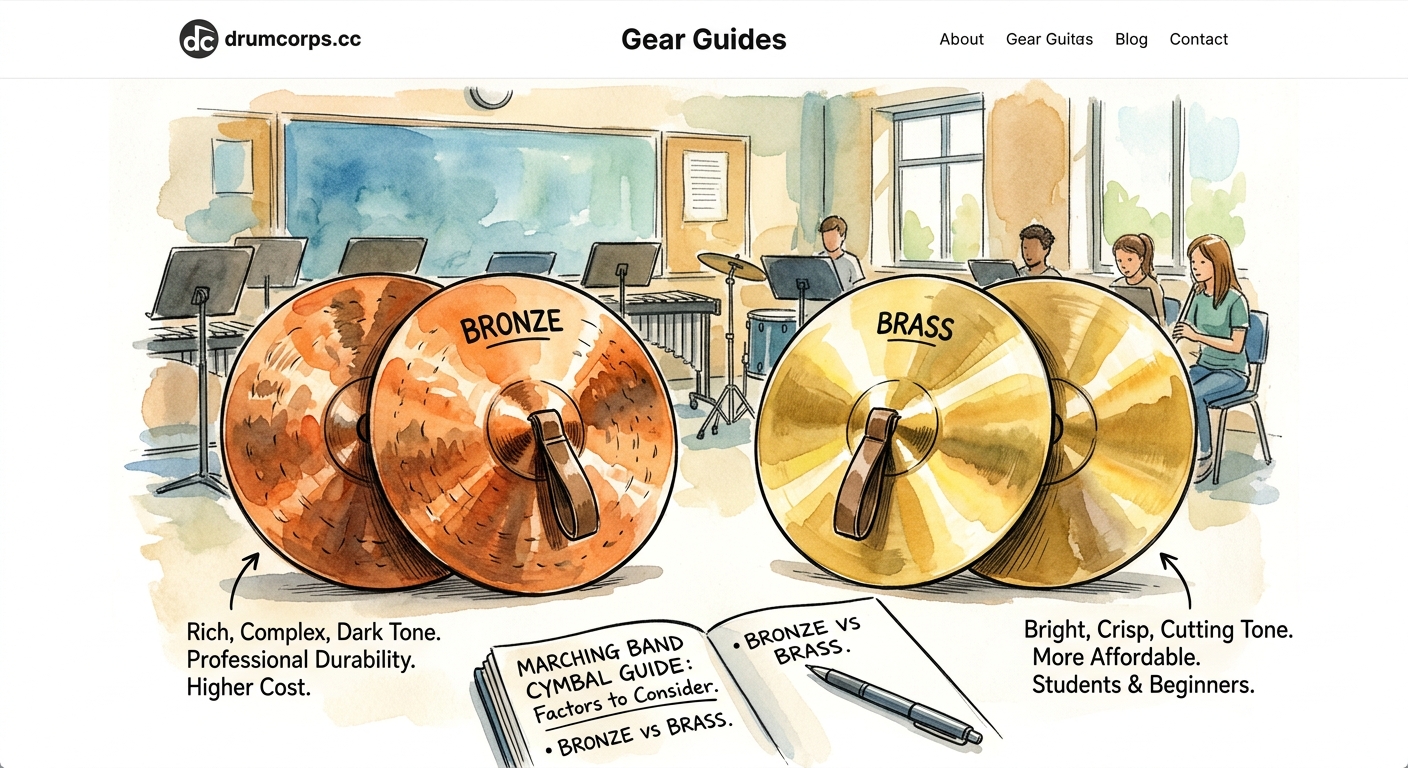
Bronze is harder and more resistant to damage. It can take repeated impacts without developing cracks or losing its tonal properties as fast.
Brass is softer and more prone to denting. A hard rim shot or accidental drop can leave permanent marks that affect the sound.
Both materials will crack eventually if you hit them incorrectly or drop them on concrete. But bronze typically survives longer under the physical demands of marching season.
Maintenance requirements differ slightly. Bronze develops a natural patina over time, which some players prefer for its vintage look. You can polish it back to brightness if desired.
Brass oxidizes differently and may develop greenish tarnish if not cleaned regularly. This doesn’t necessarily hurt the sound, but it looks less professional.
Neither material requires complex care routines. Basic cleaning with cymbal cleaner or mild soap keeps both types in good condition. Just avoid abrasive materials that can scratch the surface.
How to choose based on your program’s actual needs
Start by assessing your performance level and goals.
- Identify your ensemble’s competitive tier and the sound quality expectations for that level.
- Review your annual equipment budget and determine how much you can allocate to cymbal purchases.
- Consider how many cymbal players you need to equip and whether you need backup pairs.
Beginning programs and middle school groups usually get excellent results from quality brass cymbals. The sound is appropriate for that level, and the cost allows you to invest in other essential equipment.
High school varsity programs and competitive independent groups benefit more from bronze. The superior projection and tonal complexity contribute to higher scores in music performance captions.
Budget constraints matter. If choosing bronze means you can only afford one pair instead of equipping your full line, brass becomes the smarter choice. A complete cymbal section with brass sounds better than two players with bronze and everyone else using practice pads.
Think about your specific show design too. Music heavy on sharp, rhythmic hits might actually benefit from the bright attack of brass. Shows with sustained, melodic cymbal work showcase bronze’s strengths better.
Common misconceptions that lead to bad purchases
Many directors assume bronze is always better simply because it costs more. That’s not true for every situation.
A skilled player can make brass cymbals sound musical and controlled. A beginner will struggle to get good tone from even the most expensive bronze.
Some programs buy bronze cymbals but pair them with poor technique, negating the sound quality advantages. The material matters, but proper technique and timing matter more.
Another myth suggests brass cymbals sound “cheap” or “toy-like.” Quality brass cymbals from reputable manufacturers produce professional sound appropriate for most high school and collegiate programs.
Don’t assume you need to match your entire percussion section’s equipment tier either. It’s perfectly acceptable to have bronze snare heads and brass cymbals, or vice versa. Each instrument section should use equipment appropriate for its specific needs.
Comparing specific models and what to look for
When evaluating actual cymbals, pay attention to these factors beyond just the material.
| Factor | Bronze Models | Brass Models |
|---|---|---|
| Weight options | Usually 3-5 weight classes | Typically 2-3 weight classes |
| Size range | 16″ to 20″ common | 16″ to 19″ common |
| Hammering patterns | Hand-hammered or machine | Usually machine-hammered |
| Finish options | Traditional, brilliant, raw | Brilliant, standard |
| Warranty coverage | Often lifetime against defects | Usually 1-5 years |
The hammering pattern affects sound as much as the material. Hand-hammered cymbals (usually bronze) have more tonal variation and complexity. Machine-hammered models produce more consistent, uniform sound.
Weight classification matters for marching use. Medium-heavy weights work best for outdoor projection. Light weights get lost in wind and ensemble volume. Extra-heavy weights can be exhausting to hold during long shows.
Test cymbals in pairs, not individually. The manufacturing tolerance and matching process determine how well two cymbals will sound together. Reputable dealers should allow you to audition matched pairs.
Listen for these qualities:
- Clear, singing tone without harsh overtones or clanging
- Good balance between attack clarity and sustain
- Consistent sound across soft, medium, and loud dynamics
- Comfortable feel and weight distribution
Budget strategies that actually work for programs
You don’t have to buy everything at once.
Start by equipping your lead cymbal players with higher-quality instruments (bronze if budget allows). Put developing players on brass until they demonstrate the technique to benefit from better equipment.
Rotate equipment down as you upgrade. When you buy new bronze cymbals for your top players, move their previous brass cymbals to younger students. This builds your inventory over multiple seasons.
Consider buying used professional cymbals instead of new student models. A well-maintained pair of used bronze cymbals often outperforms brand-new brass at a similar price point. Check with other local programs, music stores, and online marketplaces.
Factor in the total cost of ownership. Bronze cymbals that last eight years cost less per season than brass cymbals you replace every three years.
Look for package deals during off-season sales. Many manufacturers offer discounts on cymbal line packages purchased between December and March.
Budget for cases and maintenance supplies too. Proper storage prevents damage that shortens cymbal lifespan regardless of material.
Making the final decision and avoiding buyer’s remorse
Write down your specific requirements before shopping. Include your budget range, number of players to equip, performance venues, and competitive goals.
Narrow your options to two or three specific models that fit those requirements. Don’t get overwhelmed by every available option.
If possible, borrow or rent different materials for a rehearsal or two. Hearing the cymbals with your actual ensemble in your typical performance spaces provides better information than any amount of research.
Ask these final questions:
- Does this purchase fit our current budget without compromising other essential needs?
- Will these cymbals serve our program for at least three full seasons?
- Do we have players with the technique to maximize these instruments’ potential?
- Does the sound quality match our ensemble’s overall musical goals?
Remember that cymbals are just one element of your percussion section. They should complement your drumline, front ensemble, and overall program philosophy rather than dominate your equipment budget.
Many successful programs use brass cymbals and achieve excellent results through superior teaching and technique development. The material provides a foundation, but your students’ skills determine the actual musical outcome.
Getting the most from whatever material you choose
Once you’ve made your purchase, protect your investment with proper care and technique training.
Teach your cymbal line correct playing angles and striking techniques from day one. Poor technique damages bronze just as easily as brass, and good technique makes brass sound better than you’d expect.
Establish clear storage and handling protocols. Cymbals should never be stacked directly on top of each other or stored in ways that put pressure on the playing surface.
Create a maintenance schedule that includes regular cleaning, inspection for cracks or damage, and strap replacement. Small issues caught early prevent major problems later.
Document your cymbals with photos and serial numbers. This helps with insurance claims if equipment is lost or stolen, and it tracks which pairs are matched together.
Consider having your students learn about proper warmup techniques that apply across all instruments. Good fundamentals translate to better sound regardless of equipment quality.
Build a replacement fund by setting aside a small amount each season. When cymbals eventually need replacing, you’ll have resources ready instead of facing an emergency budget crisis.
Sound quality matters more than the price tag
Bronze and brass cymbals both have legitimate places in marching percussion programs. Your choice should reflect your ensemble’s current needs, budget realities, and performance goals rather than assumptions about which material is “better.”
Bronze delivers superior tonal complexity and projection for programs that can invest in that quality. Brass provides excellent value and appropriate sound for developing groups and budget-conscious programs.
The best cymbals are the ones your students can actually use effectively. Start where your program is today, plan for gradual improvement, and remember that great teaching produces great sound regardless of what material hangs from your players’ straps.
Now get out there and make some music.