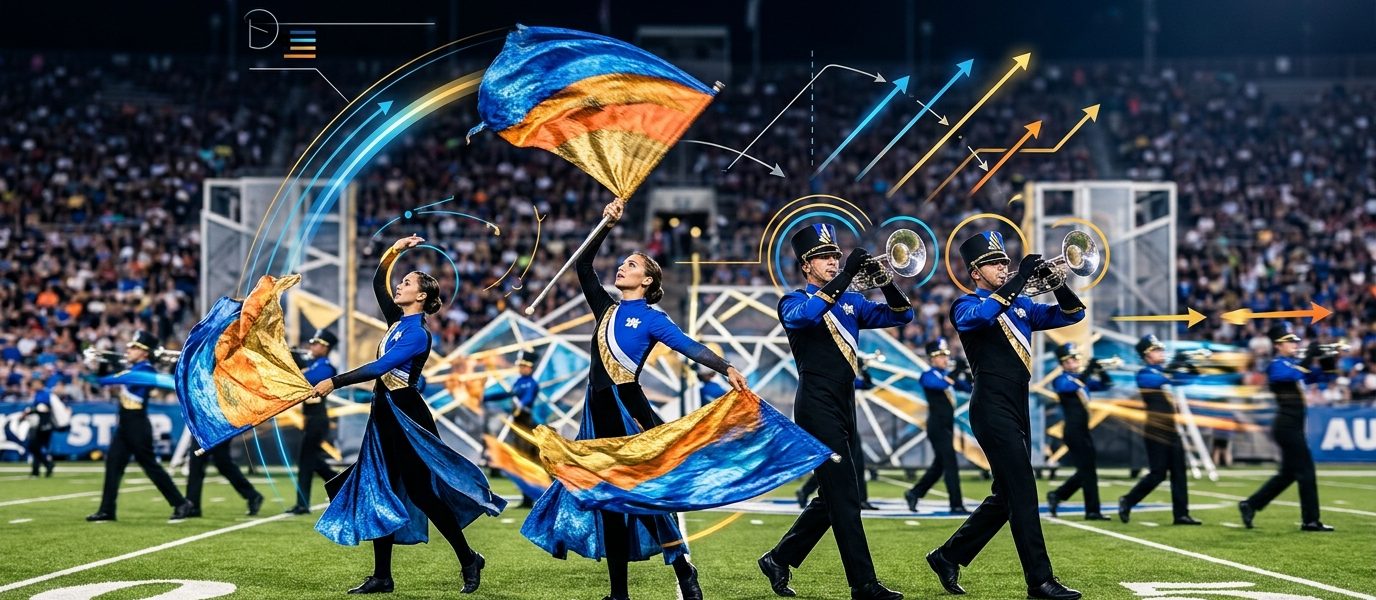
The summer of 2014 changed everything. When the Bluecoats took the field in Indianapolis for DCI Finals, they brought a show that made judges, fans, and competitors rethink what drum corps could be. Tilt wasn’t just a performance. It was a statement that tradition could bend, literally and figuratively, without breaking.
The Bluecoats 2014 Tilt show revolutionized drum corps by introducing tilted stage props, asymmetrical drill formations, and a fearless design philosophy that prioritized artistic risk over predictable symmetry. The show’s second place finish sparked debates about judging criteria while inspiring corps worldwide to embrace creative experimentation and challenge decades old design conventions in modern marching arts.
What Made Tilt Different From Every Other Show
Drum corps had followed a formula for decades. Symmetrical drill. Balanced staging. Props that sat flat on the field. Tilt threw that playbook out the window.
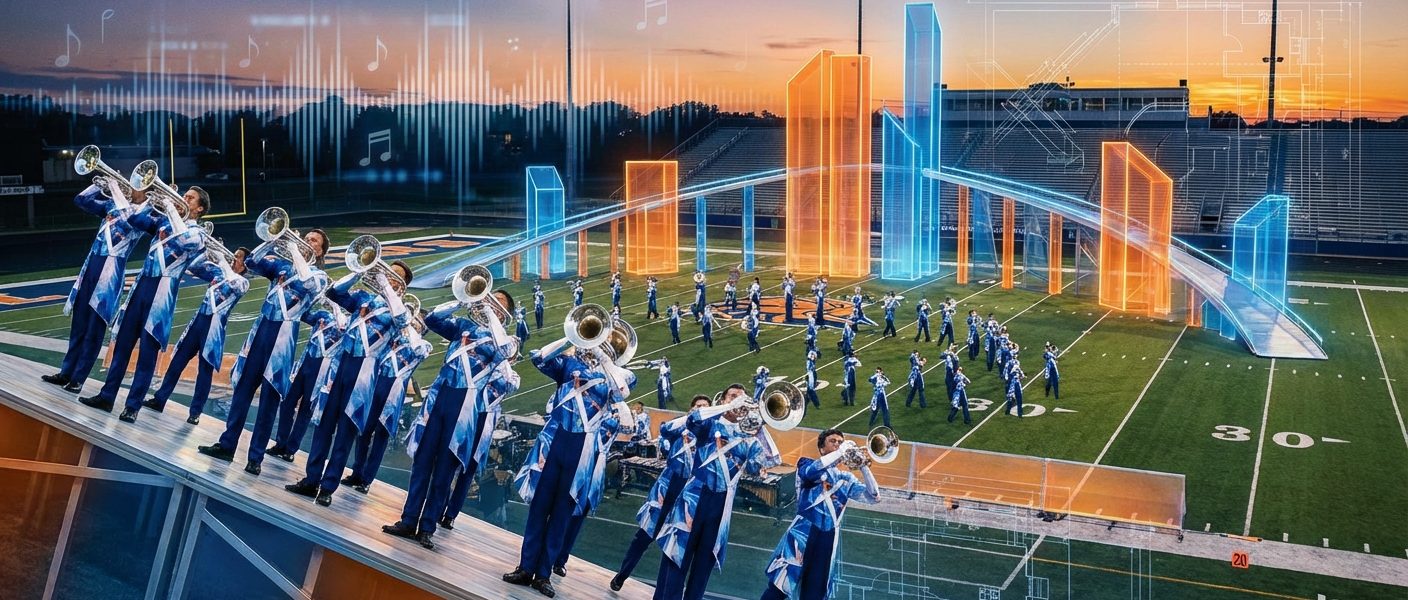
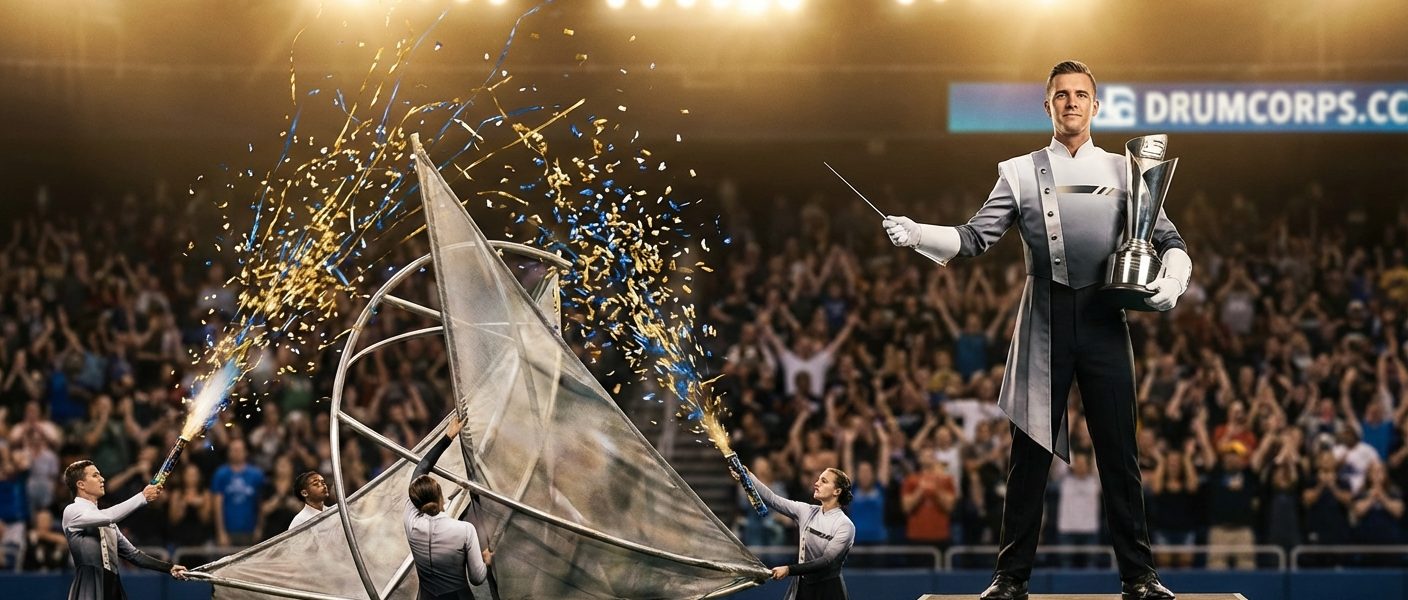
The show’s defining feature was a massive stage prop that tilted at extreme angles throughout the performance. Members performed on slanted surfaces, defying gravity while playing demanding musical passages. The visual effect was disorienting and mesmerizing at the same time.
But the tilted prop was just the beginning. The entire design philosophy rejected symmetry. Drill formations favored asymmetrical shapes. Musical phrases started and stopped in unexpected places. Even the color palette broke from the Bluecoats’ traditional blue and white, incorporating stark blacks and grays.
Designer Dean Westman and the creative team built the show around a simple question: what happens when you take everything the audience expects and turn it sideways? The answer was a performance that felt dangerous, unpredictable, and utterly captivating.
The Physical Demands That Pushed Members to Their Limits

Performing on a tilted surface isn’t just visually striking. It’s brutally difficult.
Members had to relearn basic marching technique. Balance points shifted. Muscle memory from years of training on flat fields became a liability. The brass line played complex passages while leaning at angles that would make most people dizzy.
The percussion section faced even greater challenges. Battery members navigated the tilted prop while maintaining perfect timing. Front ensemble players anchored their instruments on uneven surfaces, adjusting their playing positions constantly throughout the show.
Here’s what made the physical execution so demanding:
- Members rehearsed for months to build the specific muscle groups needed for tilted performance
- Balance drills became a daily requirement, not an occasional exercise
- The brass section developed new breathing techniques to compensate for tilted posture
- Guard members choreographed tosses and catches accounting for altered spatial perception
- The entire corps practiced emergency procedures for potential falls or equipment failures
The risk was real. One misstep on the tilted surface could mean injury. The design team worked closely with safety consultants to ensure the prop met structural standards, but the human element remained unpredictable.
How the Music Reinforced the Visual Concept
Tilt’s musical program wasn’t an afterthought. Arranger John Meehan crafted a score that felt as off balance as the visual design.
The show opened with a dissonant cluster of notes that resolved in unexpected ways. Traditional chord progressions gave way to angular harmonies. Rhythmic patterns shifted meters without warning, keeping the audience perpetually off balance.
The repertoire drew from contemporary classical composers who specialized in asymmetry and tension. Béla Bartók’s “Music for Strings, Percussion and Celesta” provided the foundation, its eerie suspensions perfectly matching the visual unease of the tilted staging.
But Meehan didn’t just transcribe existing music. He deconstructed it. Melodies appeared in fragments. Sections of the corps played different tempos simultaneously. The effect was controlled chaos, every note carefully planned to sound spontaneous.
The music had to feel like it was falling and catching itself at the same time. We wanted the audience to experience that moment of uncertainty, that split second where you’re not sure if everything will come together or fall apart. – John Meehan, 2014
The Judging Controversy That Sparked Years of Debate
Tilt finished second at the 2014 DCI World Championships. The Blue Devils took gold with a more traditional, symmetrical design.
The margin was small, but the reaction was massive. Fans debated whether the judges rewarded safe design over innovation. Some argued Tilt was too radical, sacrificing technical cleanliness for conceptual boldness. Others insisted the show represented the future of drum corps and deserved the top score.
The controversy exposed a fundamental tension in competitive marching arts. Should judges reward technical perfection or artistic risk? Can a show be both groundbreaking and clean enough to win?
Here’s how different caption areas scored Tilt versus more traditional designs:
| Design Element | Tilt Approach | Traditional Approach | Judge Response |
|---|---|---|---|
| Drill formations | Asymmetrical, unpredictable | Symmetrical, balanced | Mixed scores, some penalized for “lack of form” |
| Prop usage | Tilted, interactive, risky | Flat, decorative, safe | High visual scores, concerns about safety |
| Musical phrasing | Fragmented, dissonant | Resolved, harmonic | Praised for originality, questioned for accessibility |
| Color palette | Stark, monochromatic | Vibrant, corps traditional | Noted as bold but divisive among visual judges |
The debate continues today. Many designers cite Tilt as the moment drum corps split into two camps: those who valued innovation and those who prioritized execution. The truth is probably more nuanced, but the conversation itself changed how corps approached show design in subsequent years.
The Ripple Effect on Drum Corps Design Philosophy
Walk into any DCI show today and you’ll see Tilt’s influence. Asymmetrical drill is now standard. Props interact with performers in ways that would have seemed impossible before 2014. Corps take creative risks that would have been unthinkable a decade earlier.
The Bluecoats themselves built on Tilt’s foundation. Their 2016 show “Down Side Up” won the championship with an inverted stage design. The 2017 production “Jagged Line” continued exploring asymmetry and angular movement. Each show pushed further into the territory Tilt first mapped.
Other corps followed suit. The Blue Devils incorporated more risk into their designs. Carolina Crown experimented with unconventional staging. Even traditionally conservative corps began questioning whether symmetry was a requirement or just a habit.
The shift wasn’t just visual. Musical arrangers felt emboldened to write more adventurous scores. Guard designers choreographed movement that prioritized expression over perfect unison. The entire activity became more willing to accept imperfection in service of artistic vision.
Three Steps to Understanding Tilt’s Design Process
If you’re trying to grasp how the creative team built such a radical show, here’s the process they followed:
-
Start with a concept that creates tension. The team chose “tilt” as both a literal and metaphorical idea. Everything in the show had to create a sense of imbalance or uncertainty. They rejected any element that felt too comfortable or resolved too easily.
-
Build the visual design first, then solve the technical problems. Most corps design shows around what’s physically possible. Tilt reversed that order. The creative team imagined the tilted prop, then figured out how to make it work. This approach led to innovations in prop construction and safety protocols that other corps now use.
-
Test everything with real performers early and often. The design team brought members into the process months before the season started. They built prototype props at different angles, tested marching techniques on tilted surfaces, and adjusted the design based on what actually worked. This iterative process prevented the concept from becoming impossible to execute.
Common Misconceptions About What Tilt Actually Did
A decade later, myths about the show persist. Let’s clear up the most common ones.
Myth: Tilt was the first show to use props. Props had been part of drum corps for years before 2014. What made Tilt different was how the prop functioned. It wasn’t decoration or a platform. It was an active element that changed the performers’ relationship to space and gravity.
Myth: The show was intentionally designed to lose. Some fans believe the Bluecoats knew Tilt was too radical to win and designed it anyway as a statement. The reality is more complex. The corps absolutely designed the show to compete for a championship. They believed innovation and execution could coexist. The second place finish was disappointing, not intentional.
Myth: Tilt abandoned all traditional drum corps values. The show still featured world class brass playing, precise percussion work, and athletic guard choreography. The difference was the context. Tilt proved you could maintain technical excellence while completely rethinking the visual framework.
Myth: You had to see it live to appreciate it. While the live experience was undeniably powerful, the show translates remarkably well to video. The camera angles actually help viewers appreciate the extreme angles and spatial relationships that were harder to see from the stands.
Why 2014 Was the Perfect Moment for This Show
Timing matters. Tilt couldn’t have happened five years earlier. The activity wasn’t ready.
By 2014, several factors aligned. High definition video made it easier for fans worldwide to watch and discuss shows. Social media gave designers direct feedback from audiences. The judging system had evolved to reward creativity alongside execution.
Technology played a role too. Prop construction techniques had advanced enough to build structures that were both safe and visually dramatic. Audio equipment allowed for more nuanced musical production. LED lighting created visual effects that enhanced the tilted staging.
But the biggest factor was cultural. A generation of designers who grew up watching innovative corps like the Cavaliers and Phantom Regiment were now creating shows themselves. They understood tradition but weren’t bound by it. They had the confidence to ask “why not?” instead of accepting “that’s how it’s always been.”
The Bluecoats organization provided the perfect environment. The corps had a history of creative risk taking. The administration supported the design team’s vision even when it seemed impossible. The members trusted the process and committed fully to the concept.
The Legacy That Keeps Growing
Ten years later, Tilt remains a reference point. Designers mention it in planning meetings. Judges cite it when discussing innovation versus execution. Fans use it as shorthand for the moment drum corps modernized.
The show proved that audiences would embrace radical change. Ticket sales and video views demonstrated that innovation attracted attention and grew the fan base. Corps realized they didn’t have to choose between artistic vision and commercial success.
Educational programs felt the impact too. High school and college marching bands started experimenting with asymmetry and unconventional staging. The ideas that seemed too risky for competitive drum corps in 2013 became standard teaching tools by 2020.
What Performers Learned From Living Inside the Show
Talking to members who marched Tilt reveals insights that video can’t capture. They describe a unique bond formed through shared risk. Every performance felt like a tightrope walk. One person’s mistake could cascade through the entire production.
That pressure created focus. Members report that Tilt taught them concentration skills they use in careers far removed from drum corps. The physical demands built resilience. The creative freedom showed them that rules exist to be questioned.
Many describe the show as a turning point in their artistic development. They learned that perfection isn’t the only goal. Sometimes the most memorable performances include small imperfections that make the moment feel human and real.
How Tilt Changed What Audiences Expect
Before 2014, drum corps audiences knew what to expect. Shows followed predictable arcs. Visual moments happened at expected times. The experience was satisfying but rarely surprising.
Tilt recalibrated expectations. Audiences learned to anticipate the unexpected. They became more willing to sit with discomfort and uncertainty. The show trained fans to appreciate artistic risk even when execution wasn’t flawless.
This shift benefited the entire activity. Corps could experiment without fear that audiences would reject anything unfamiliar. The relationship between performers and viewers became more collaborative. Fans started seeing themselves as participants in an evolving art form rather than consumers of a static product.
A Show That Still Feels Relevant
Most drum corps shows have a shelf life. They’re impressive in their moment but feel dated a few years later. Tilt is different.
Watch the show today and it still feels modern. The design choices that seemed radical in 2014 now feel prescient. The show anticipated where the activity was heading and helped steer it in that direction.
That relevance comes from focusing on fundamental questions rather than trendy answers. Tilt asked what happens when you challenge basic assumptions about space, balance, and symmetry. Those questions don’t expire. New generations of designers continue wrestling with them, finding their own answers.
The Bluecoats gave the activity permission to be bold. They showed that second place with a revolutionary show beats first place with a forgettable one. They proved that the risks worth taking are the ones that change what’s possible for everyone who comes after.