Category: Practice Tips

  • How to Build a Perfect 30-Minute Individual Practice Routine

    You don’t need hours to make real progress. Thirty minutes of focused, structured practice can outperform two hours of wandering through exercises without a plan. The secret isn’t more time. It’s better structure.

    Key Takeaway

    A 30 minute practice routine works best when divided into four focused blocks: warmup (5 minutes), fundamentals (10 minutes), challenge work (10 minutes), and cooldown (5 minutes). This structure builds skills efficiently while preventing burnout. Consistency matters more than duration, and a well-designed short session beats a long, unfocused one every time.

    Why 30 minutes works better than you think

    Most people assume longer practice sessions automatically mean better results. That’s not how skill development works.

    Your brain can only maintain peak focus for limited windows. After about 20 to 30 minutes of intense concentration, attention starts to drift. Mistakes creep in. You stop noticing what you’re doing wrong.

    Short sessions force you to prioritize. You can’t waste five minutes scrolling your phone or noodling around aimlessly. Every minute has a job.

    This approach also fits real life. You might not have two hours free, but almost everyone can carve out 30 minutes before work, during lunch, or after dinner. Practicing six days a week for 30 minutes beats practicing twice a week for 90 minutes. Repetition builds neural pathways. Gaps between sessions let those pathways weaken.

    The four-block framework

    How to Build a Perfect 30-Minute Individual Practice Routine - Illustration 1

    Breaking your session into distinct blocks creates natural momentum. Each section has a clear purpose, and you move through them knowing exactly what comes next.

    Here’s the basic structure:

    Block Duration Purpose Example Activities
    Warmup 5 minutes Prepare body and mind Breathing exercises, light stretching, simple scales
    Fundamentals 10 minutes Reinforce core technique Rudiments, tone production, posture drills
    Challenge work 10 minutes Push current limits New repertoire, difficult passages, speed building
    Cooldown 5 minutes Consolidate and reflect Play something familiar, write notes, plan tomorrow

    This framework adapts to almost any skill. Drummers, brass players, woodwinds, dancers, even visual artists can use the same basic structure.

    Setting up your warmup block

    Start slow and simple. Your warmup isn’t the place to impress anyone.

    The goal here is to wake up your muscle memory and get your mind focused. If you play a brass instrument, long tones work perfectly. Percussionists can run through basic stroke patterns on a pad. Dancers might do gentle stretches and balance work.

    Keep the difficulty low. You should feel comfortable and relaxed. This isn’t about pushing limits yet.

    Some people skip warmups because they feel like wasted time. That’s backwards thinking. A good warmup makes the rest of your session more productive. Cold muscles make more mistakes. A scattered mind retains less information.

    Set a timer for five minutes. When it goes off, move on. Don’t let your warmup bleed into the next block.

    Building your fundamentals block

    This is where you build the foundation that supports everything else.

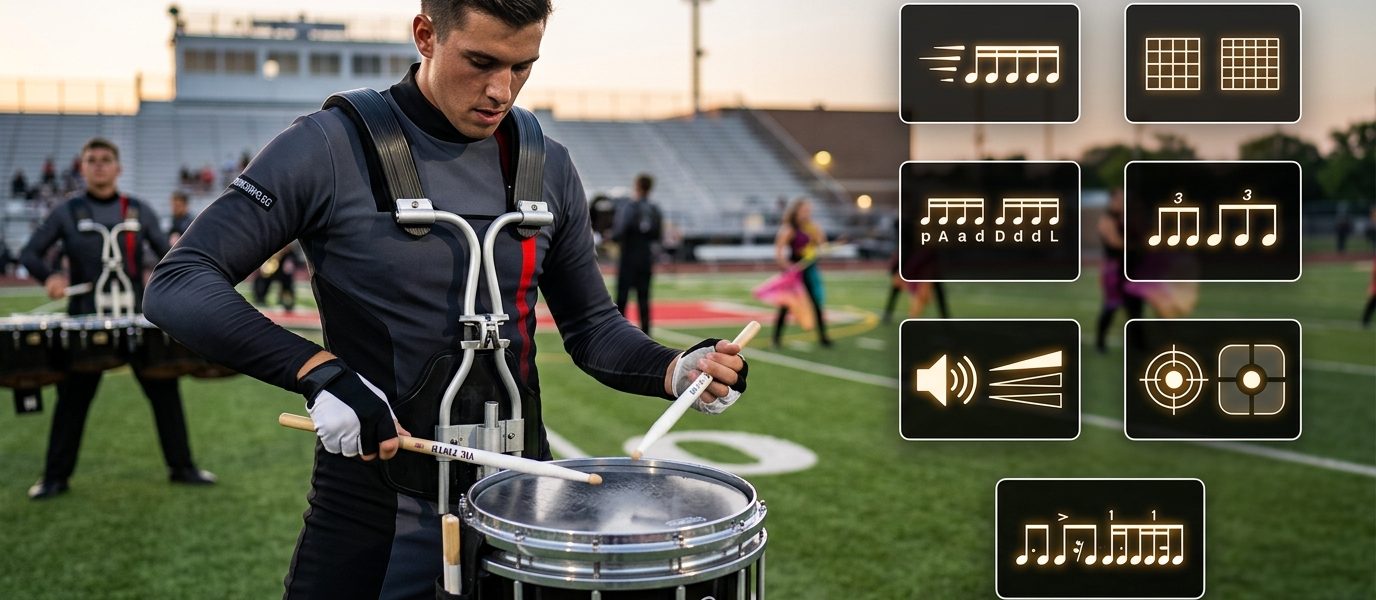
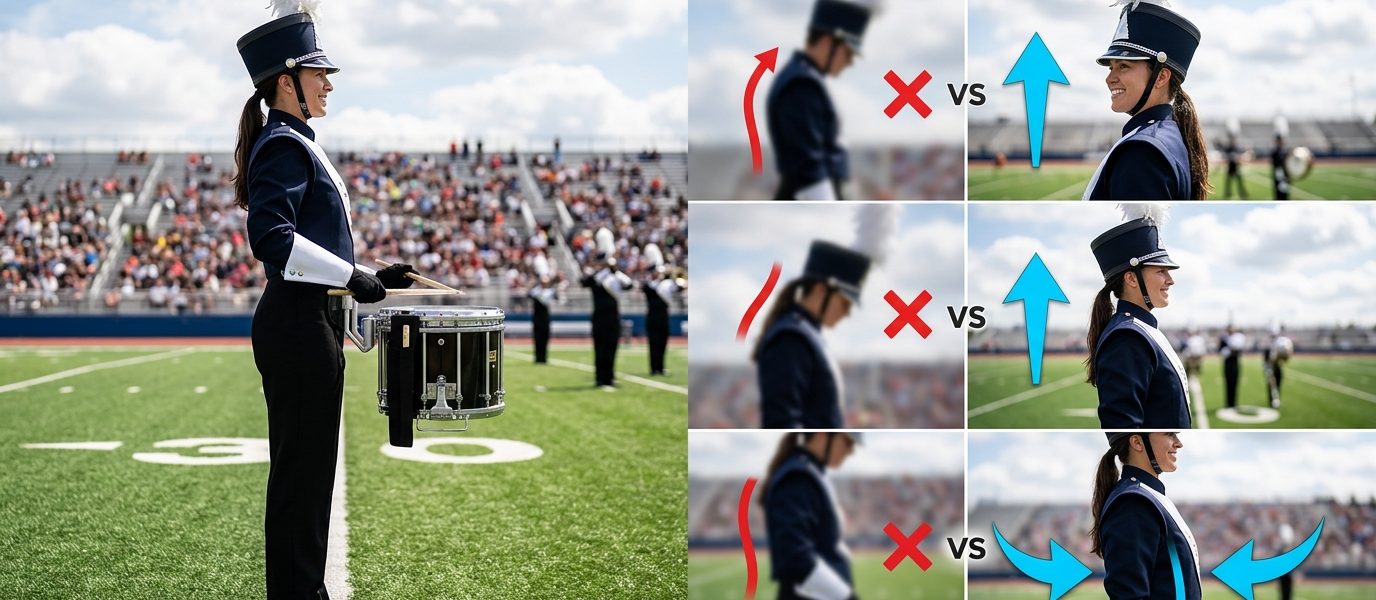
    Fundamentals are the techniques you need every single time you perform. For brass players, that’s tone quality, articulation, and breath control. For drummers, it’s stick control, timing, and dynamics. For dancers, it’s posture, alignment, and basic positions.

    Pick two or three fundamental skills to work on during this block. Rotate them throughout the week so you’re not drilling the same thing every day.

    Here’s a sample rotation for a snare drummer:

    1. Monday: Single strokes and doubles
    2. Tuesday: Paradiddles and flam patterns
    3. Wednesday: Dynamics and accents
    4. Thursday: Timing with a metronome
    5. Friday: Buzz rolls and sustained sounds
    6. Saturday: Mixed rudiments at various tempos

    Notice how each day focuses on specific elements. This prevents you from trying to fix everything at once, which usually means fixing nothing.

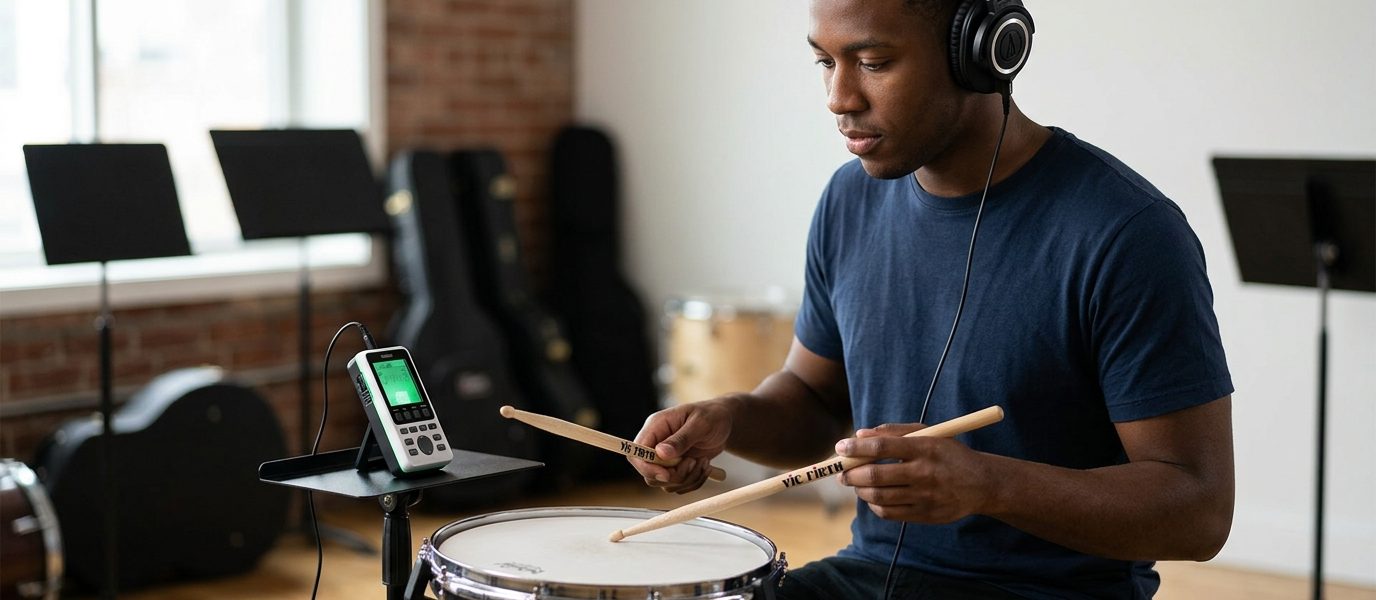
    Use a metronome during this block. Start at a comfortable tempo where you can play cleanly. Gradually increase speed only when you can maintain perfect technique.

    “The fundamentals block is where championships are won. You can’t fake good basics under pressure. Build them when the stakes are low so they hold up when the stakes are high.” – Caption head instructor

    Ten minutes feels short, but it’s enough to make measurable progress if you stay focused. Track your metronome speeds in a notebook. Seeing those numbers climb over weeks and months proves you’re improving.

    Tackling your challenge work

    Now you get to work on the hard stuff.

    This block is for material that currently sits just beyond your comfortable skill level. Maybe it’s a difficult excerpt from your show music. Maybe it’s a technique you haven’t mastered yet. Maybe it’s playing something familiar at a faster tempo than you’ve managed before.

    The key word is “challenge,” not “impossible.” If you’re failing 90% of the time, the material is too hard. Scale it back. If you’re succeeding 90% of the time, it’s too easy. Push harder.

    Aim for a success rate around 60 to 70%. You should feel like you’re stretching, but not breaking.

    Break difficult passages into smaller chunks. Don’t try to run the whole thing at full speed right away. Isolate the trickiest two measures. Loop them slowly. Gradually increase tempo. Only when those two measures feel solid should you add the measures before and after.

    This is also where you can experiment. Try different sticking patterns. Test alternate fingerings. See what happens if you change your breathing or your grip. You won’t know what works best until you test options.

    Keep a practice journal nearby. When you figure out a breakthrough technique or notice a recurring mistake, write it down. Your future self will thank you.

    Cooling down the right way

    Most people quit the moment their timer hits 30 minutes. That’s a mistake.

    Your cooldown serves two purposes. First, it lets your body and mind transition out of intense focus mode. Second, it helps consolidate what you just learned.

    Play something you already know well. Something that feels good. This isn’t about improvement. It’s about ending on a positive note.

    Finishing with success puts you in the right mindset for your next session. If you end frustrated and exhausted, you’ll dread coming back tomorrow. If you end feeling confident, you’ll look forward to it.

    Spend the last minute or two reflecting. What went well today? What needs more attention tomorrow? What specific goal will you tackle next time?

    Write those thoughts down. They become your roadmap for the next session.

    Common mistakes that wreck 30 minute sessions

    Even with a solid structure, certain habits will sabotage your progress.

    Starting without a plan. Walking into your practice space without knowing what you’ll work on wastes precious minutes. Decide your focus areas the night before.

    Skipping the timer. You think you’ll just “feel” when five minutes is up. You won’t. Blocks will expand and contract randomly. Use your phone timer or a dedicated practice app.

    Practicing mistakes. If you keep playing something wrong, you’re teaching your muscles to do it wrong. Slow down until you can play it correctly, then gradually speed up.

    Ignoring rest days. Your body needs recovery time. Practicing seven days a week often leads to injury or burnout. Six days with one rest day works better for most people.

    Multitasking during practice. Put your phone in another room. Close the laptop. Tell your roommate you’re unavailable. Distraction turns a 30 minute session into a 50 minute session with 30 minutes of actual work.

    Adapting the framework for different skills

    The four-block structure works across disciplines, but the details change based on what you’re practicing.

    For brass players:
    – Warmup: Long tones, lip slurs, breathing exercises
    – Fundamentals: Scales, articulation patterns, range building
    – Challenge: Difficult excerpts, high/low register work, new repertoire
    – Cooldown: Favorite melody, light playing, equipment care

    For battery percussion:
    – Warmup: Stroke patterns on a pad, wrist stretches
    – Fundamentals: Rudiments with metronome, stick heights, timing grids
    – Challenge: Show music, speed building, complex sticking patterns
    – Cooldown: Favorite groove, equipment check, stick twirling if that’s your thing

    For color guard:
    – Warmup: Stretching, basic tosses, footwork review
    – Fundamentals: Drop spins, body work, equipment control
    – Challenge: New choreography, difficult tosses, speed cleaning
    – Cooldown: Run-through of clean work, flexibility, visualization

    The percentages stay roughly the same. Adjust the specific activities to match your instrument or discipline.

    Tracking progress without obsessing

    You need some way to measure improvement, or you’ll lose motivation. But tracking can become its own time sink if you’re not careful.

    Keep it simple. A basic notebook works fine. Each day, jot down:

    • Date and time of practice
    • What you worked on in each block
    • One win (something that improved)
    • One focus for next time

    That’s it. Four lines. Takes 30 seconds to write.

    Every two weeks, flip back through your notes. You’ll spot patterns. Maybe your fundamentals block always feels rushed. Maybe Tuesdays are consistently better than Thursdays. Maybe you’ve been avoiding a particular technique.

    These patterns tell you what to adjust. Don’t wait for someone else to point out your weak spots. Your practice journal will show you.

    Making it stick long term

    The hardest part isn’t designing a good 30 minute practice routine. It’s showing up consistently.

    Pick the same time every day. Your brain likes patterns. If you practice at 7pm every evening, it becomes automatic. You don’t have to decide whether to practice or negotiate with yourself about when. The time arrives, you practice.

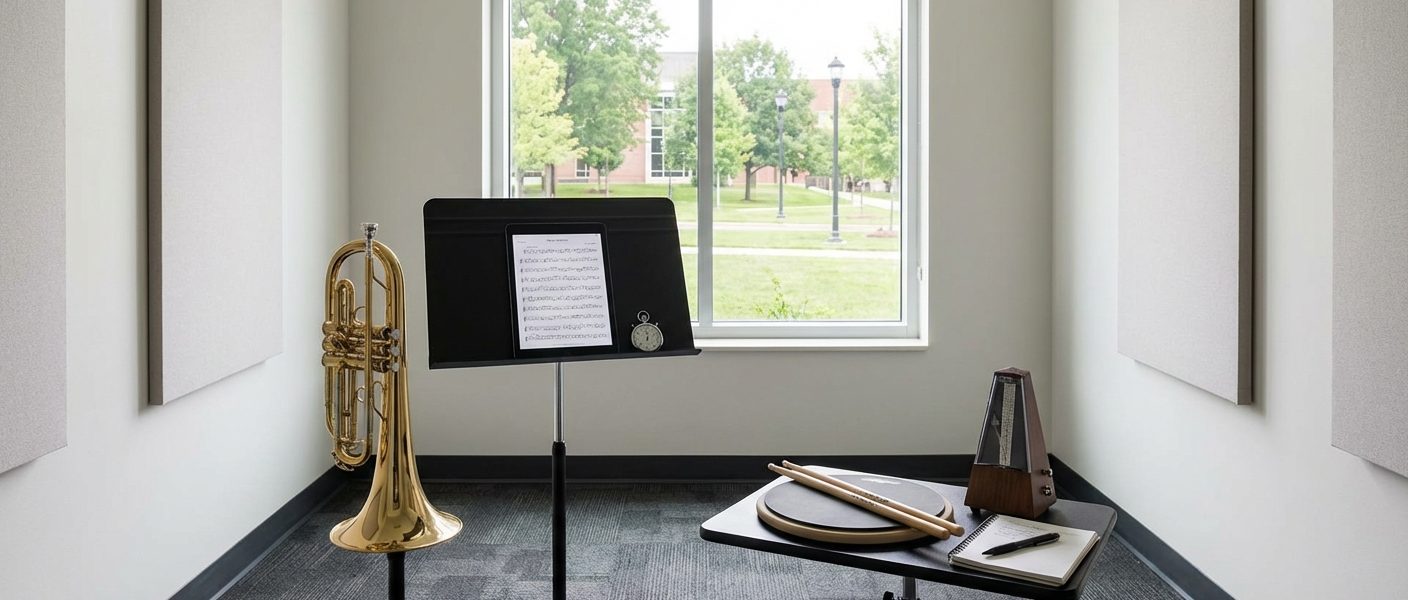
    Prepare your space the night before. Lay out your sticks, music stand, metronome, and notebook. When practice time comes, everything is ready. No excuses about needing to find your tuner or dig out your music.

    Tell someone your schedule. Accountability helps. Text a friend after each session. Join an online community where people post their practice logs. Knowing someone might ask keeps you honest.

    Forgive missed days without spiraling. You’ll skip sometimes. Life happens. One missed session doesn’t ruin your progress. But letting one missed day become three, then five, then a whole week will set you back. Get back on schedule the next day.

    Your next 30 minutes

    You now have a complete framework. Four blocks, clear purposes, specific activities. You know what mistakes to avoid and how to track progress.

    The structure works because it matches how your brain actually learns. Short, focused bursts with clear goals. Repetition spread over time. Immediate feedback. Gradual difficulty increases.

    You don’t need a coach standing over you. You don’t need a three-hour block of free time. You need 30 minutes, a timer, and a plan.

    Set up your first session tonight. Write down what you’ll work on in each block. Set out your equipment. Pick your practice time for tomorrow.

    Then show up and run the routine. Just once. See how it feels.

    After a week, you’ll notice sharper focus. After a month, you’ll see measurable skill improvements. After three months, this structure will feel as natural as breathing.

    The perfect 30 minute practice routine isn’t about perfection. It’s about showing up, following a system, and trusting the process to build your skills one focused session at a time.

  • 5 Essential Breathing Exercises Every Brass Player Should Master

    Playing a brass instrument demands more than just moving your fingers and reading notes. Your breath is the engine that powers every sound you create, and without proper control, even the most talented player will struggle with tone, endurance, and consistency.

    Key Takeaway

    Mastering breath control transforms your brass playing from adequate to exceptional. These five breathing exercises target diaphragm strength, air capacity, breath support, and controlled release. Practice them daily for ten minutes to build the foundation for better tone quality, extended phrases, and confident performance. Each exercise addresses specific technical challenges brass players face, from maintaining steady air pressure to eliminating tension during demanding passages.

    Most brass players focus on fingerings, embouchure, and repertoire while treating breathing as something that just happens naturally. That’s a mistake. The difference between a good brass player and a great one often comes down to breath management. Professional musicians spend years refining their breathing technique because it directly impacts every aspect of their sound.

    The exercises below target different aspects of breath control. Some build capacity. Others develop support. A few focus on the release and control of air. Together, they create a complete system for breathing that will transform your playing.

    Building Your Foundation With Diaphragmatic Breathing

    Your diaphragm is the large muscle beneath your lungs that does the heavy lifting when you breathe properly. Many players breathe shallowly from their chest, which limits air capacity and creates tension in the shoulders and neck.

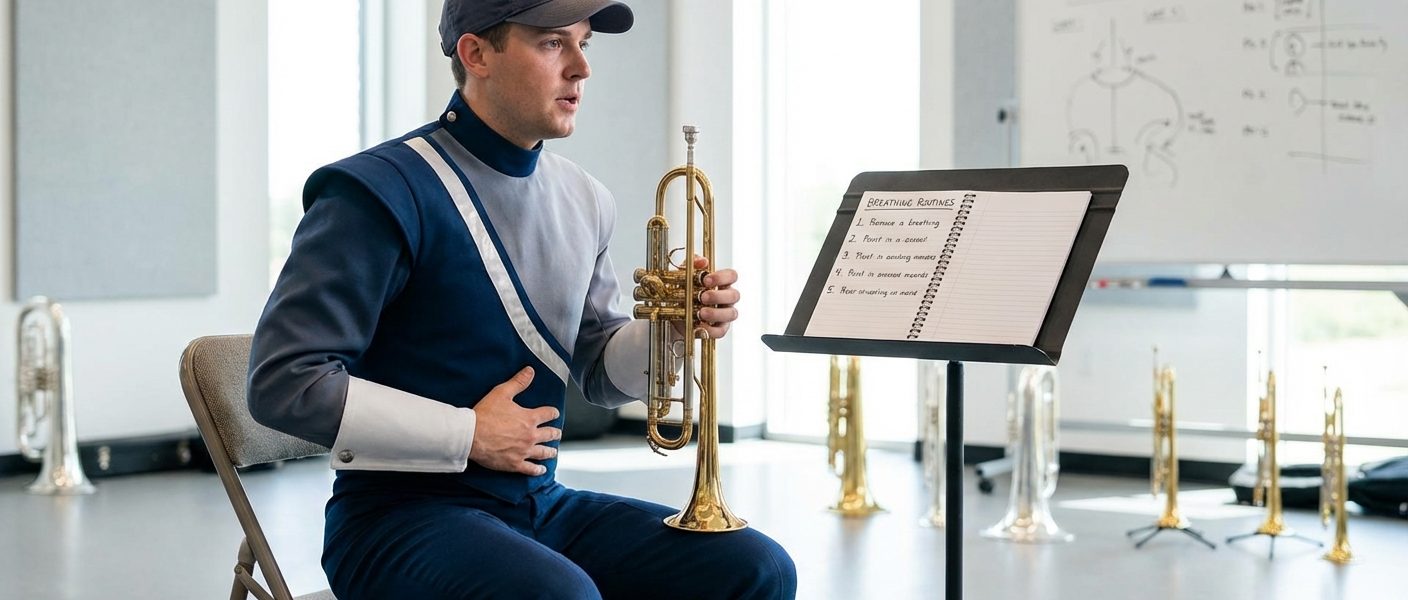
    Lie flat on your back with one hand on your chest and the other on your stomach. Breathe in slowly through your nose, focusing on expanding your belly while keeping your chest relatively still. Your stomach hand should rise significantly while your chest hand barely moves.

    This is diaphragmatic breathing. It feels strange at first if you’ve been a chest breather your whole life.

    Practice this position for five minutes daily. Once you can consistently breathe from your diaphragm while lying down, try it sitting in a chair. Then try it standing with your instrument. The goal is to make this your default breathing pattern, both on and off the horn.

    “The diaphragm is the most important muscle you have as a brass player. Everything else is secondary. Master this first, and the rest becomes easier.” – Arnold Jacobs, legendary tuba player and teacher

    The Four-Count Breathing Cycle

    5 Essential Breathing Exercises Every Brass Player Should Master - Illustration 1

    This exercise builds both capacity and control while establishing a rhythm that mirrors musical phrasing.

    1. Inhale through your nose for four counts, filling your lungs from bottom to top using diaphragmatic breathing.
    2. Hold your breath for four counts without tensing your throat or chest.
    3. Exhale through your mouth for four counts, maintaining steady air pressure throughout.
    4. Hold empty for four counts before beginning the next cycle.

    Start with four counts for each phase. As you improve, extend to six counts, then eight. The key is maintaining consistency. Your exhale should be just as controlled at count eight as it was at count one.

    This exercise teaches you to manage air pressure over extended phrases. It also builds the mental discipline to stay relaxed while holding your breath, which translates directly to playing long notes without tension.

    Resistance Breathing for Strength and Endurance

    Your breathing muscles need strength training just like any other muscle group. Resistance breathing builds that strength.

    Place your hand loosely over your mouth, creating partial resistance. Breathe in against this resistance, feeling your diaphragm work harder to pull air in. Then exhale against the same resistance, maintaining steady pressure.

    Do three sets of ten breaths with 30-second rest periods between sets. You can also use a straw in a glass of water, blowing bubbles at a consistent rate. The water provides resistance that strengthens your breathing muscles.

    This exercise is particularly valuable for players who struggle with endurance during long rehearsals or performances. The resistance forces your muscles to work harder than normal breathing requires, building strength that makes regular playing feel easier.

    Sustained Tone Breathing Practice

    This exercise connects your breathing directly to sound production. You’ll need your instrument for this one.

    Take a full breath using diaphragmatic technique. Play a comfortable middle register note at a moderate dynamic level. Sustain it as long as possible while maintaining consistent tone quality, pitch, and volume.

    Time yourself. Write down your results. Most beginners start between 15 and 25 seconds. Intermediate players often reach 30 to 45 seconds. Advanced players can sustain for a minute or longer.

    The goal isn’t just duration. Focus on keeping the sound steady from beginning to end. Many players start strong but fade or go sharp as they run out of air. That reveals problems with air support and embouchure stability.

    Practice this daily with different notes across your range. Low notes typically require more air. High notes need faster air speed but less volume. Understanding these differences helps you manage your breath more efficiently.

    The Breathing Gym Approach

    The Breathing Gym system, developed by Sam Pilafian and Patrick Sheridan, offers structured exercises that combine physical movement with breathing. These exercises are used by professional brass players worldwide.

    Here are three core movements you can start with:

    Stretches: Reach your arms overhead while inhaling deeply. Hold briefly, then lower your arms while exhaling completely. This opens your ribcage and encourages full lung expansion.

    The Lift: Stand with feet shoulder-width apart. Inhale while raising your arms to the sides and overhead. Exhale while lowering them. Coordinate the breath with the movement so they finish simultaneously.

    The Shoulder Shrug: Inhale while raising your shoulders toward your ears. Hold for two counts. Exhale while dropping your shoulders completely. This releases tension that many brass players carry in their upper body.

    Perform each movement ten times before your practice session. They serve as both warm-up and breathing exercise, preparing your body for efficient air use.

    Exercise Primary Benefit Common Mistake Correction
    Diaphragmatic Breathing Builds proper breathing foundation Chest rises instead of belly Place hand on stomach to monitor movement
    Four-Count Cycle Develops controlled air release Rushing the exhale phase Use metronome to maintain consistent tempo
    Resistance Breathing Strengthens breathing muscles Creating too much resistance Start with light resistance and build gradually
    Sustained Tone Connects breath to sound production Letting tone quality deteriorate Stop before tone degrades, build gradually
    Breathing Gym Releases tension, increases capacity Separating breath from movement Coordinate breathing and movement as one action

    Common Breathing Problems and How to Fix Them

    Even with regular practice, brass players encounter specific breathing challenges. Understanding these problems helps you address them directly.

    Running out of air too soon: This usually indicates shallow breathing or excessive air waste. Focus on taking fuller breaths using your diaphragm. Also check that you’re not blowing too hard. Many players use twice as much air as necessary.

    Tension in shoulders and neck: This happens when you breathe from your chest instead of your diaphragm. Return to the foundational lying-down exercise until diaphragmatic breathing becomes automatic.

    Inconsistent air pressure: Your sound wavers or changes volume unintentionally. Practice the four-count breathing cycle and sustained tone exercises. These build the control needed for steady air support.

    Gasping or noisy breaths: You’re creating tension in your throat. Open your throat as if yawning. The air should flow silently and smoothly.

    Dizziness during practice: You’re either hyperventilating or breathing too shallowly. Take normal breaths between exercises. Don’t overdo the breathing work, especially when starting out.

    Creating Your Daily Breathing Routine

    Consistency matters more than marathon practice sessions. Ten focused minutes daily beats an occasional hour-long workout.

    Here’s a practical routine that covers all the essential areas:

    • Minutes 1-2: Diaphragmatic breathing while lying down or sitting (20 breaths)
    • Minutes 3-5: Four-count breathing cycle (10 complete cycles)
    • Minutes 6-7: Resistance breathing with hand or straw (3 sets of 10)
    • Minutes 8-9: Sustained tone practice on three different notes
    • Minute 10: Breathing Gym stretches and movements

    Do this routine before your regular practice session. It serves as a warm-up while building the breathing skills you’ll use throughout your playing.

    Track your progress weekly. Note your sustained tone times. Record how the exercises feel. This documentation helps you see improvement that might otherwise go unnoticed.

    Breathing Technique Across Different Brass Instruments

    Each brass instrument presents unique breathing challenges based on its size, range, and typical repertoire.

    Trumpet players need efficient breathing for rapid passages and high register work. Focus on taking faster, fuller breaths during short rests. Practice the four-count cycle at quicker tempos.

    Trombone players often deal with long, sustained passages in various positions. Sustained tone exercises are particularly valuable. Work on maintaining consistent air pressure while moving the slide.

    French horn players face perhaps the most demanding breathing requirements due to the instrument’s resistance and wide range. All five exercises are essential. Pay special attention to resistance breathing to build the strength needed.

    Tuba and euphonium players require the largest air capacity. Diaphragmatic breathing is absolutely critical. Practice taking maximum breaths efficiently. You need volume, but you also need to fill your lungs quickly during brief rests.

    Despite these differences, the fundamental principles remain the same. Every brass player benefits from proper diaphragmatic breathing, controlled air release, and strong breathing muscles.

    Breathing Exercises Away From Your Instrument

    You don’t need your horn to improve your breathing. In fact, some of the most effective practice happens without it.

    Try these activities:

    • Swimming builds breath capacity and control naturally. The resistance of water and need to coordinate breathing with movement translates directly to brass playing.
    • Yoga and meditation practices emphasize diaphragmatic breathing and body awareness. Many professional musicians incorporate these into their routines.
    • Cardio exercise improves overall lung capacity and efficiency. Running, cycling, or brisk walking all contribute to better breathing.
    • Simple awareness throughout your day helps. Notice how you breathe while sitting at your desk, walking between classes, or watching TV. Make diaphragmatic breathing your default.

    These activities complement your focused breathing exercises. They build the general fitness and awareness that supports your specific musical goals.

    Making Breathing Exercises Part of Your Musical Life

    These five breathing exercises form the foundation of solid brass technique. They’re not separate from music making. They are music making.

    Your breath creates every sound you produce. The quality of that breath determines the quality of your tone, the length of your phrases, the consistency of your pitch, and your endurance through demanding passages.

    Start today with just one exercise. Master it before adding the next. Build your routine gradually until these techniques become second nature. Within weeks, you’ll notice differences in your playing. Within months, the changes will be dramatic.

    The best brass players in the world still practice breathing exercises daily. They understand that maintaining these fundamentals is what separates good playing from great playing. Your breath is your most important tool. Treat it that way, and everything else will improve.