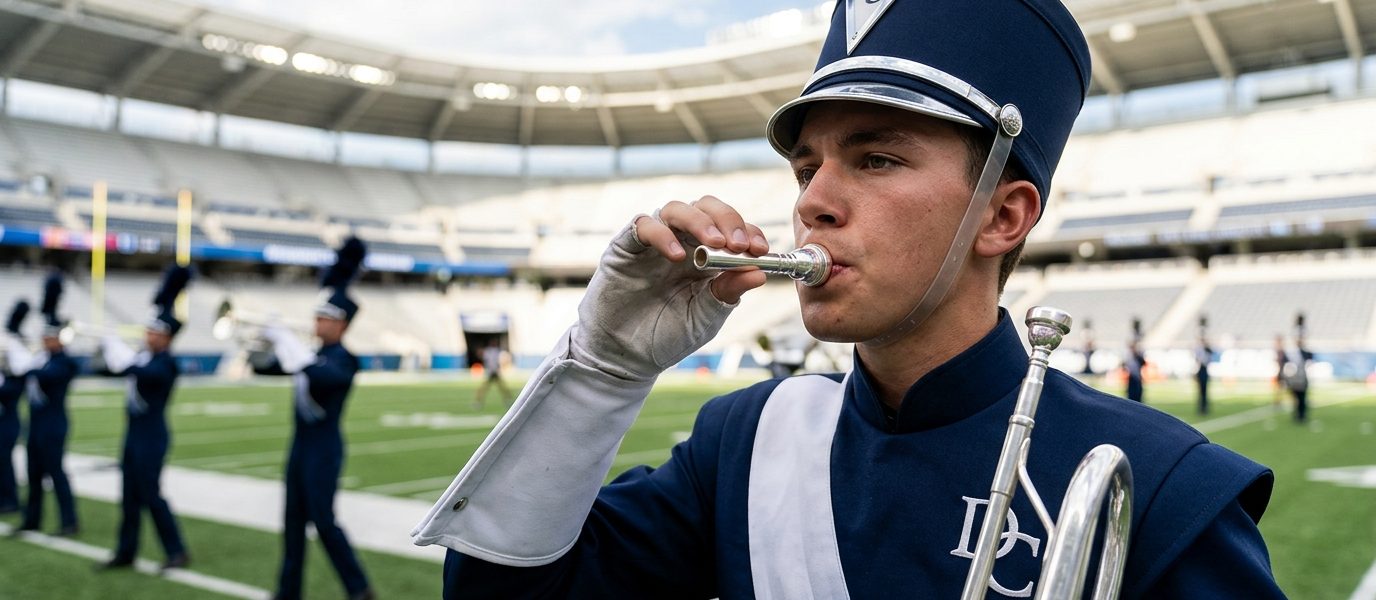
Marching band brass players hear it all the time. Buzz on your mouthpiece before rehearsal. Buzz without your mouthpiece to build embouchure strength. Buzz every day to improve your tone. But does it actually work, or is it just another practice room myth passed down through generations of band directors?
The answer is more nuanced than a simple yes or no. Research shows that buzzing exercises can improve certain aspects of brass playing when done correctly, but they’re not a magic solution for every sound issue. Understanding what buzzing can and cannot do for your playing helps you practice smarter, not just longer.
Buzzing exercises can improve brass sound when used strategically to develop embouchure awareness, pitch accuracy, and air control. However, they work best as a supplement to full instrument practice, not a replacement. The key is matching the right type of buzzing to your specific sound goals and avoiding common mistakes that can actually harm your tone quality.
What buzzing actually does for your embouchure
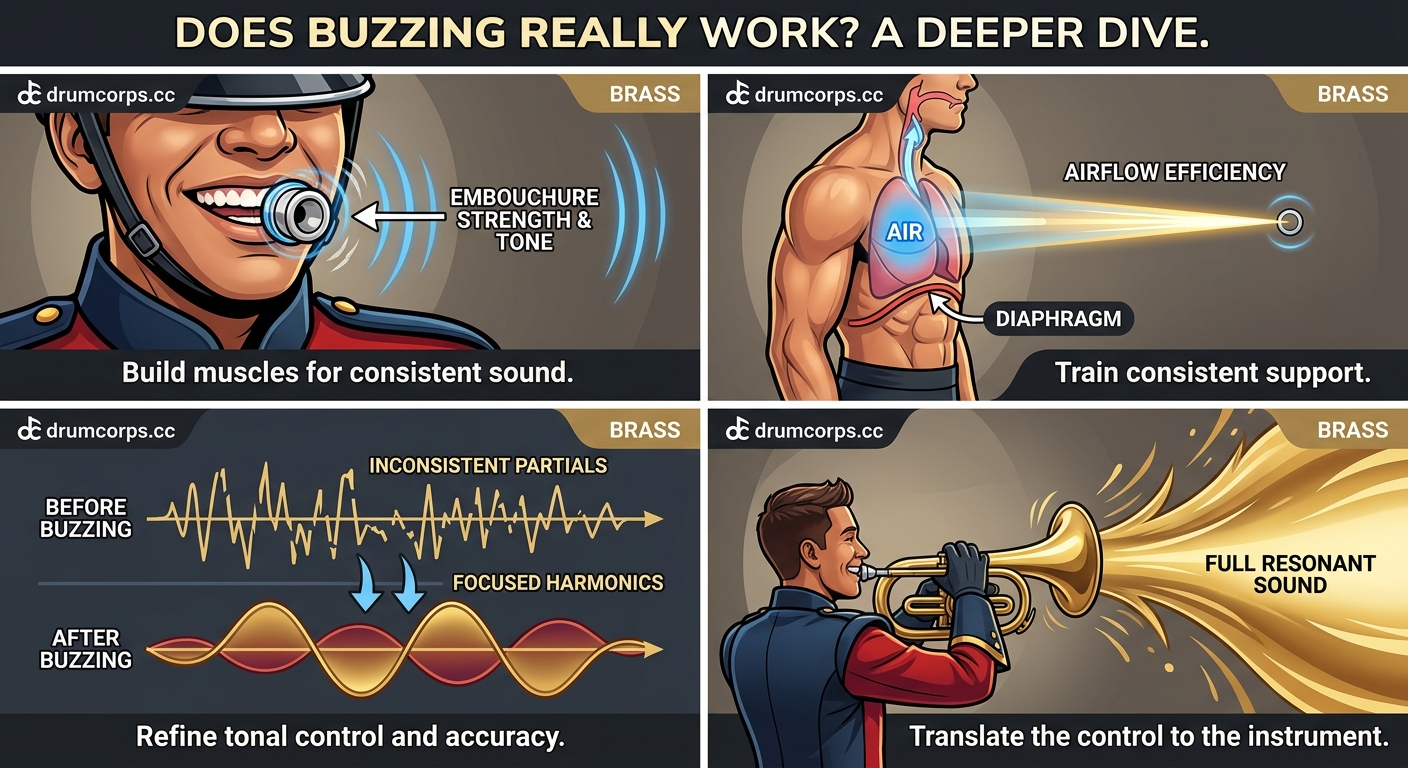
Buzzing creates vibration using just your lips, either freely or against a mouthpiece. This isolated movement helps you feel exactly what your embouchure is doing without the feedback loop of the full instrument.
When you buzz on a mouthpiece, you’re forcing your lips to create a stable vibration at a specific pitch. This builds awareness of embouchure tension, air speed, and aperture size. Many players discover they’re using too much pressure or the wrong lip position when they try to sustain a buzz.
Free buzzing (without the mouthpiece) takes this even further. Your lips have zero support, so any inefficiency becomes immediately obvious. If your air stream is inconsistent or your embouchure is too tight, the buzz will sputter or die completely.
The physical benefits include:
- Increased lip flexibility and endurance
- Better coordination between air support and embouchure
- Stronger muscle memory for specific pitch centers
- Improved awareness of tension and relaxation patterns
But here’s what buzzing doesn’t do. It doesn’t replace the resonance feedback you get from playing your actual instrument. The horn’s acoustics teach your body how to create a centered, resonant sound. Buzzing alone can’t replicate that learning process.
The research behind buzzing and tone quality
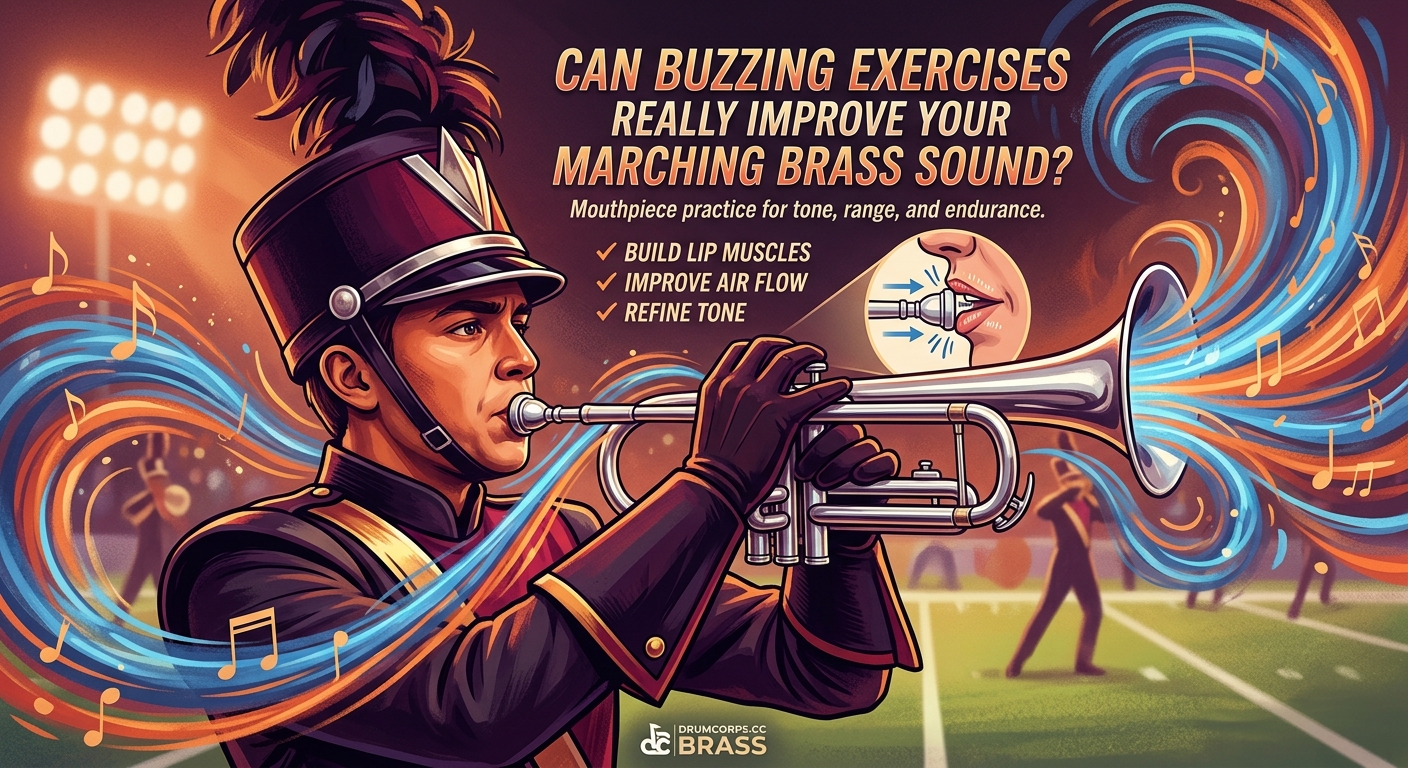
A 2011 study published in the Journal of Research in Music Education examined whether mouthpiece buzzing improved tone production in beginning brass students. The results were mixed. Students who buzzed showed slight improvements in pitch accuracy but no significant difference in overall tone quality compared to students who practiced only on their instruments.
Other research from brass pedagogy experts suggests that buzzing is most effective for intermediate and advanced players who already have a foundation of good sound production. Beginners often develop tension or incorrect embouchure habits when buzzing because they lack the body awareness to self-correct.
Dr. Douglas Yeo, former bass trombonist of the Boston Symphony Orchestra, has written extensively about buzzing. He notes that buzzing can be a useful diagnostic tool but warns against over-reliance.
“If buzzing is all you do, you’ll get really good at buzzing. But that doesn’t automatically translate to better playing on the horn. The instrument teaches you things that buzzing simply cannot.”
This perspective aligns with what many top drum corps brass instructors teach. Buzzing has a place in the warmup routine, but it should never dominate practice time. The goal is always to transfer those benefits back to the full instrument as fast as possible.
How to use buzzing exercises effectively
If you decide to incorporate buzzing into your routine, structure matters. Random buzzing without a clear goal wastes time and can even reinforce bad habits.
Here’s a step-by-step approach that works for marching brass players:
- Start with free buzzing to check your air flow and embouchure relaxation. Buzz a comfortable pitch for 5-8 seconds, focusing on steady airspeed and minimal tension.
- Move to mouthpiece buzzing and match specific pitches from your show music. Use a tuner or drone app to verify accuracy.
- Practice buzzing simple melodic patterns or lip slurs that mirror technical passages in your drill.
- Immediately transfer to your instrument and play the same exercises. Notice what feels different or easier.
- Repeat this cycle for no more than 10 minutes total. The rest of your practice should be on the full horn.
The key is the immediate transfer. Buzzing in isolation doesn’t create lasting change. You need to connect the buzzing sensation to actual playing as fast as possible.
Pairing buzzing with how to build rock-solid breath support for high brass endurance creates a more complete warmup that addresses both embouchure and air support simultaneously.
Common buzzing mistakes that hurt your sound
Many players buzz incorrectly and then wonder why their tone doesn’t improve. These mistakes are especially common in marching band settings where individual instruction time is limited.
| Mistake | Why It Hurts | Better Approach |
|---|---|---|
| Buzzing for 20+ minutes | Creates embouchure fatigue and builds bad muscle memory | Limit buzzing to 5-10 minutes, then move to full instrument |
| Using excessive mouthpiece pressure | Trains your face to play with tension | Buzz with light pressure, focusing on air speed instead |
| Ignoring pitch accuracy | Reinforces out-of-tune playing habits | Always use a tuner or reference pitch when buzzing |
| Buzzing only high notes | Develops imbalanced embouchure strength | Practice full range, emphasizing low and middle registers |
| Never transferring to the horn | Creates a disconnect between buzzing and playing | Immediately play the same exercise after buzzing it |
The excessive pressure mistake is particularly damaging. Some players think that pressing the mouthpiece harder against their lips will create a stronger buzz. In reality, this trains your embouchure to rely on pressure instead of proper air support. When you return to the full instrument, that tension carries over and chokes your sound.
Another common error is buzzing only during warmups and never revisiting the concept during actual practice. If you’re working on a difficult technical passage, try buzzing the rhythm and contour first. This helps you hear the phrase internally before adding the complexity of valves or slide positions.
When buzzing actually makes things worse
Not every brass player benefits from buzzing. Some embouchure types and playing issues are actually made worse by excessive buzzing practice.
Players with naturally thin lips or high-pressure embouchures often struggle with buzzing. The mouthpiece rim can cut into their lips more easily, creating discomfort and tension. For these players, focusing on full-instrument practice with proper air support is more productive.
If you’re recovering from an embouchure injury or making major changes to your playing position, buzzing can reinforce old habits. Your muscle memory will default to the familiar pattern when buzzing, even if you’re trying to change it. In these cases, working only on the full instrument with a teacher’s guidance is safer.
Beginning players under age 12 often lack the body awareness to buzz productively. They end up creating random noise without understanding what they’re supposed to feel or hear. For young students, more time on the instrument with proper modeling is far more valuable.
Some professional players never buzz at all. They’ve developed such efficient playing mechanics that buzzing feels unnecessary or even counterproductive. If your sound is already centered and resonant, there’s no rule that says you must buzz.
Building a balanced practice routine
The question isn’t really whether buzzing works. It’s whether buzzing is the best use of your limited practice time.
For most marching brass players, a balanced routine includes:
- 5 minutes of breathing exercises and body warmup
- 5 minutes of buzzing (free and mouthpiece)
- 10 minutes of long tones and fundamental exercises on the horn
- 20 minutes of technical work (scales, articulation patterns, drill music)
- 10 minutes of musical playing (lyrical excerpts, solo repertoire)
Notice that buzzing occupies just 10% of a 50-minute practice session. It’s a tool, not the foundation of your development.
If you’re preparing for a demanding show with lots of high playing, you might increase buzzing time to 8-10 minutes and focus specifically on buzzing in the upper register. But even then, the majority of your practice should happen on the full instrument where you can develop the resonance and projection needed for the field.
Integrating buzzing with 5 essential breathing exercises every brass player should master creates a comprehensive warmup that addresses both air and embouchure.
Alternative approaches to improving brass sound
If buzzing isn’t producing results for you, other methods might work better. Every player responds differently to various practice techniques.
Long tone practice with a tuner and drone develops resonance and pitch stability without the isolation of buzzing. You get immediate feedback from the horn’s acoustics, which helps your body learn faster. Start on a comfortable middle register note and sustain for 8-12 counts, focusing on steady air and centered tone.
Flow studies (playing scales or simple melodies at a very soft dynamic) build air control and embouchure finesse. The goal is to play as quietly as possible while maintaining a beautiful tone. This trains your embouchure to work efficiently without excess tension.
Lip slurs without the tongue develop flexibility and smooth register transitions. Play simple patterns like C-G-C or F-Bb-F, focusing on moving between notes using only air speed and embouchure adjustment. This builds coordination without the artificial isolation of buzzing.
Recording yourself and comparing your sound to professional recordings is often more valuable than any specific exercise. Your ear is the ultimate judge of tone quality. If you can hear the difference between your sound and a world-class player’s sound, your body will naturally make adjustments over time.
Working with a private instructor who can observe your playing in real time catches issues that no amount of solo buzzing can fix. Sometimes your air stream is fine and your embouchure is fine, but your tongue position or throat tension is killing your sound. A good teacher spots these problems immediately.
Matching buzzing type to your specific goals
Different buzzing approaches target different aspects of playing. Matching the method to your goal makes practice more efficient.
Free buzzing (no mouthpiece) is best for:
- Checking air flow efficiency
- Developing lip flexibility without pressure
- Warming up cold chops gently
- Diagnosing tension issues
Mouthpiece buzzing is best for:
- Improving pitch accuracy and intonation
- Building embouchure endurance
- Practicing specific musical passages
- Developing consistent tone color
Buzzing into a BERP (Buzz Extension and Resistance Piece) or similar device is best for:
- Immediate transfer between buzzing and playing
- Maintaining instrument angle and hand position
- Reducing the disconnect between buzzing and full playing
If your main issue is endurance during long rehearsals, mouthpiece buzzing with a focus on relaxation and steady air helps. If your problem is pitch accuracy on exposed entrances, buzz those specific notes with a tuner before playing them on the horn.
For players working on expanding range, buzzing can help you feel the embouchure adjustments needed for higher or lower notes. But this only works if you immediately transfer to the instrument. Buzzing a high C for minutes won’t magically give you a high C on your trumpet. You have to teach your body how to create that note with the horn’s resistance and acoustics.
What actually matters for marching brass sound
Tone quality in a marching ensemble comes down to a few core factors that matter more than any single practice technique.
Consistent air support is the foundation. Without steady, fast-moving air, no amount of buzzing or embouchure work will create a resonant sound. Most marching brass sound issues trace back to insufficient or inconsistent air flow.
Proper instrument angle and posture affect tone dramatically. Marching posture is different from sitting in a concert band. Your horn angle needs to project sound forward and slightly up, not down at the ground. Many players develop a great sound in the practice room but lose it on the field because their marching posture changes everything.
Section blend requires matched articulation style, dynamic balance, and vowel shape. If everyone in your section is buzzing differently or using different practice methods, but you’re not actively listening and adjusting to each other during rehearsal, your section will never sound unified.
Mental focus and musical intention matter more than most players realize. If you’re thinking about your feet or the person next to you while playing, your sound suffers. The best brass players are fully present in the music, hearing the phrase internally before they play it.
Equipment that fits your face and playing style makes everything easier. A mouthpiece that’s too big or too small for your embouchure creates problems that no practice routine can fix. If you’re struggling with basics, have a teacher help you evaluate whether your equipment is appropriate.
Building these fundamentals takes time and consistent practice. There’s no shortcut. Buzzing can support the process, but it can’t replace the hours of focused work on the full instrument that develop real playing skills.
Putting buzzing in perspective
So do buzzing exercises improve brass sound? Yes, when used correctly as one tool among many. No, when treated as a magic solution or practiced in isolation.
The players with the best tone in top drum corps don’t rely on buzzing alone. They practice systematically, with clear goals and immediate feedback. They record themselves, work with teachers, and constantly compare their sound to professional models.
If buzzing helps you feel more connected to your air or gives you better awareness of your embouchure, keep doing it. But keep it brief, purposeful, and always connected to playing on the full instrument.
If buzzing feels forced or doesn’t produce results after a few weeks, try something else. There are dozens of ways to improve your sound. The best method is the one that works for your body and brain.
Your practice time is valuable. Spend it on activities that directly improve your playing on the field. Whether that includes buzzing or not depends entirely on your individual needs and goals.
Making practice time count
The marching season is short and intense. Every minute you spend in the practice room needs to move you closer to your performance goals.
Start by identifying your actual sound issues. Record yourself playing a lyrical passage and a technical excerpt from your show. Listen critically. Is your tone thin or harsh? Is your pitch consistently flat or sharp? Are you running out of air on long phrases? Each problem has specific solutions, and buzzing may or may not be part of the answer.
Build a routine that addresses your specific needs. If you struggle with endurance, spend more time on breathing exercises and long tones. If your articulation is sloppy, focus on rhythmic precision and tongue speed. If your pitch wanders, work with a tuner and drone every day.
Buzzing can fit into this routine if it serves a clear purpose. Five minutes of focused, intentional buzzing beats 20 minutes of mindless repetition. Always ask yourself what you’re trying to accomplish and whether buzzing is the most efficient way to get there.
Consider working buzzing into how to build a perfect 30-minute individual practice routine so it becomes one element of a comprehensive approach rather than your entire strategy.
The goal is always the same: a beautiful, resonant, centered sound that projects across the field and blends perfectly with your section. How you get there matters less than the result. Stay focused on what works for you, be willing to adjust your approach, and trust the process.